Green for Change Ghana (GCG) is advancing efforts to restore degraded landscapes and shea parklands in northern Ghana, with plans to raise more than 75,000 shea and other indigenous tree seedlings ahead of the 2027 planting season under the Ghana Shea Landscape Emission Reductions Project (GSLERP).
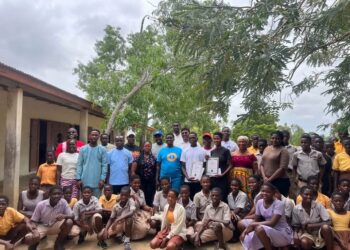
The organisation’s Executive Director, John Balankoo Sumbo, and Communications Officer, Kukua Benjamin Bangaham, recently visited the nursery to assess progress, inspect seedling development and engage the attendants responsible for daily operations.
Mr. Sumbo, mentions that the initiative is expected to support landscape restoration across the Upper West and Savannah Regions, while strengthening community participation in sustainable land management.
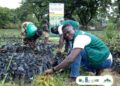
”As part of implementation, GCG is operating a community-based nursery at Soalepe in the West Gonja Municipality of the Savannah Region, where seedlings are being raised for eventual transplantation into degraded areas.”
GCG Executive Director, John Balankoo Sumbo
The visit also provided an opportunity to identify operational challenges, offer technical guidance and reinforce nursery management practices necessary for producing healthy, high-quality seedlings.
The monitoring exercise comes as Ghana intensifies efforts to protect its northern savannah ecosystems, where shea trees support rural livelihoods, biodiversity and the shea-processing industry.
Nursery Management Supports Restoration
Madam Bangaham mentions that, GCG’s nursery activities form part of a broader intervention aimed at increasing tree cover and restoring degraded shea parklands through community led action.
The organisation’s work includes monitoring seedling growth, supporting nursery attendants and improving the management practices required to prepare planting materials for the 2027 restoration season.
‘’Effective nursery management is essential to the success of tree-planting programmes. Seedlings must receive appropriate watering, protection and care to develop into healthy planting materials capable of surviving after transplantation. Regular monitoring also helps identify problems early and enables field teams to address deficiencies before they affect production targets.’’
CGC Communication Director, Kukua Benjamin Bengaham
For GCG, the visit to Soalepe offered an opportunity to evaluate these operational requirements directly and engage the people responsible for maintaining the nursery. The organisation said the exercise would help strengthen seedling production and improve preparedness for the next planting season.
The importance of sustained community participation is reflected in the wider GSLERP programme, which combines environmental restoration with livelihood development.
The project is designed to address deforestation and forest degradation while improving the resilience of communities that depend on northern Ghana’s natural resources.
Shea Trees Link Climate Action and Livelihoods
Shea trees have considerable economic and environmental importance in northern Ghana. Their nuts provide raw materials for shea butter production, an activity that supports women collectors, processors, traders and other participants in the value chain.

The trees also contribute to local ecosystems through carbon storage, soil protection and the maintenance of biodiversity.
However, pressure from land conversion, tree cutting and bushfires threatens the sustainability of shea parklands and other savannah woodlands. Restoring these landscapes is therefore important not only for environmental protection but also for safeguarding the natural resources underpinning rural economic activity.
According to the United Nations Development Programme (UNDP), GSLERP was approved by the Green Climate Fund in 2020 with financing of US$54.5 million, combining a US$30.1 million grant from the fund with contributions from the Government of Ghana and private-sector investment.
The project seeks to reduce emissions from deforestation and forest degradation while supporting sustainable livelihoods in the Northern Savannah Zone.
The wider programme includes plans to restore degraded shea parklands and off-reserve savannah forests, establish forest plantations and strengthen community-based natural resource management. Its interventions are also intended to improve the economic position of people whose livelihoods depend on the shea industry.
For GCG, raising more than 75,000 seedlings represents a practical contribution to these wider objectives. The seedlings are intended to support restoration activities in the Upper West and Savannah Regions, helping replenish tree populations and improve the long-term productivity of shea-growing landscapes.
The expected benefits will depend partly on the quality of seedlings produced, successful transplantation and effective maintenance after planting. Protecting young trees from fire, grazing and other threats will be important to achieving lasting restoration outcomes.
Partnerships Drive Community Based Action
GSLERP brings together national institutions, development partners, private-sector actors and local communities to address interconnected environmental and economic challenges.
The Forestry Commission is responsible for implementing the wider project, with technical support from the UNDP and the Global Shea Alliance.
The programme also seeks to mobilise private investment in the shea value chain and promote approaches that improve both environmental sustainability and economic opportunity.
GCG is undertaking its nursery initiative with support from the Global Shea Alliance under the project, which is funded by the Green Climate Fund with implementation support from the UNDP and Forestry Commission Ghana.
The organisation has acknowledged the contributions of its nursery attendants, field teams and community members, whose work is central to seedling production and day-to-day nursery management.
Their involvement illustrates the importance of local capacity in translating large-scale environmental objectives into practical activities at the community level.
The Soalepe monitoring visit also highlights the value of routine supervision in project delivery. Assessing progress, listening to operational concerns and providing guidance can help identify gaps early, improve resource management and keep activities aligned with planting targets.
As preparations continue towards the 2027 planting season, maintaining seedling quality and strengthening nursery operations will remain important priorities for GCG.
The initiative reflects a broader approach to landscape restoration in which environmental protection, community participation and sustainable economic activity are pursued together.
Its eventual impact will depend on how effectively seedlings are established, protected and maintained, and whether restored shea parklands can continue supporting livelihoods while improving the resilience of northern Ghana’s landscapes.
READ ALSO:Mahama Swears In Two New Electoral Commission Deputy Chairpersons