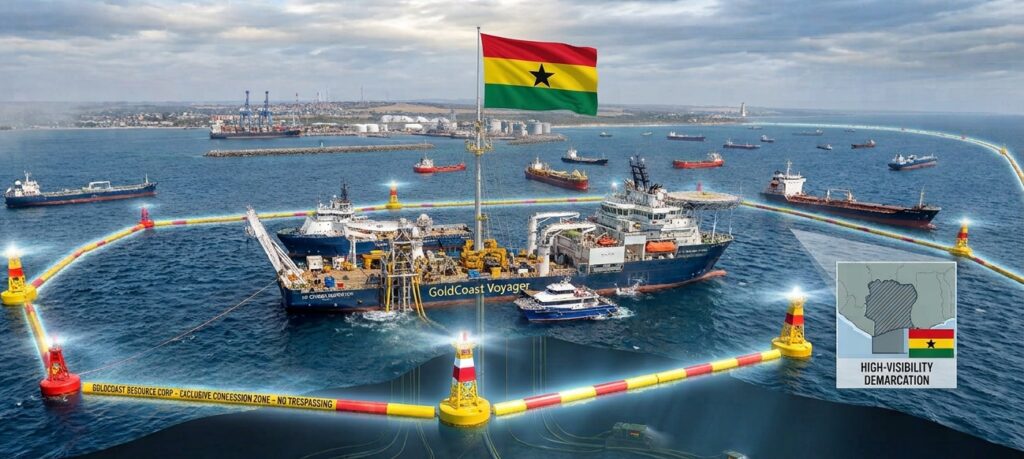
The Africa Policy Lens (APL) has raised critical questions regarding the decision-making framework of the Ghanaian government following the initial approval of an offshore reconnaissance licence granted to Gold Coast GRC Ghana Ltd. for mineral exploration on the country’s shallow continental shelf.
While welcoming the subsequent suspension of the permit by the Office of the President, the policy research organization argues that public attention must focus on the regulatory loopholes and administrative lapses that permitted such a risky concession in the first place.
The group emphasizes that reversing a controversial directive after public backlash is insufficient, demanding instead full disclosure on the environmental and social impact assessments conducted prior to the approval.
“While the suspension is a welcome development, APL believes we must confront a much more fundamental question: How did we get to the point where such a licence was granted in the first place? Suspending a questionable decision after public opposition is one thing. Ensuring such decisions undergo rigorous environmental scrutiny, scientific assessment, and meaningful public consultation before approval is quite another.”
Africa Policy Lens (APL)
The policy institute highlighted that Ghana’s marine space represents a vital socioeconomic pillar providing food security, employment, and biodiversity for thousands of coastal residents, making any unsanctioned marine extraction a direct threat to national security.
The controversy stems from a letter dated October 9, 2026, from the Office of the President (Ref. OPS142/2/26/1603), which halted the exploration activities only after organized opposition from industrial bodies like the National Fisheries Association of Ghana.
According to the think tank, relying on public protests to trigger regulatory oversight reveals a reactive governance model that undermines environmental protection standards and places vulnerable artisanal fishing communities at severe economic risk.
Flaws in Extractive Governance and Public Scrutiny
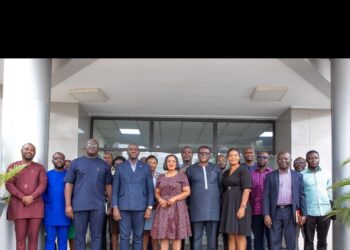
In a statement signed by Dr. Hayford M. Ayerakwa, Director of Research, Administration & Partnerships, the organization insisted that “the President and the responsible regulatory institutions owe Ghanaians a transparent explanation” regarding the regulatory process.
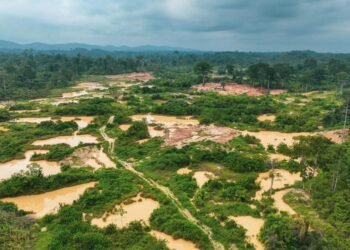
The policy lens notes that at a time when the nation is struggling with the destructive legacy of illegal land-based mining popularly known as galamsey extending operations into fragile marine ecosystems represents a reckless expansion of ecological vulnerability.
The institute cautioned against repeating terrestrial environmental mistakes in deep-sea environments, asserting that “our oceans are not expendable” and that economic opportunities must not automatically take precedence over long-term ecological balance.
The group further interrogated the official approval mechanisms, demanding clarity on “who authorised this licence” and whether marine scientists and coastal stakeholders were genuinely engaged before the document was signed.
By allowing mineral exploration without proactive, baseline environmental impact assessments, regulatory bodies risk sacrificing sustainable development goals for short-term revenue gains.
APL emphasized that effective environmental protection must be embedded into the foundational stages of governance rather than introduced “as a corrective measure after public pressure,” calling for systematic structural reforms across the Minerals Commission and the Environmental Protection Agency.
Research Imperatives for Marine Safeguards
Thorough research into offshore mineral reconnaissance underscores the extreme ecological sensitivity of seabed exploration, where localized noise pollution, sediment plumes, and habitat disruption can devastate pelagic fish stocks and benthic communities.
Marine ecosystems along the Gulf of Guinea serve as vital spawning grounds for small pelagic species that form the backbone of West Africa’s artisanal fishing economy.
Granting reconnaissance rights without baseline oceanographic modeling or multi-stakeholder mapping threatens to paralyze localized fisheries, exacerbate coastal poverty, and disrupt regional marine biodiversity corridors that require decades to recover from industrial disturbance.

Furthermore, academic and policy studies on resource management indicate that marine governance requires strict alignment with precautionary principal frameworks to prevent irreversible damage to vulnerable coastal populations.
Sustainable oceanic resource management demands that economic initiatives maintain an equilibrium between industrial growth and ecological preservation.
Without comprehensive environmental and social impact assessments, authorizing preliminary gold exploration sets a dangerous precedent for the extractive sector, making robust research, public transparency, and institutional accountability mandatory prerequisites for any future ocean-based economic policy.
Demanding Institutional Accountability and Reform
The controversy surrounding the Gold Coast GRC Ghana Ltd. licence underscores an urgent need to re-evaluate how mining concessions are vetted across all regulatory tiers in Ghana.
APL reiterated that “the real test of leadership is not simply the willingness to reverse a decision,” but rather the transparency and foresight applied when making initial policy choices.
Stakeholders across the natural resources sector continue to urge government agencies to institutionalize open-access databases for mining permits, ensuring that local communities, civil society groups, and environmental experts can scrutinize prospective projects long before licenses reach the execution stage.
Moving forward, the civil society group maintains that safeguarding national resources requires an unwavering commitment to participatory governance and ecological stewardship.
As public discourse intensifies over the management of Ghana’s territorial waters, the call for systematic reform remains clear: environmental sustainability must serve as a non-negotiable barrier to unchecked industrial expansion.
The policy institute’s intervention serves as a firm reminder that true progress in the extractive industry cannot occur at the expense of coastal livelihoods, marine biodiversity, and the environmental security of future generations.
READ ALSO: KiDi Announces ‘Crazy World’ Live Concert In Accra