The Ghana Cocoa Board (COCOBOD) is pursuing stronger private-sector partnerships to improve sustainable cocoa production, expand domestic processing and strengthen Ghana’s competitiveness in the international cocoa market.
The initiative follows an engagement between COCOBOD’s management, led by Chief Executive Dr. Randy Abbey, and representatives of Walmart/Clasen and Afrotropic Cocoa Processing Ltd. (ACPL) to explore investment opportunities and identify areas of collaboration across the cocoa value chain.
Discussions with Walmart/Clasen centred on sustainable cocoa bean sourcing, financing, the management of Cocoa Swollen Shoot Virus Disease (CSSVD), deforestation prevention and the restoration of cocoa farms.
The engagement with ACPL, meanwhile, focused on strengthening cooperation to increase local processing and value addition.
The discussions come as Ghana undertakes reforms to improve the financial sustainability of its cocoa industry and retain a greater share of the economic benefits generated from cocoa production
“The importance of a strategic partnerships in supporting farmers, strengthening Ghana’s cocoa value chain and building a more sustainable and resilient cocoa industry.’’
Chief Executive Official, Dr. Randy Abbey
Sustainability and Traceability Drive
The discussions with Walmart/Clasen highlighted opportunities to improve the sustainability and traceability of Ghanaian cocoa, particularly through responsible sourcing practices, farm rehabilitation and the implementation of recognised production standards.
A key area of interest was the proposed introduction of pilot initiatives to support the implementation of ARS 1000 standards. These standards are intended to promote sustainable and traceable cocoa production while strengthening quality assurance across the supply chain.
Traceability has become increasingly important to cocoa-producing countries as international buyers and regulators demand stronger evidence that agricultural commodities are produced without contributing to deforestation.
The European Union’s Deforestation Regulation, for instance, requires covered commodities, including cocoa, placed on or exported from the EU market to meet requirements relating to deforestation free production, legality and due diligence.
For Ghana, strengthening farm-level records and supply-chain monitoring is therefore important for maintaining access to major international markets.
The proposed collaboration also addressed Cocoa Swollen Shoot Virus Disease, a longstanding threat to Ghana’s cocoa farms. The disease damages cocoa trees, reduces productivity and can eventually make affected farms unproductive, creating financial difficulties for farmers and reducing the supply of marketable beans.
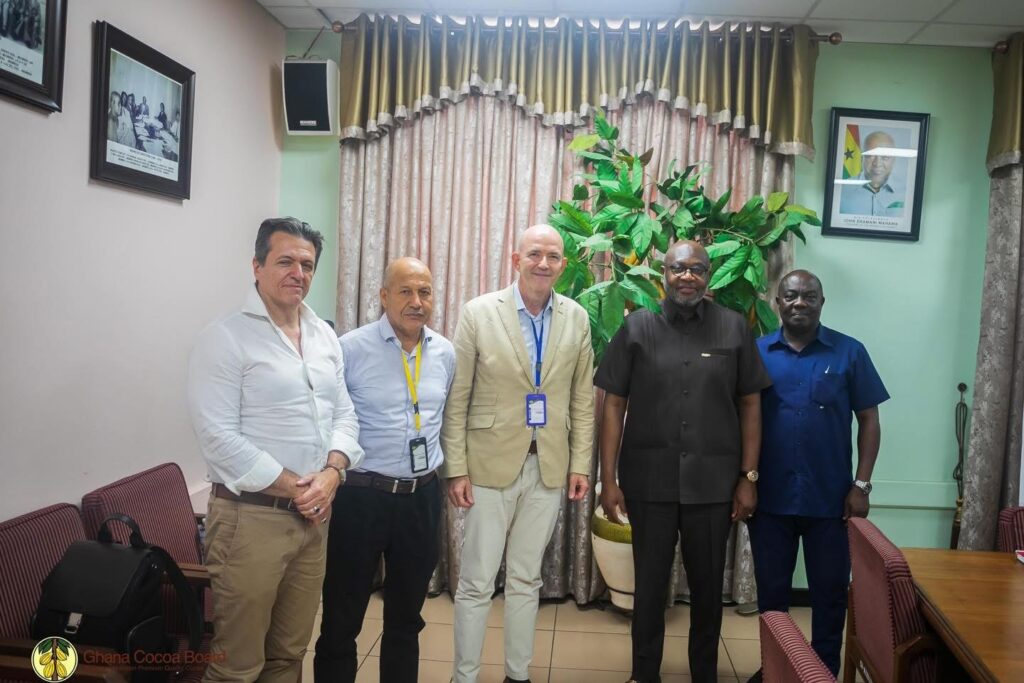
“Discussions with Walmart focused on sustainable cocoa beans sourcing, cocoa financing, Cocoa Swollen Shoot Virus Disease management and deforestation.”
Walmart/Clasen and Afrotropic Cocoa Processing Ltd. (ACPL)
Financing arrangements that account for this transition could help farmers meet immediate household needs while investing in the future productivity of their farms.
Partnerships that combine commercial financing with technical support could also help improve the adoption of sustainable farming practices.
However, the impact of the proposed initiatives will depend on how pilot projects are designed, financed and implemented, as well as the extent to which participating farmers benefit from the interventions.
Domestic Processing Gains Momentum
The engagement with Afrotropic Cocoa Processing Ltd. focused on developing a stronger strategic relationship with COCOBOD to expand domestic cocoa processing and increase the amount of value retained within Ghana.
The objective aligns with the government’s directive that at least 50 per cent of Ghana’s cocoa beans should be processed locally from the 2026/2027 crop season. The policy was announced by Finance Minister Dr. Cassiel Ato Forson in February 2026 as part of wider reforms to the cocoa sector.

COCOBOD’s reform programme seeks to improve the availability of beans to domestic processors and strengthen the operating environment for companies investing in local manufacturing.
According to the Ghana News Agency’s February 2026 reporting on the reforms, the policy is intended to promote value addition, job creation and a stronger domestic cocoa-processing industry.
Ghana has historically exported substantial quantities of cocoa beans for processing in overseas markets. Expanding domestic processing offers opportunities to produce more cocoa liquor, butter, powder and other semi-finished or finished products before export.
These activities can generate additional industrial employment, create demand for supporting services and provide opportunities for businesses involved in packaging, logistics, engineering and product development.
Nevertheless, reaching the 50 per cent target will require reliable bean supplies, adequate working capital, efficient processing facilities and access to competitive international markets. Processors must also manage energy costs, equipment maintenance and the commercial risks associated with fluctuations in global cocoa prices.
The proposed collaboration with ACPL provides an opportunity to explore how industry partnerships can contribute to these objectives, although the specific investment commitments and implementation arrangements were not detailed in the engagement announcement.
“The engagement with ACPL focused on building a strong strategic relationship with COCOBOD to promote collaboration, boost local cocoa processing and increase value addition.”
C.E.O of Cocoa Board,Dr. Randy Abbey
Partnerships and Industry Resilience
The engagements with Walmart/Clasen and ACPL reflect two complementary priorities for Ghana’s cocoa industry: protecting the sustainability of production and increasing the economic value generated from locally produced beans.
Both objectives are important as COCOBOD implements measures to address financial pressures and improve the sector’s long-term competitiveness.
The need for reform has been underscored by volatility in international cocoa prices. The International Monetary Fund’s 2026 assessment of Ghana reported that global cocoa prices fell sharply from approximately US$8,800 per metric tonne in August 2025 to around US$2,800 at the end of February 2026, placing significant pressure on COCOBOD’s liquidity.
Such fluctuations demonstrate the importance of strengthening the industry beyond the export of raw beans. A more diversified cocoa economy, supported by domestic manufacturing, sustainable production and effective financing, could help Ghana capture additional value while reducing some of its exposure to international market shocks.
“The importance of strategic partnerships in supporting farmers, strengthening Ghana’s cocoa value chain and building a more sustainable and resilient cocoa industry.”
C.E.O of Cocoa Board, Dr. Randy Abbey
The collaboration with international sourcing partners and domestic processors, COCOBOD is seeking to align sustainable cocoa production with industrial development. The approach could help strengthen farmer livelihoods, expand manufacturing opportunities and reinforce Ghana’s position in the global cocoa trade
READ ALSO:Ghanaians Still Struggling Despite Inflation Decline, ISSER Reveals