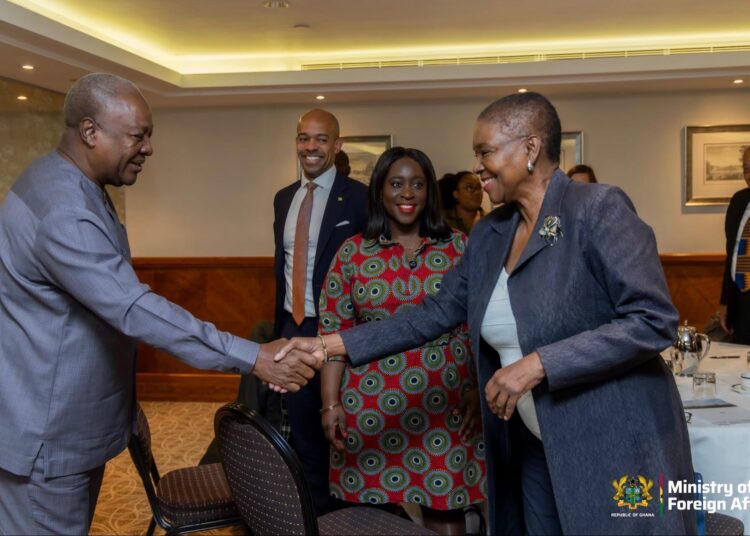
President John Dramani Mahama has engaged British parliamentarians of Ghanaian and African heritage in London to explore a new business framework for Ghana-United Kingdom cooperation, focusing on trade expansion, artificial intelligence, climate change, reparatory justice and aviation connectivity.
The engagement forms part of Ghana’s broader diplomatic and economic strategy to strengthen international partnerships, attract investment and establish stronger links between government institutions and diaspora communities.
It also reflects efforts to use parliamentary relationships to complement formal diplomatic engagements between Accra and London.
The discussions come at a significant moment for both countries, with Ghana preparing to assume the chairmanship of the African Union (AU) in 2027 and the United Kingdom scheduled to hold the G20 Presidency in the same year.
These developments present opportunities for the two countries to coordinate their positions on international trade, economic development, climate financing and reforms to global governance.
“The engagement sought to strengthen cooperation between Ghana and the United Kingdom through parliamentary relations, economic partnerships and shared international priorities.”
President of Ghana, John Dramani Mahama
Trade and Investment at the Centre
Trade expansion is expected to remain a central pillar of the proposed cooperation framework, particularly as Ghana seeks to increase exports, attract productive investment and strengthen the competitiveness of domestic businesses in international markets.
The Available UK government statistics demonstrate the scale of the existing commercial relationship. Total trade in goods and services between Ghana and the UK reached £1.5 billion in the four quarters to the end of June 2025, representing an increase of 5.7 per cent, or £83 million, compared with the corresponding period a year earlier.
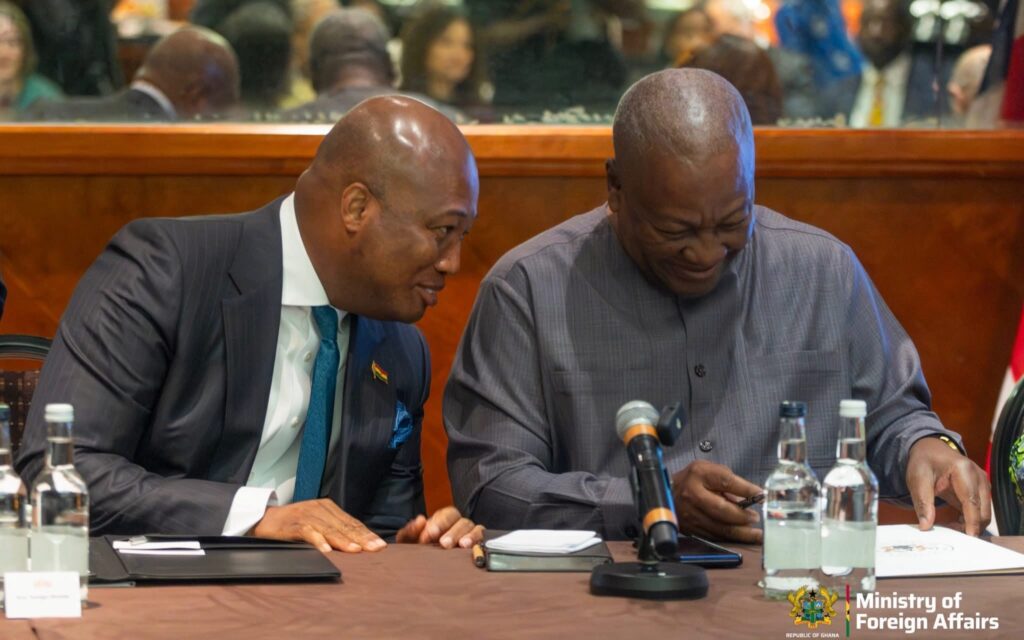
During that period, UK exports to Ghana amounted to £888 million, while imports from Ghana totalled £640 million. The figures highlight an opportunity for Ghana to expand its export earnings, improve market access for locally manufactured products and increase the value of goods processed before export.
For Ghanaian businesses, closer engagement with British parliamentarians could help draw attention to regulatory barriers, investment opportunities and the challenges confronting companies seeking to enter the UK market.
The proposed framework could also complement the UK-Ghana Growth Partnership for 2026–2028, which was established to promote private-sector investment, trade, infrastructure development and skills acquisition.
The partnership builds on agreements involving investments and commercial deals worth up to £215 million announced during the Ghana Investment Summit in London in June 2026.
“Total trade in goods and services between Ghana and the UK reached £1.5 billion in the four quarters to June 2025, providing a foundation for further commercial cooperation.”
President of Ghana, John Dramani Mahama
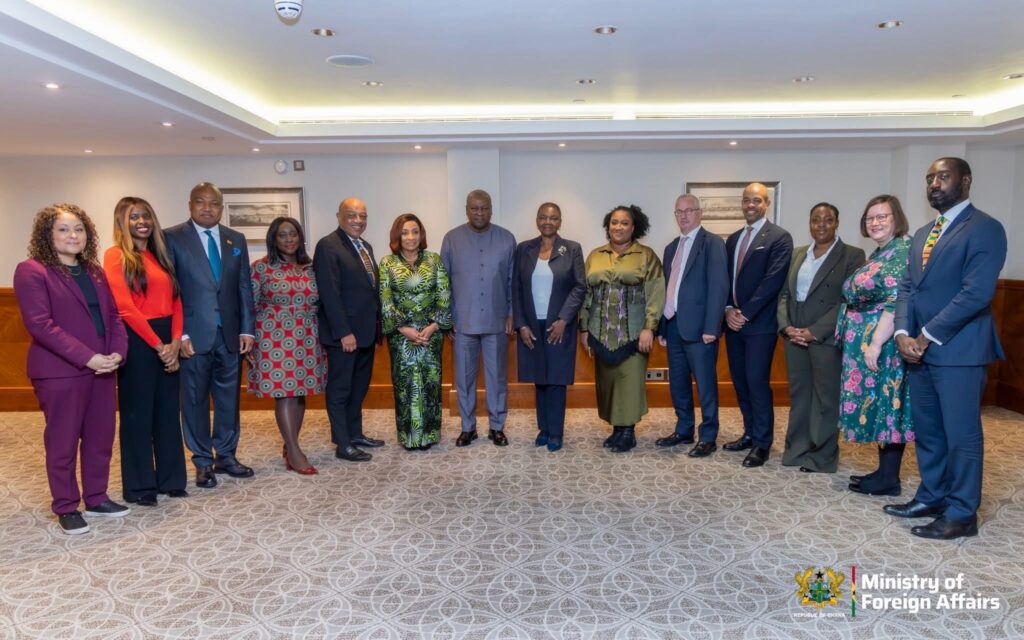
Finance and Technical Experts for Development
Access to finance and technical expertise could help the country develop resilient infrastructure, support sustainable agricultural practices and attract investment into renewable energy.
Existing bilateral initiatives provide a basis for this work. The UK-Ghana Growth Partnership includes a £5 million Green Project Preparation Facility designed to help turn climate-focused infrastructure proposals into investment-ready projects, with the potential to unlock up to £180 million in deals over three years.
Reparatory justice, meanwhile, introduces a historical and diplomatic dimension to the relationship. Ghana has advocated for international discussions addressing the consequences of the transatlantic slave trade and colonialism, including the restitution of cultural artefacts and reforms to address persistent economic inequalities.
The issue requires sustained dialogue, particularly given Britain’s historical role in the transatlantic slave trade and colonial administration in the Gold Coast.
“Reparatory justice extends beyond financial compensation to include the return of cultural artefacts, debt relief and measures that improve the long term prospects of affected communities.”
President of Ghana, John Dramani Mahama
The challenge will be translating discussions into practical arrangements that both countries can examine and implement through appropriate diplomatic and institutional channels.
Ghana Airways Revival and Strategic Alignment
Aviation emerged as another important issue, with discussions reportedly including the revival of Ghana Airways and measures to encourage greater competition on the Accra-London route.
The proposal addresses longstanding concerns about international travel costs and connectivity between Ghana and the United Kingdom. The route serves business travellers, students, tourists, families and members of the Ghanaian diaspora, making reliable and affordable air transport important to economic and social relations between the countries.
A revived national carrier could potentially expand travel options and strengthen Ghana’s aviation links.
However, the commercial viability of such an initiative would depend on a credible financing model, effective management, operational efficiency, regulatory compliance and the ability to compete with established airlines.
Ghana Airways ceased operations in 2004 following prolonged financial difficulties. Any attempt to re-establish a national carrier would therefore need to consider the lessons of its collapse, including the importance of sound corporate governance and sustainable business operations.
The discussions have not, by themselves, established a launch date, financing arrangement or implementation plan for a new airline.
“Greater competition and improved air connectivity could expand travel options between Accra and London, although any revival of Ghana Airways would require a sustainable commercial and operational model.”
President of Ghana, John Dramani Mahama
The proposed cooperation framework will be judged by its practical outcomes rather than the breadth of issues discussed. Improved market access, increased investment, technology partnerships, affordable transport and measurable progress on shared priorities would provide tangible indicators of its effectiveness.
READ ALSO:PIAC Report Exposes Gaps in Ghana’s Oil Revenue Accountability