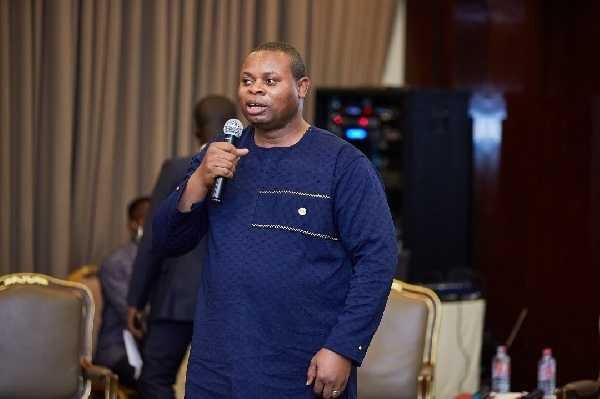
Sammy Gyamfi’s framework for reforming artisanal and small-scale mining (ASM) sector has earned endorsement from Franklin Cudjoe, the founding president of IMANI Africa, who emphasizes that formalising illegal or unlicensed operations does not require overly complex academic theories.
Formalising illegal or unlicensed artisanal and small-scale mining commonly known as galamsey in Ghana involves transitioning informal operators into legal, regulated frameworks such as the Minerals and Mining Act (Act 703) and government initiatives like the Responsible Cooperative Mining and Skills Development Programme.
By cutting through bureaucratic ambiguity, this pragmatic approach establishes clear regulatory pathways that permit compliant miners to operate legally while swiftly weeding out destructive practices across mining communities.
“2. The process of transition from informal or illegal operations (such as galamsey) to a legally recognized framework follows structural phases designed to bring operators under regulatory oversight, tax systems, and environmental compliance.”
Franklin Cudjoe

Building upon this initial praise, the policy model details how the transition from informal or illegal operations (such as galamsey) to a legally recognized framework follows structural phases designed to bring operators under regulatory oversight, tax systems, and environmental compliance.
Formalisation effectively shifts illegal activities into a structured legal framework using a phased model of zoning, legal incorporation, environmental compliance, and continuous monitoring.
Under this setup, operators gain access to legitimate technical support and cooperative structures, provided they strictly adhere to national ecological standards and land-use regulations.
Deconstructing the Three-Tier Exclusionary Zones
To prevent further environmental degradation, the proposed framework enforces a strict zero-tolerance policy against irresponsible mining activities in ecologically sensitive and urban locations.
Sammy Gyamfi identifies three categories of unlicensed mining that are “irredeemably wrong” and completely barred from entering the formalisation pipeline: mining that impacts or takes place near water bodies, mining within forest reserves, and mining in unsafe community areas (e.g., roadsides, school lands, or residential yards).

If an operation is found in any of these zones, it is shut down permanently. If it operates outside these prohibited areas, it transitions to the next phase of formal legal incorporation and compliance checks.
This unambiguous spatial boundary gives security enforcement clear mandates to clamp down on rogue operations without harassing legitimate small-scale operators.
The Urgent Need for ASM Reforms in Ghana
The critical need for this structured formalisation initiative stems from decades of unregulated artisanal mining, which has severely damaged Ghana’s major water bodies, deforested agricultural belts, and threatened rural public health.
Unlicensed mining operations have traditionally operated outside the national tax net, depriving the state of critical revenue while leaving local communities to bear the social and environmental costs of land degradation.
By instituting a practical framework that distinguishes viable, reform-minded operators from environmentally destructive entities, Ghana can protect vital water bodies and forest reserves while securing sustainable livelihoods for thousands of artisanal miners within a fully compliant extraction economy.