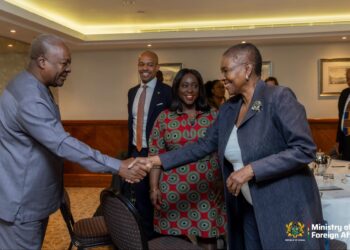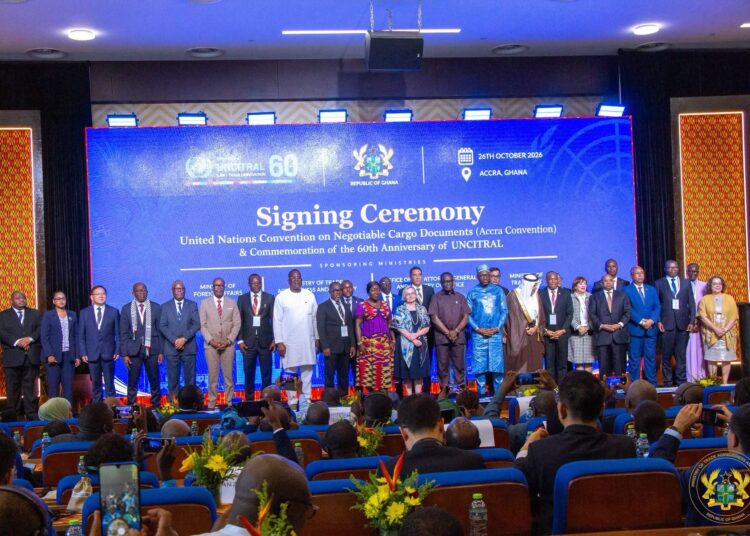
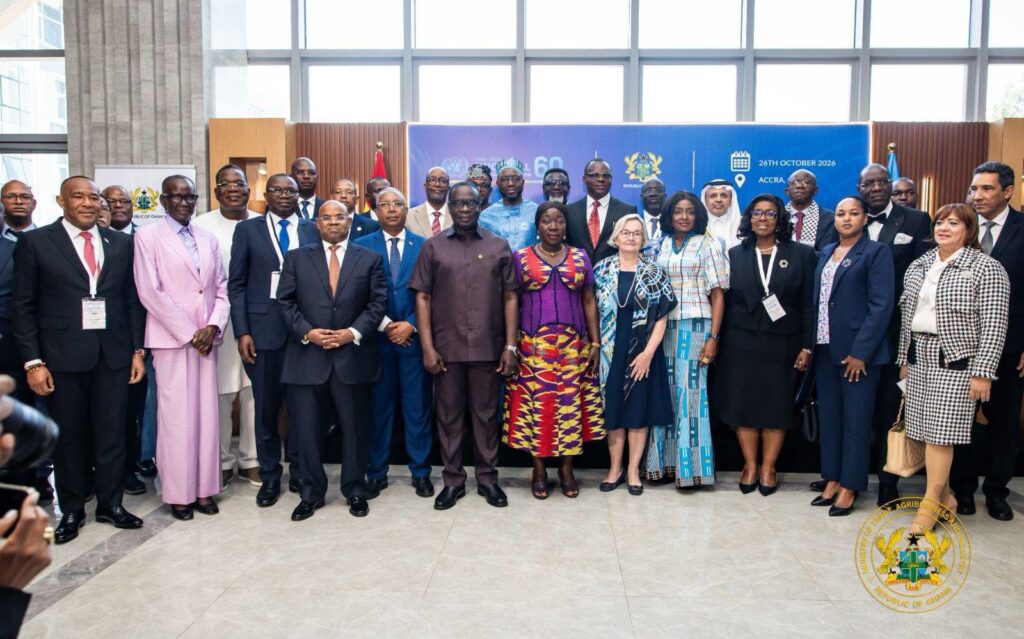
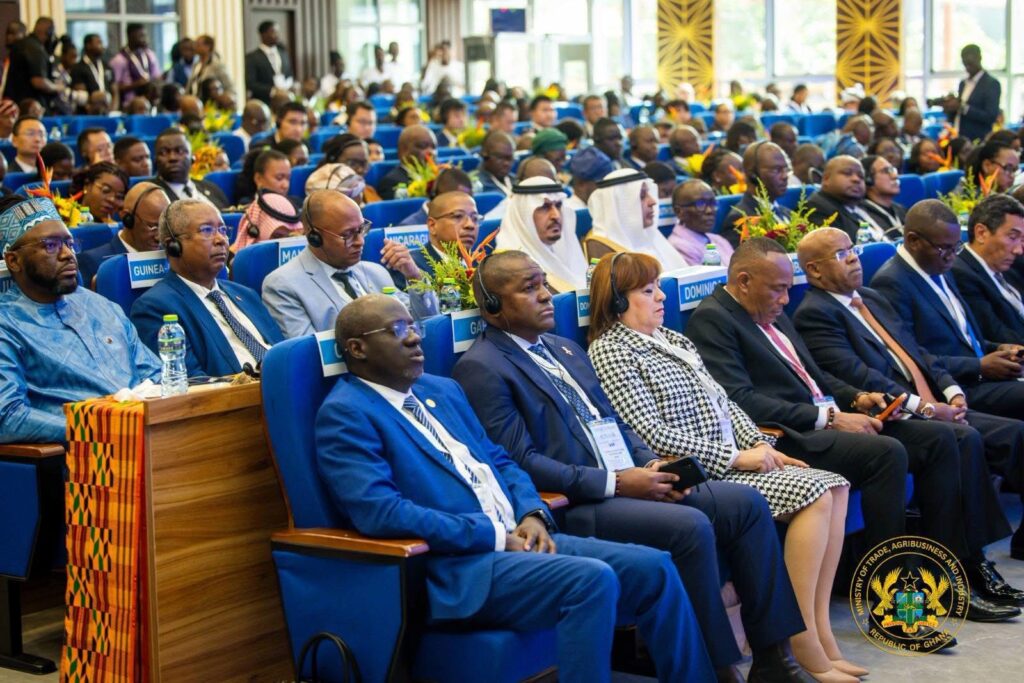
Twenty-six countries have signed the United Nations Convention on Negotiable Cargo Documents in Accra, launching an international effort to improve trade financing, simplify cargo documentation and establish common legal rules for goods moving across borders.
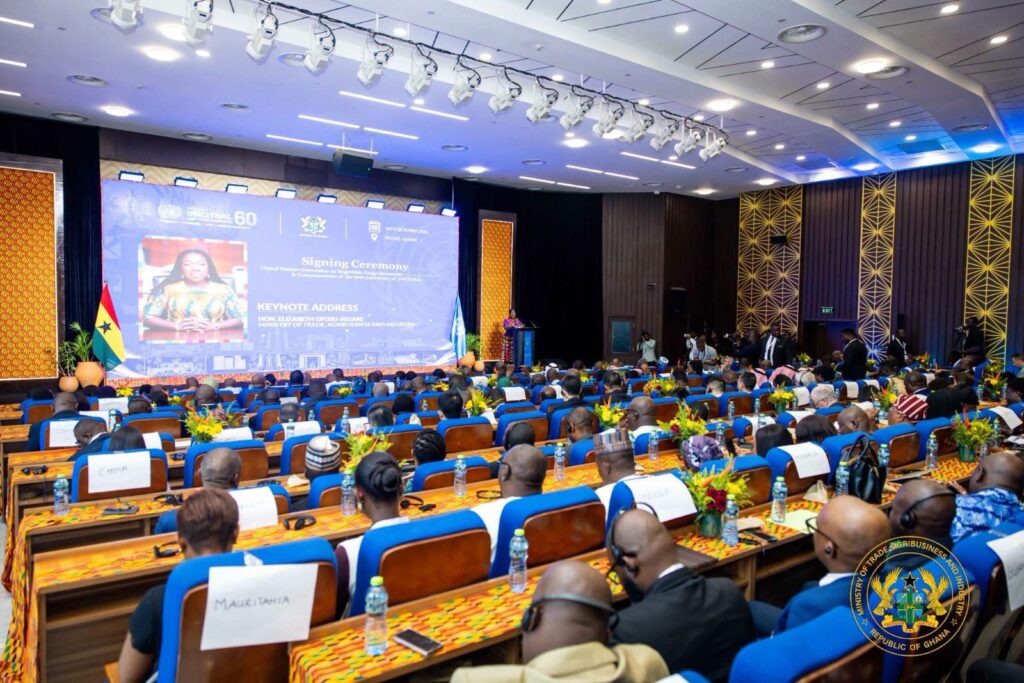
The agreement, known as the Accra Convention on Negotiable Cargo Documents, was opened for signature in Ghana .
The participating countries are Ghana, Sierra Leone, Burkina Faso, Cabo Verde, China, Comoros, Côte d’Ivoire, Cuba, the Democratic Republic of the Congo, Djibouti, Dominica, the Dominican Republic, Gabon, The Gambia, Guinea, Guinea-Bissau, Mauritania, Nicaragua, Nigeria, Pakistan, Rwanda, Saudi Arabia, South Sudan, Togo, Tanzania and Venezuela.
The agreement was developed by the United Nations Commission on International Trade Law (UNCITRAL) and adopted by the United Nations General Assembly on December 15, 2025.
“The Convention establishes a uniform legal framework governing the issuance and use of negotiable cargo documents.”
UNCITRAL
The Convention provides a common framework for negotiable cargo documents, which can represent rights to goods in transit and be transferred between parties during commercial transactions.
Why 26 Countries Signed?
The principal reason for the Convention is to address gaps in the legal treatment of negotiable cargo documents, particularly for goods transported by road, rail and air, as well as by sea.
International trade frequently involves several parties, including exporters, importers, shipping companies, freight forwarders, transport operators, banks and customs authorities.
Each party depends on accurate documentation to establish the identity of goods, coordinate delivery, manage commercial risks and complete transactions.
However, differences in national laws can make it difficult to transfer rights to goods in transit or use transport documents consistently across jurisdictions.
The Convention seeks to address this problem by providing common rules governing the issuance, transfer and legal effects of negotiable cargo documents.
According to UNCITRAL, the framework is intended to facilitate trade finance, enable the sale of goods in transit, promote multimodal transportation and support the digitalisation of international trade.
It also allows a single negotiable cargo document to cover an entire journey involving different modes of transport, potentially reducing the need for multiple documents.
The agreement therefore offers participating governments an opportunity to modernise their commercial legal systems while creating more predictable conditions for international transactions.
The 26 signatures do not necessarily mean that every country faces identical trade challenges or has the same commercial objectives.
Rather, they demonstrate participation in a common international initiative designed to make cargo documentation more reliable and transferable.
Trade Finance and Digitalisation Benefits
The Convention provides a legal basis for negotiable cargo documents to be transferred between parties, with the associated rights passing to the new holder in accordance with its provisions.
This could create additional financing opportunities for exporters and traders, including small and medium sized enterprises that struggle to secure working capital.
Nevertheless, the availability of credit will continue to depend on lenders’ risk assessments, borrowers’ financial positions and the enforceability of the relevant transactions.
The Convention recognises negotiable cargo documents in both paper and electronic forms, subject to specific legal and technical requirements.
Electronic documents must use reliable methods to establish identification, control and integrity throughout their period of validity.
This provision could help reduce dependence on physical documents, which may need to be transported between businesses, banks and logistics operators before transactions can be completed.
For companies operating across international supply chains, the ability to use legally recognised electronic documents could improve information sharing and reduce documentation-related delays.
Ghana’s Role and the Next Steps
Ghana’s decision to host the signing ceremony places the country at the centre of the initiative’s launch. The hosting arrangement also reflects the United Nations General Assembly’s decision to associate the Convention with Accra.
For Ghana, the agreement is relevant to its ambitions to strengthen trade facilitation, improve logistics efficiency and support regional commerce under the African Continental Free Trade Area (AfCFTA).
A common framework for cargo documents could help businesses move goods between participating jurisdictions with greater legal certainty.
This may be particularly relevant to landlocked African countries that depend on neighbouring states’ transport corridors to access international markets.
Ghanaian exporters and importers could also benefit from more consistent documentation arrangements, particularly where their transactions involve several transport modes or foreign financial institutions.
The Ghana Shippers’ Authority, government ministries, financial institutions and logistics operators will have important roles in building awareness and preparing for implementation.
Businesses will need to understand the legal requirements before relying on negotiable cargo documents in actual transactions.
The Convention’s signing is not, however, equivalent to full implementation. According to the United Nations Treaty Collection, the agreement will enter into force 180 days after the deposit of the tenth instrument of ratification, acceptance, approval or accession.
Countries must therefore complete the applicable domestic procedures before becoming bound by the Convention’s substantive provisions.
“The next phase will require domestic approval and practical implementation.”
UNCITRAL
The signing by 26 countries establishes an important starting point for international cooperation on cargo documentation.
Its lasting economic value will ultimately depend on ratification, implementation and the extent to which the framework improves financing opportunities and the movement of goods across borders.
READ ALSO:Black Sherif Announces Canadian Dates for ‘Sun Swagga’ Tour