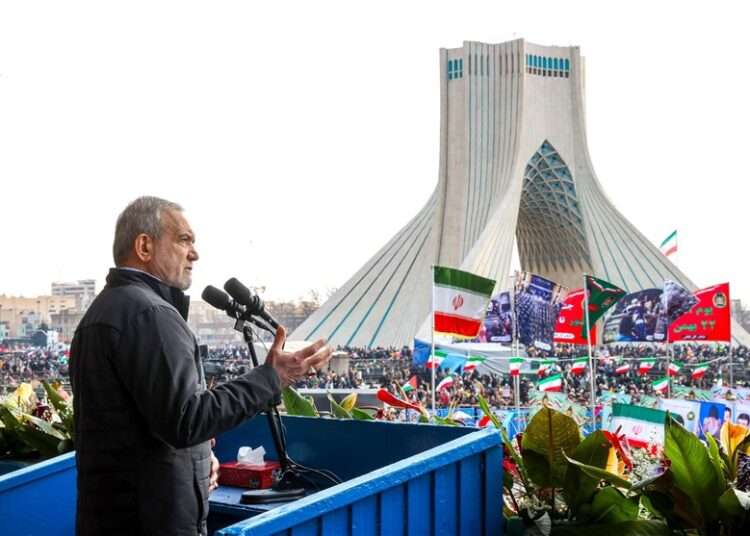
Iranian President, Masoud Pezeshkian has called on Muslim countries to strengthen regional cooperation against what he described as “Israeli aggression” and US-backed efforts to divide the Middle East, as diplomatic efforts intensify to prevent a renewed regional war.
Speaking at a meeting in Tehran with Saudi Defence Minister Khalid bin Salman Al Saud, Pakistan’s Army Chief Asim Munir and Türkiye’s Intelligence Chief Ibrahim Kalin, Pezeshkian said that Iran was ready to support greater unity, security and development among Muslim nations.
He condemned Israeli attacks on Gaza, Lebanon, Iran and other parts of the region, arguing that cooperation among Muslim-majority countries was essential to addressing regional security challenges.
Pezeshkian also reiterated that Iran was not seeking nuclear weapons but maintained its right to pursue peaceful nuclear activities under the Nuclear Non-Proliferation Treaty.
He criticised what he called “contradictory US policies,” accusing Washington of engaging in negotiations with Tehran while simultaneously attacking Iran and its nuclear facilities.
His remarks came as senior officials from Saudi Arabia, Pakistan and Türkiye met in Tehran for discussions aimed at reducing tensions and preventing further fighting in the Middle East.
Saudi Arabia, Pakistan, Türkiye Seek De-escalation
The Tehran meetings bring together representatives of three countries that signed the Mecca Joint Defence Agreement in August. The agreement treats an armed attack against one member as an attack against all three.
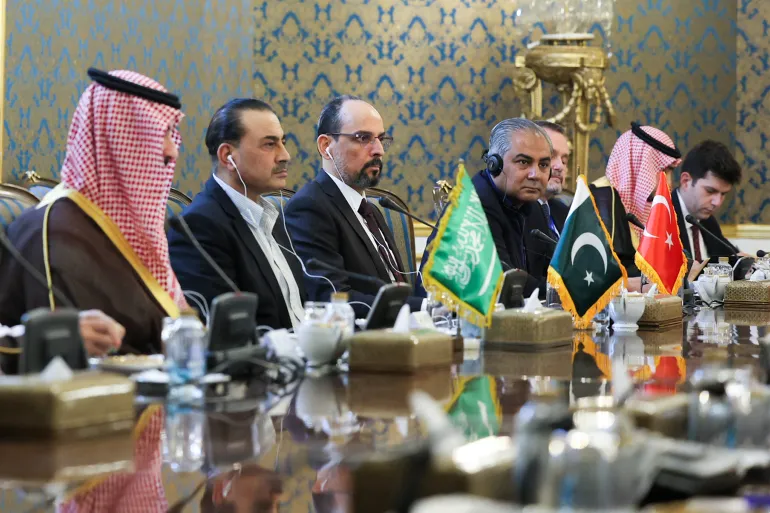
Saudi Defence Minister Khalid bin Salman, Pakistani military Chief Asim Munir and Turkish intelligence Chief Ibrahim Kalin held discussions with Pezeshkian and Iran’s security leadership, including Mohsen Rezaei, Secretary of Iran’s Supreme National Security Council.
According to the Saudi Foreign Ministry, the talks are intended to prevent further military escalation and create conditions for a diplomatic settlement. “The kingdom emphasises the importance of opening channels for negotiation to prevent a resurgence of military escalation in the region, and to pave the way for an agreement that ends the crisis and secures peace and stability,” the ministry said in a statement.
The discussions mark the first talks involving all three members of the defence agreement and Iran since Yemen’s Iran-aligned Houthi armed group escalated attacks on Saudi Arabia last month.
The participation of Saudi Arabia, Pakistan and Türkiye highlights regional efforts to contain the conflict through diplomacy, even as tensions between Iran, the United States and Israel remain high.
The talks also come amid concerns that further military action could draw neighbouring countries into a wider confrontation, threatening regional security and economic stability.
UN Chief Warns Against Renewed US-Iran War
Meanwhile, United Nations Secretary-General, António Guterres also urged Washington and Tehran to avoid restarting hostilities, warning that further escalation could push the region beyond diplomatic control.
During a visit to Cairo, Guterres called on both sides to exercise restraint and pursue diplomatic solutions.
“I want to send a loud and clear message: we need maximum restraint and diplomatic solutions.
“If the sabre-rattling we are witnessing now translates itself into a major mutual escalation, the situation in the region can get out of control.”
Antonio Guterres
Guterres also stressed the importance of restoring freedom of navigation in key maritime routes, including the Strait of Hormuz and Bab al-Mandeb, in accordance with international law.
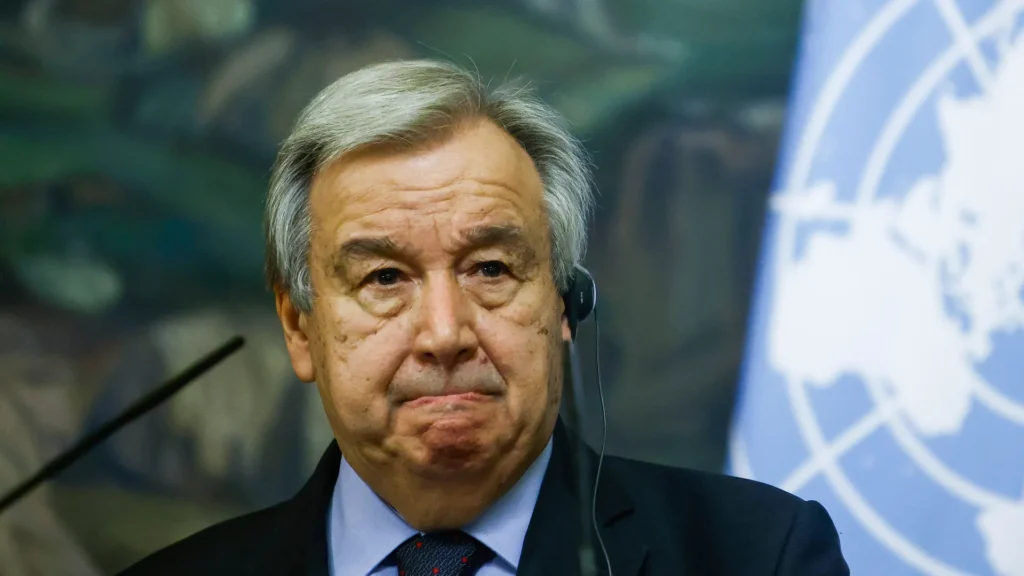
The UN Chief commended Egypt for helping create conditions for dialogue between the United States and Iran, underscoring the importance of regional and international mediation in preventing further conflict.
The warnings reflect growing concerns about the consequences of renewed military action, particularly for maritime trade and countries across the Middle East.
Diplomatic efforts face significant obstacles as the United States and Iran remain divided over the conditions for ending the conflict.
US President Donald Trump is reportedly considering further attacks to break the diplomatic deadlock, while Tehran has refused to agree to a peace arrangement unless several of its demands are met.
Washington and regional powers want international shipping through the Strait of Hormuz to resume without restrictions or attacks. The United States is also seeking to constrain Iran’s nuclear programme and secure international inspections of its highly enriched uranium.
Israel, meanwhile, has stated that it wants to overthrow Iran’s Islamic Republic.Tehran is demanding that Washington lift its naval blockade of Iran’s southern ports, which has halted crude oil exports and disrupted much of the country’s trade. Iran also wants a return to a memorandum of understanding agreed between the two countries in June.
The United States has rejected Iran’s proposed conditions, with Trump warning that he faces a choice to “finish the job” through major strikes on Iranian civilian infrastructure.
Such attacks could prompt Tehran to retaliate against neighbouring countries, as it did earlier in the war when it targeted US bases in Arab states and regional infrastructure.
The prospect of further military action has increased the urgency of the diplomatic discussions in Tehran, where Saudi Arabia, Pakistan and Türkiye are seeking to prevent the conflict from spreading.
While Pezeshkian’s call for Muslim unity signals Iran’s willingness to promote regional cooperation, the outcome of the talks will depend on whether diplomatic efforts can bridge the widening differences between Washington and Tehran.
READ ALSO: EU Welcomes Student List’s Win In Serbia’s Election