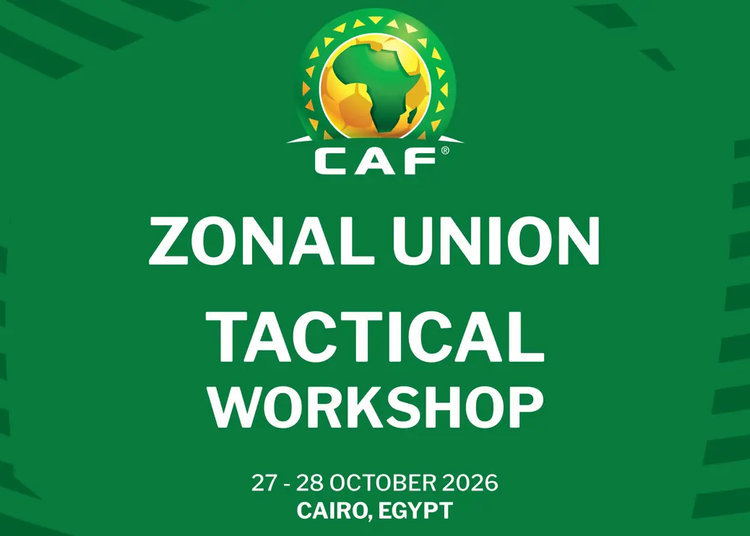
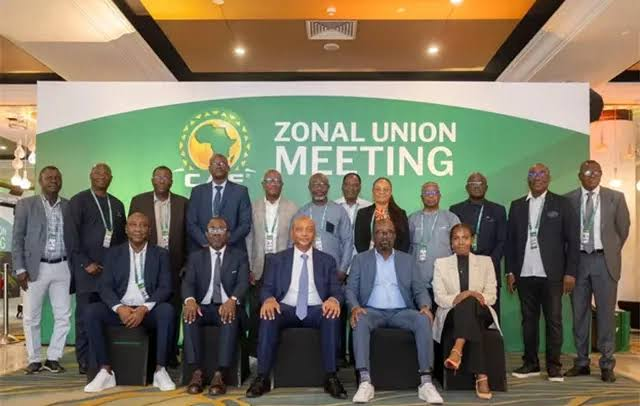
The Confederation of African Football (CAF) will convene the leadership and management teams of its six Zonal Unions in Cairo, Egypt, on October 27 and 28, 2026, for a strategic workshop focused on strengthening football governance, enhancing institutional effectiveness and advancing development across Africa.
The two-day Annual Zonal Union Tactical Workshop will focus on aligning regional football bodies with CAF’s strategic priorities, with particular attention to implementation, accountability and measurable development outcomes across the continent’s 54 Member Associations.
“The workshop is aligned with the vision of CAF President Dr Patrice Motsepe of Making Football in CAF’s 54 Member Associations world-class and self-supporting and continuing to uplift CAF competitions to be globally competitive,” CAF Director of Member Associations Sarah Mukuna said ahead of the gathering.
The six Zonal Unions are the Union of North African Football (UNAF), West African Football Union Zone A (WAFU A), West African Football Union Zone B (WAFU B), Central African Football Federations’ Union (UNIFFAC), Council for East and Central Africa Football Associations (CECAFA), and Council of Southern Africa Football Associations (COSAFA).
CAF Targets Stronger Regional Football Governance
The workshop forms part of Motsepe’s broader ambition to build a self-sustaining African football ecosystem capable of competing at the highest international level. By bringing together the six Zonal Unions, CAF intends to strengthen coordination between its continental administration and regional structures, which play an important role in implementing development programmes and supporting national football associations.
The Zonal Unions serve as an important link between CAF and its Member Associations, helping to coordinate regional activities, identify common challenges and support the delivery of football development initiatives.
Mukuna stressed the importance of strengthening these structures to achieve CAF’s long-term objectives.
“Strong and effective Zonal Unions are central to achieving this ambition. Through their proximity to Member Associations, the six Zones play an important role in coordinating regional delivery, identifying common development needs, supporting implementation, facilitating knowledge sharing and strengthening participation in CAF and zonal programmes and competitions.”
Sarah Mukuna, CAF Director of Member Associations
The discussions will therefore seek to clarify institutional responsibilities and improve cooperation among CAF, the Zonal Unions and the national associations. The emphasis will be on ensuring that strategic decisions translate into practical actions rather than remaining at the planning stage.
2027-2028 Implementation Plans in Focus
A major outcome expected from the workshop is the development of implementation plans for the 2027-2028 period. These plans will establish clear objectives, measurable targets and defined accountability mechanisms to guide the work of the Zonal Unions.
Participants will assess the current state of football development and administration within their respective regions, identify areas requiring additional attention and agree on priority actions to improve performance.
The exercise is intended to provide a more structured approach to delivering CAF’s strategic objectives, allowing progress to be assessed against specific targets while strengthening institutional responsibility.
The CAF IMPACT programme will also feature prominently during the discussions. Participants will examine how the Zonal Unions can help Member Associations achieve measurable development outcomes and determine where coordinated regional interventions could deliver greater benefits.
Through this process, CAF hopes to improve the implementation of its development initiatives by ensuring that regional bodies are better equipped to support national associations and respond to their specific needs.
The focus on implementation also reflects the need for stronger collaboration across the African football system, particularly in addressing shared administrative and developmental challenges.
Four Pillars to Guide Strategic Discussions
The workshop will be organised around four strategic pillars: Football Development; Programmes and Projects for Capacity Building; Administration; and Competition Management.
These areas will guide discussions on strengthening the institutional capacity of the Zonal Unions and improving their contribution to football development across their respective regions.
Football development will address the broader objective of improving the game, while capacity-building programmes and projects will focus on strengthening the skills and institutional capabilities required to deliver sustainable results.
Administration and competition management will also be central to the discussions, with the wider objective of improving organisational effectiveness and the delivery of football programmes and competitions.
Beyond reviewing their individual priorities, the six Zonal Unions will have an opportunity to exchange experiences, share good practices and explore joint solutions to challenges affecting football governance and development across Africa.
The gathering represents another step in CAF’s efforts to build stronger football institutions at every level, from the continental governing body through its regional structures to the 54 Member Associations.
CAF aims to improve coordination, reinforce accountability and deliver tangible results across African football through stronger strategic alignment, practical implementation plans and measurable targets.
READ ALSO: UG Calls for African Research Commercialization to Drive Innovation