The Ghana Gold Board (GoldBod) has engaged the University of Mines and Technology (UMaT) as part of stakeholder consultations on the proposed Artisanal and Small-Scale Mining (ASM) Formalisation and Financing Support Programme, scheduled for implementation in 2027.
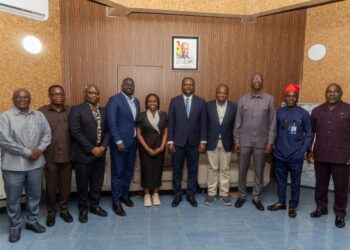
Led by GoldBod’s Deputy Chief Executive Officer, Richard Nunekpeku, Esq., the delegatory engagement brought together academic and technical leadership, with the UMaT delegation led by its Vice-Chancellor, Professor Bernard Kumi-Boateng. This consultative process marks a crucial step forward in aligning regulatory frameworks with technical expertise to reshape Ghana’s extractive landscape.
“The proposed Artisanal and Small-Scale Mining (ASM) Formalisation and Financing Support Programme represents a strategic shift toward sustainable resource management. By engaging technical institutions early, GoldBod aims to bridge the long-standing gap between formal regulation and practical field operations. This consultative drive remains essential to ensuring that structured financing and environmental compliance work hand in hand.”
GoldBod
Richard Nunekpeku explained that the programme represents a broader government intervention aimed at formalising ASM operations, improving access to structured financing, and promoting responsible mining.

He emphasised the critical importance of securing multi-sectoral stakeholder input before submitting the proposal for Cabinet and parliamentary consideration.
Demonstrating academic commitment to national development, Professor Bernard Kumi-Boateng pledged UMaT’s technical expertise to support the programme’s rollout.
To ensure a robust policy execution, further consultations will involve key regulatory and sector institutions, including the Minerals Commission, Ministry of Lands and Natural Resources, Minerals Income Investment Fund (MIIF), Environmental Protection Authority (EPA), Water Resources Commission, and other relevant stakeholders.
Imperative for Reform: The Need for ASM Formalisation
For decades, Ghana’s extractive narrative has been defined by a sharp dichotomy between large-scale commercial mining and the unregulated artisanal and small-scale sector.
While the ASM sector contributes significantly to local employment, total national gold output, and rural livelihoods, it has historically operated under severe structural constraints.
The lack of access to formal financial systems, inadequate technical training, and cumbersome licensing procedures have pushed thousands of operators into informal—and often illicit channels.

The consequences of an unformalised ASM sector extend far beyond unrecorded economic output. Illegal small-scale mining activities have led to extensive deforestation, dangerous mercury pollution, severe topsoil degradation, and the heavy siltation of major national river bodies.
Previous state interventions that relied heavily on security enforcement often suffered from short-lived success because they failed to address the root socioeconomic drivers: lack of capital and regulatory marginalisation.
By introducing a structured policy intervention slated for 2027, GoldBod is addressing the core underlying vulnerabilities of the sector. Formalisation creates a clear legal pathway for operators to register their concessions, adhere to environmental benchmarks, and access institutional credit through entities like MIIF.
When small-scale miners gain legal protection and financial access, they are far more likely to invest in cleaner, modern recovery technologies that replace toxic chemicals and preserve the environment.
Technical Synergies: Bridging Academia and Policy Implementation
The strategic decision to partner with UMaT highlights a modern, science-backed approach to extractive sector governance.
Technical expertise is crucial for mapping mineralized zones suitable for small-scale operations, establishing soil remediation frameworks, and training miners in efficient, eco-friendly mineral processing techniques.

Integrating academic leadership ensures that policy proposals sent to Cabinet and Parliament are grounded in practical engineering realities rather than administrative assumptions.
UMaT’s participation offers the precise technical validation required to design customized financial models that fit the cash-flow cycles of small-scale mining enterprises.
Furthermore, bringing institutional stakeholders like the EPA, Water Resources Commission, and Minerals Commission into a unified consultative framework ensures regulatory harmony.
Rather than operating in silos, these agencies can collaboratively streamline permit approvals while strictly enforcing safety and environmental regulations.
National Economic Resilience: Scaling Sustainable Value Creation
Beyond localized environmental remediation, formalising the ASM sector serves as a direct driver of national economic stability.
Capturing small-scale gold production within official supply chains allows the state to maximize revenue mobilization through direct royalties, corporate taxes, and central bank foreign exchange reserve accumulation.

Structured financing platforms remove predatory middle-tier aggregators who frequently exploit small-scale miners, ensuring that a larger share of mineral wealth remains within host communities.
This redistribution strengthens local supply chains, generates indirect employment in manufacturing and equipment servicing, and fosters sustainable rural economies.
As GoldBod advances its consultative roadmap toward 2027, the institutional collaboration between government, regulatory bodies, and academia provides a sustainable blueprint.
By converting informal mining into a regulated, well-financed, and environmentally sound industry, Ghana positions its extractive sector for long-term growth and environmental stewardship.
READ ALSO: Ato Forson Sets November 12 to Unveil Ghana’s 2027 Budget