The International Organization for Migration (IOM) has warned that misinformation about migration, increasingly amplified by artificial intelligence (AI), is deepening public mistrust, fuelling suspicion and exposing migrants to greater risks.
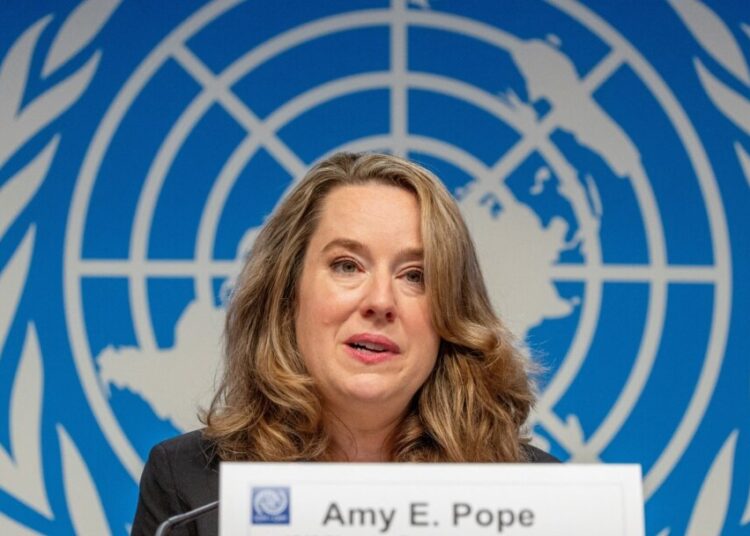
Speaking at the opening of the International Dialogue on Migration (IDM) in Geneva, IOM Director General Amy Pope stated that public confidence in migration governance is under growing strain worldwide.
“People’s concerns are real, and we have to take them seriously. We also have to be honest about where our systems are falling short. Facts and figures alone won’t win back public confidence. Institutions have to listen, and they have to act, even when what they hear is uncomfortable.”
Amy Pope
According to IOM, false and misleading narratives about migrants, amplified through social media and generative AI, are contributing to growing polarisation and mistrust within communities.
IOM also pointed to declining development funding and mounting pressure on international cooperation as factors complicating the response. Reduced resources undermine efforts to support vulnerable communities, strengthen migration governance and address the conditions that force people to leave their homes.
More than 304 million people currently live outside their country of birth, including approximately 168 million migrant workers. Their movements and contributions are closely connected to labour markets, household livelihoods and economic activity across countries and regions.
Nearly half of all international migrants are women and girls, many of whom face heightened risks of discrimination, abuse and exploitation.
Against this background, IOM cautioned that public discourse shaped by misinformation risks obscuring the complex realities of migration and the contributions migrants make to communities and economies.
IOM Sets Out Three Priorities for Migration Governance
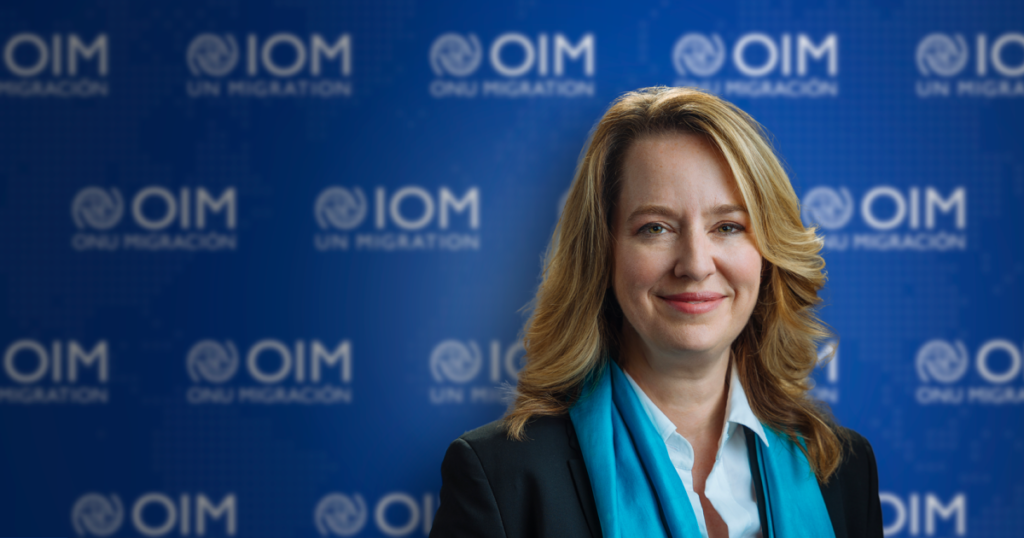
To rebuild confidence and strengthen cooperation, IOM Director General called for coordinated action in three key areas.
The first priority focuses on cooperation between countries sharing migration routes. Amy Pope urged governments to plan together to expand regular migration pathways, strengthen protection systems and improve humane border management.
Coordinated planning, according to IOM’s approach, can help governments manage migration more effectively while reducing the risks people face during their journeys.
The second priority concerns communities experiencing repeated floods, failing harvests and other climate-related pressures. Amy Pope called for early investment in these areas to help people remain in their communities where possible and move safely when circumstances make relocation necessary.
The proposal recognises that climate pressures can undermine livelihoods and make it increasingly difficult for communities to sustain their way of life.
The third priority centres on reliable data, public participation and responsible technology. According to the IOM Chief, the voices of affected people must be central to migration decisions, alongside evidence that accurately reflects conditions on the ground.
“Trust is earned one step at a time. Every agreement we honor, and every person we treat fairly, makes cooperation stronger.”
Amy Pope
Global Migration Commitments Face Key Reviews
The IOM warning comes at a significant moment for international migration policy, following renewed commitments by governments and other stakeholders to advance safe, orderly and regular migration.
In May, a record number of States and stakeholders gathered at the International Migration Review Forum, reaffirming their commitment to improving migration governance. The meeting provided an opportunity to assess progress and strengthen collective efforts towards more coordinated approaches to migration.
However, IOM’s latest concerns highlight the difficulties facing these commitments as public mistrust grows and international cooperation comes under pressure.
The agency’s warning suggests that progress will depend not only on agreements reached between governments but also on their ability to maintain public confidence and translate commitments into practical improvements.
The next major milestone will come in July 2027, when the United Nations is scheduled to review global progress towards the Sustainable Development Goal target on well-managed migration. The review will provide an opportunity to assess how countries are implementing commitments to facilitate safe, orderly and regular migration.
The SDG Summit, scheduled for September 2027, will follow, with discussions expected to begin on the framework that succeeds the 2030 Agenda.
The International Dialogue on Migration is expected to contribute to these wider discussions. The outcomes of the current dialogue will feed into the IOM Council in December, where a high-level panel is scheduled to examine the theme “Strengthening Political Trust for Migration Governance.”
The discussion is expected to provide a further opportunity to consider how governments and other stakeholders can rebuild confidence in migration systems.