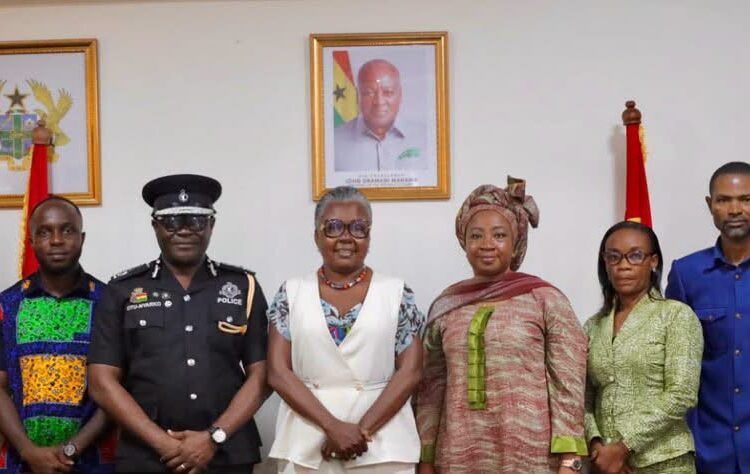
The Ministry of Fisheries and Aquaculture is exploring a partnership with the Cooperative Council to strengthen sustainable fisheries management, improve sector governance and expand economic opportunities for individuals and communities dependent on Ghana’s fisheries industry.
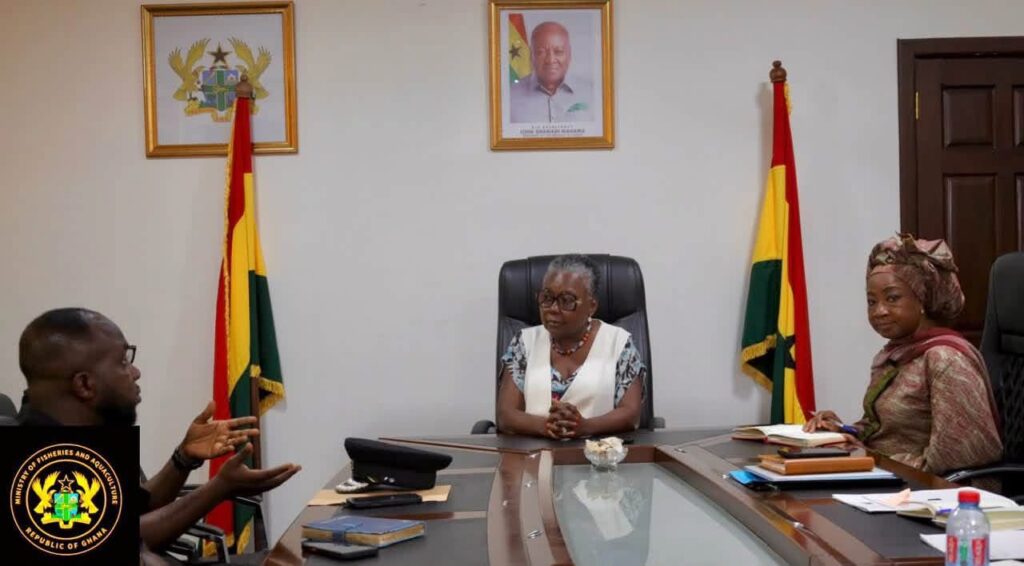
The proposed collaboration emerged during a courtesy visit by a delegation from the Cooperative Council, led by its Board Chairman, COP Dr. Samuel Otu-Nyarko, to the Ministry of Fisheries and Aquaculture.
The engagement focused on identifying areas of mutual interest and examining how cooperative structures could support the development of the fisheries sector, particularly through improved stakeholder participation, sustainable resource management and livelihood development.
The Minister said the discussions provided an opportunity to explore practical areas of collaboration between the two institutions.
Minister for Fisheries and Aquaculture, Hon. Emelia Arthur
“The Council expressed its interest in partnering with the Ministry on programmes and initiatives that will support the growth and development of the sector.”
Cooperative Model for Fisheries Development
The proposed partnership comes at a time when Ghana’s fisheries sector faces the dual responsibility of sustaining livelihoods and protecting aquatic resources while meeting the country’s growing demand for fish.
Cooperative organisations could provide an institutional framework for bringing fishermen, fish farmers, processors, traders and other value-chain participants together to pursue common economic and development objectives.
Through collective organisation, members can potentially improve their access to production inputs, financing, technical assistance, storage facilities and markets. Such arrangements can also strengthen their bargaining positions and reduce some of the operational difficulties associated with individual businesses.
For artisanal fishing communities, cooperative structures could support collective purchasing of fishing-related inputs, improve access to post-harvest infrastructure and facilitate training in responsible fishing practices.
In aquaculture, similar arrangements could help fish farmers pool resources, access quality fingerlings and feed, share technical knowledge and establish stronger market connections.
The importance of such interventions is reflected in the contribution of fisheries and aquaculture to Ghana’s economy. The National Fisheries and Aquaculture Policy identifies the sector as a significant source of employment, estimating that approximately 10 per cent of the population depends directly and indirectly on activities along the fisheries and aquaculture value chain.
Fish also accounts for approximately 60 per cent of the animal protein consumed by Ghanaians, making the sector an important component of national food and nutrition security.
Accordingly, strengthening the economic organisation of fisheries stakeholders could contribute to improved productivity, more efficient value-chain operations and better livelihood outcomes.
Production and Sustainability Challenges Across Fisheries Value Chain

The potential partnership also comes against the background of production and sustainability challenges that require coordinated interventions across the fisheries value chain.
According to the National Development Planning Commission’s 2024 Annual Progress Report, Ghana recorded approximately 442,361 metric tonnes of marine fish production in 2024, compared with 425,361 metric tonnes in 2023.
Aquaculture production also increased from approximately 116,108 metric tonnes in 2023 to 121,809 metric tonnes in 2024.
However, inland fisheries production declined from 147,583 metric tonnes in 2023 to approximately 131,552 metric tonnes in 2024, reflecting pressures affecting the country’s inland fishing resources.
The report also recorded fish imports of approximately 78,550 metric tonnes in 2024, highlighting the continued importance of domestic production in meeting national consumption requirements.
These figures demonstrate the need to strengthen production systems while ensuring that fishing activities do not undermine the long-term sustainability of aquatic resources.
The Ghana National Aquaculture Development Plan 2024–2028 similarly identifies aquaculture expansion as an important strategy for increasing domestic fish supply, creating employment and reducing pressure on capture fisheries.
It highlights constraints including the high cost of fish feed, limited access to quality fingerlings, fish diseases and inadequate financing as challenges affecting aquaculture development.
Cooperative arrangements could provide opportunities for addressing some of these constraints through shared investments, collective access to inputs and improved coordination among industry participants.
The Ministry’s engagement with the Cooperative Council therefore presents an opportunity to examine how collective enterprise models can complement existing fisheries development interventions.
“The Council expressed its interest in partnering with the Ministry on programmes and initiatives that will support the growth and development of the sector.”
Minister for Fisheries and Aquaculture, Hon. Emelia Arthur
Cooperative Day Celebration to Deepen Engagement
Ghana’s wider cooperative sector provides an existing institutional foundation for such collaboration.
According to figures from the Department of Cooperatives’ 2025 Statistical Report, the country had 29,612 registered cooperative societies, of which 23,701 were active, with more than 2.4 million members.
The sector also recorded a capital base of GH¢587.9 million, demonstrating the scale of organised collective economic activity that could potentially support productive sectors such as fisheries.
For the fisheries industry, stronger cooperative participation could provide opportunities to connect small-scale operators to financing institutions, improve business management practices and strengthen their participation in policy discussions affecting their livelihoods.
It could also support the development of community-based approaches to fisheries management, particularly where the sustainability of fish stocks depends on the cooperation of fishing communities and compliance with established regulations.
“I look forward to continued engagement with the Council and exploring practical ways to harness cooperative partnerships for fisheries development and improved livelihoods.”
Minister for Fisheries and Aquaculture, Hon. Emelia Arthur
The proposed collaboration could provide an additional platform for strengthening stakeholder coordination and ensuring that economic opportunities within the fisheries value chain are accessible to a broader section of the population.
READ ALSO:Minority: Government Must Explain Why Traffickers Keep Exploiting Ghana’s Ports