Ghana’s updated Renewable Energy Master Plan carries the promise of more than 353,000 jobs and over US$10.8 billion in investment between 2026 and 2030. But the scale of those projections may matter less than how effectively local businesses can access the opportunities behind them.
The Strategic Youth Network for Development (SYND Ghana) says young entrepreneurs risk being excluded from the implementation of the plan if financing arrangements, procurement rules and licensing requirements continue to favour larger, established companies.
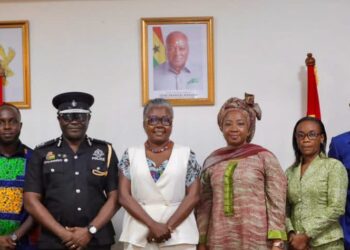
Speaking at a press conference on Monday, SYND Ghana Executive Coordinator Chibeze Ezekiel argued that young businesses must be treated as participants in the country’s renewable energy expansion, rather than as beneficiaries of employment initiatives on its margins.
He said the new plan would struggle to achieve its objectives without the involvement of young entrepreneurs who are prepared to contribute if the programme “opens its doors to them”.
The concern raises a critical question for Ghana’s energy transition: can the country expand renewable energy infrastructure while building a domestic industry capable of supplying, installing and maintaining it?
Previous Targets Expose Implementation Weaknesses
The new master plan sets out an ambitious programme covering 440 mini-grids, 1.1 million solar lanterns, 125,000 solar street and community lights, solar irrigation across 10,000 hectares, 100 solar crop dryers and 4.5 million improved cookstoves.
However, the performance of the previous 2019–2025 plan suggests that setting targets is not the same as delivering them.
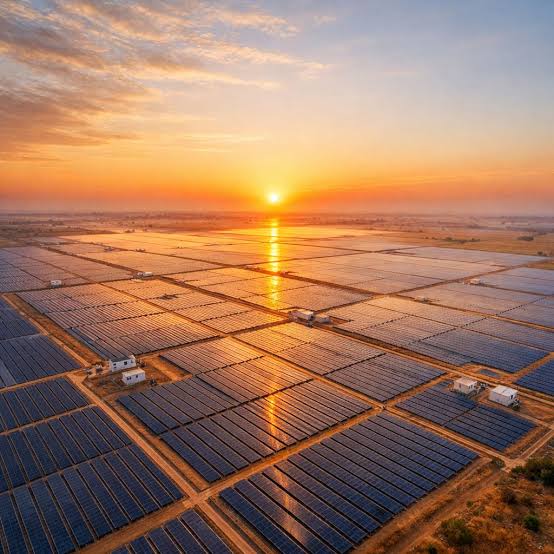
Utility-scale solar capacity reached 183.1 megawatt-peak against a target of 347.5 megawatt-peak, representing approximately 53% achievement.
No utility-scale wind capacity was delivered against a 275 megawatt-peak target, while only eight of the 200 planned mini-grids were constructed.
The institutional framework also fell short. The Renewable Energy Fund was established but never became operational, the Renewable Energy Authority was not established, and the Renewable Energy Master Plan Coordinating Unit was never created.
The failure to meet the requirement under Legislative Instrument 2354 for at least 60% of goods and services to be procured locally further illustrates the gap between policy ambition and domestic participation.
“The requirement under Legislative Instrument 2354 for at least 60% of goods and services to be procured locally was also not met,” SYND said in its statement.
These shortcomings are significant because they suggest that the next phase requires more than additional capital.
It needs institutions capable of coordinating implementation, enforcing local-content provisions and ensuring that businesses have a realistic route into the procurement chain.
Local Enterprise Offers A Different Delivery Model
SYND’s review also identified areas where performance was stronger, particularly where local supply chains and distributed business models played a role.
Distributed solar installations reached 86 megawatt-peak against a target of 100 megawatt-peak, while improved domestic cookstoves exceeded expectations, with more than 5.3 million delivered against 1.8 million planned.
The contrast is important. It suggests that decentralised technologies and local enterprise participation can support delivery, even where larger infrastructure targets remain unmet.
For the 2026–2030 plan, SYND is therefore advocating a stronger role for small and youth-led businesses in areas such as off-grid solar, productive uses of electricity, clean cooking and distributed renewable energy.
Its Young Green Entrepreneurs programme, which has operated since 2022, has supported more than 110 entrepreneurs across three cohorts.
The initiative now continues through the Young Green and Sustainability Entrepreneurs Consortium, connecting businesses with public institutions, financiers and development partners.
At a workshop organised by the network, 18 youth-led energy businesses developed proposals covering 16 of the plan’s 26 technology areas.
Three firms identified capacity to deliver 24 solar crop dryers, while three others proposed 11 community water-pumping systems. Two businesses outlined plans for 15 agricultural and industrial biogas plants, and two firms proposed four mini-grids.
Four companies also identified the capacity to provide more than 10 megawatt-peak of utility-scale, distributed and home solar photovoltaic systems.
These proposals are not evidence that the projects have been financed or secured. Their significance, however, is that they identify businesses already positioning themselves to contribute to the national programme.
Ezekiel stressed that the proposals remain business plans, but said they demonstrate that young entrepreneurs understand the master plan and can identify practical areas for participation.
Procurement Rules Could Determine Who Benefits
The most revealing part of SYND’s argument concerns the conditions businesses must satisfy before they can compete for public contracts.
The network cited Takoradi-based FF Electricals and Engineering, which converted a diesel-powered thresher by replacing its engine with a 20-horsepower electric motor supplied by a 34-kilowatt off-grid solar system. The company has reportedly served 200 customers across 20 districts.
Despite this experience, the company encountered substantial financial and administrative requirements when bidding to install a 250-kilowatt solar system.

It was expected to finance the initial phase of the project itself and wait at least 90 days after completion for payment. The tender also required insurance cover of at least US$1 million, Energy Commission certification and tax-clearance documentation.
For a smaller enterprise, these conditions can create a barrier even where the technical capacity to execute the work exists.
“These are not problems of skill or ambition. They are rules written for large companies and applied to small ones,” SYND
This is where the employment projections meet the realities of public procurement. A renewable energy programme can generate substantial economic activity without necessarily creating accessible opportunities for smaller Ghanaian companies.
If local firms cannot finance mobilisation, meet insurance thresholds or absorb lengthy payment delays, contracts may continue to concentrate among businesses with greater financial capacity.
The resulting investment could expand renewable energy infrastructure without producing the intended breadth of domestic enterprise development.
SYND is calling for procurement requirements proportionate to the size and risk of contracts, alongside mobilisation advances and payment within 30 days of completed project phases.
Financing And Institutional Support Remain Critical
The network’s recommendations extend beyond procurement reform. It wants the Renewable Energy Fund operationalised in the 2027 budget, with a dedicated financing window for youth-led and small businesses.
It is also proposing that large project targets be divided into smaller procurement lots, with at least 10% of relevant lots or subcontracts reserved for qualified local youth-led enterprises.
Other recommendations include a dedicated clean-cooking programme, one-stop renewable energy facilitation desks, reduced certification costs for smaller firms and a single published checklist outlining the requirements for participation.
SYND is also urging the government to publish employment and contract data disaggregated by age and sex, allowing progress on youth participation to be measured rather than assumed.
The clean-cooking sector presents a particularly important opportunity. Although the previous plan delivered more than 5.3 million improved cookstoves, none of the 18 businesses at SYND’s workshop presented proposals for the new plan’s 4.5 million-unit target.
The network believes this gap points to a need for better access to training, product testing, certification and finance. Without those conditions, a major component of the renewable energy programme could remain inaccessible to emerging businesses.
The potential employment impact is substantial. SYND cited the plan’s estimate that every US$1 million invested in renewable energy could generate approximately 33 jobs.
It argues that local procurement would help retain more economic value in Ghana through employment, tax contributions and domestic supply chains.
But those benefits will depend on the quality of implementation, not simply the amount of money committed.
SYND says it intends to present the businesses’ proposals to the Ministry of Energy and the Energy Commission, support members with registration and pre-qualification, connect them with buyers and financiers, and monitor jobs and installed capacity.
Ultimately, Ghana’s renewable energy ambitions will be judged not only by how much capacity is installed or how much investment is attracted, but also by whether domestic businesses can participate meaningfully in delivering them.
The projected 353,000 jobs will remain an economic promise unless the financing, procurement and institutional arrangements make it possible for local enterprises to compete.
READ ALSO: Speaker of Parliament Demands Punctuality As Parliament Reconvenes