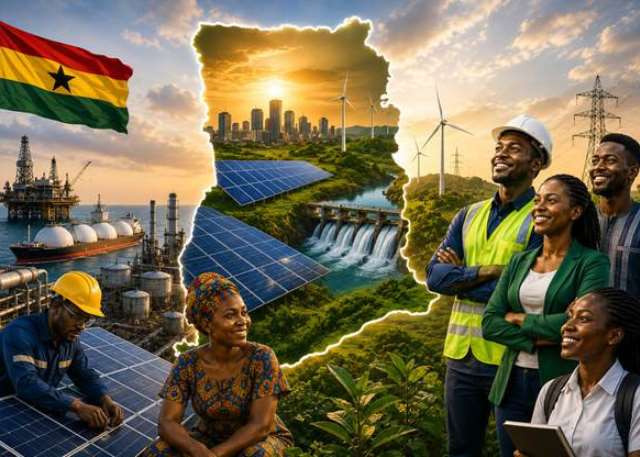
Ghana’s participation in the Bharat Renewable Energy Summit and Expo 2026 will present an opportunity to pursue clean-energy investment, but the more pressing challenge is converting international engagement into projects that can improve electricity reliability, reduce exposure to fuel-price volatility and strengthen the country’s domestic energy capabilities.
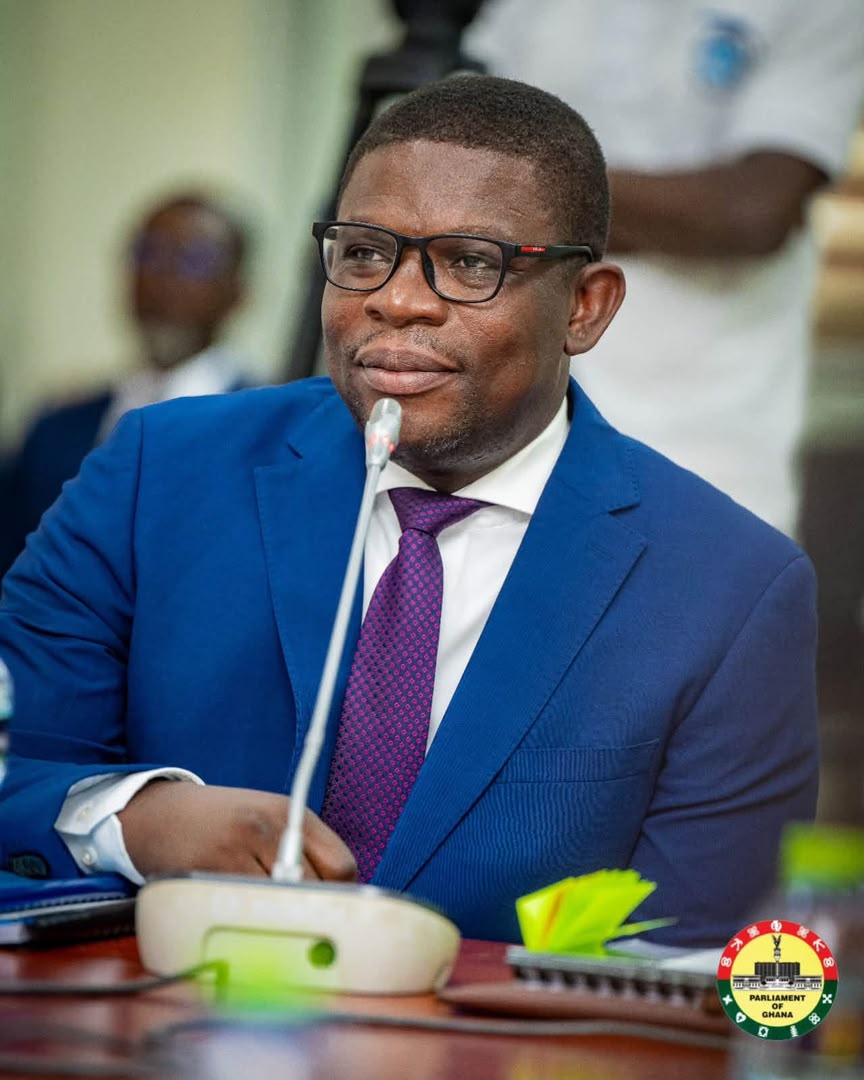
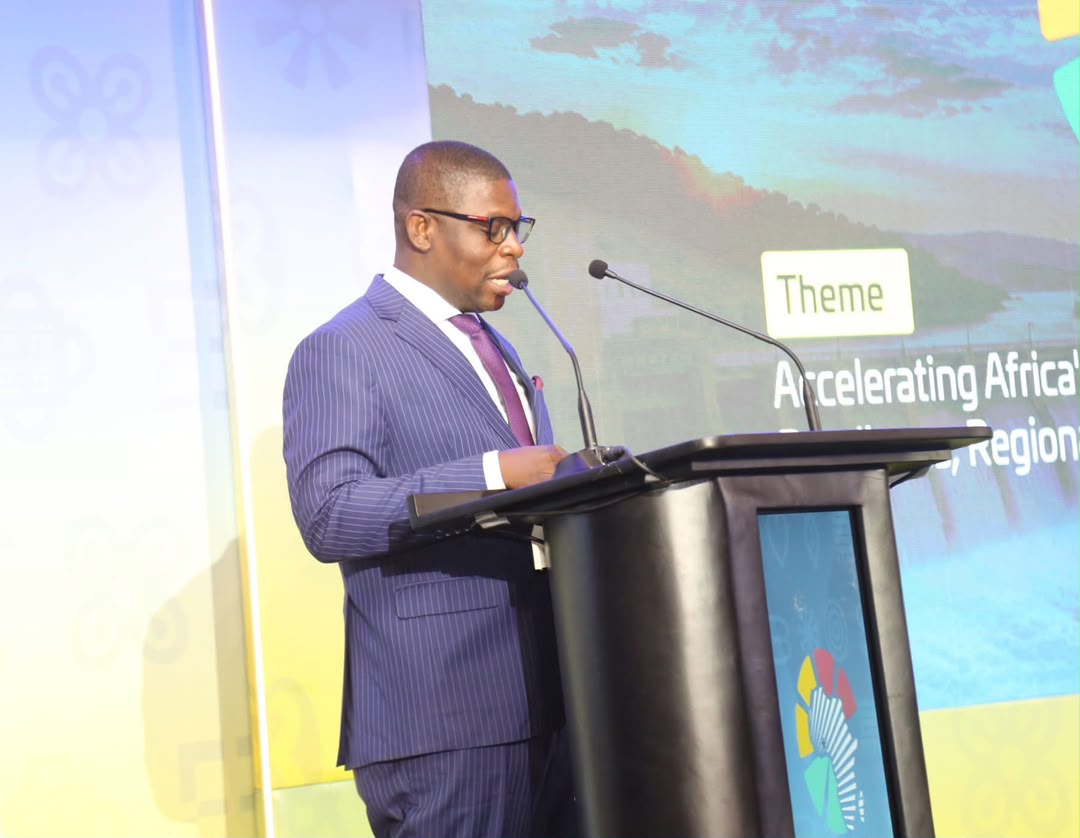
Deputy Minister for Energy and Green Transition Richard Gyan-Mensah is expected to attend the November 2–5 summit in New Delhi, India, where governments, investors and technology providers will discuss renewable energy financing, supply chains, green hydrogen and ways to accelerate clean-energy deployment.
The event, organised by India’s Ministry of New and Renewable Energy, will run alongside the ninth International Solar Alliance Assembly and the fourth International Conference on Green Hydrogen.
The combined programme offers Ghana access to discussions on technologies and financing models that could influence how developing economies expand their energy systems.
But Ghana’s principal challenge is not simply identifying renewable energy technologies or attracting interest from international partners.
It is establishing the policy certainty, financing structures, grid infrastructure and procurement arrangements needed to turn proposed investments into dependable electricity supply.
The significance of the visit should therefore be measured less by the number of meetings held and more by whether it helps advance projects, secure viable partnerships and address the practical barriers facing Ghana’s energy transition.
The Investment Gap Behind Ghana’s Energy Transition
Renewable energy investment requires more than political commitment. Projects must be financially viable, technically suitable for the electricity system and supported by infrastructure capable of delivering their output to consumers.
For Ghana, these conditions are particularly important as policymakers seek to expand cleaner generation while maintaining a reliable supply for households, businesses and industry.

Solar power offers the possibility of diversifying electricity generation and reducing dependence on conventional fuels during suitable periods.
However, the value of additional solar capacity depends on how effectively it is integrated into the grid, whether transmission and distribution infrastructure can accommodate the generation, and how the system manages fluctuations in output.
Storage can help address some of these challenges by shifting electricity availability across time, but it introduces additional capital costs and requires careful consideration of battery performance, replacement costs, safety and financing.
This makes the financing discussions expected at the New Delhi summit relevant to Ghana’s energy planning. International capital could help accelerate deployment, but financing must match the revenue structure and risk profile of each project.
A power project can attract considerable interest and still fail to reach financial close if investors cannot establish predictable revenue, manageable currency exposure or confidence in payment arrangements.
For Ghana, the priority should be to use international engagements to address these investment conditions rather than treating expressions of interest as evidence that new capacity is secured.
India Offers Lessons Beyond Installed Capacity
India’s renewable energy expansion provides a substantial reference point for countries seeking to increase clean electricity generation while meeting growing energy demand.
According to the summit report, India’s non-fossil fuel capacity exceeded 304 gigawatts in August 2026, including approximately 168 gigawatts of solar power. The country is targeting 500 gigawatts of non-fossil fuel capacity by 2030.
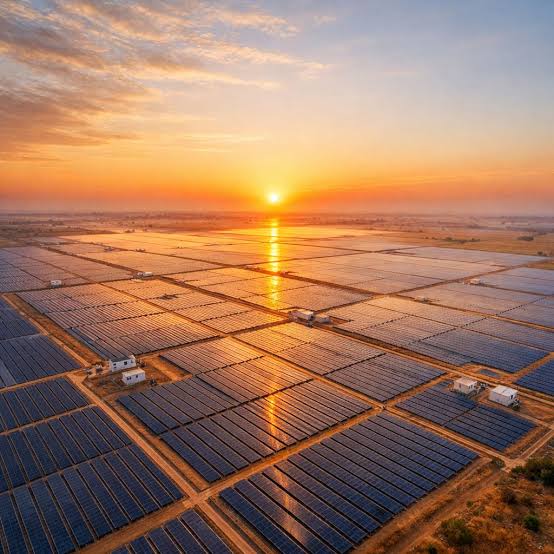
That ambition involves more than installing solar panels and wind turbines. It requires investment in transmission networks, energy storage, manufacturing, project development and the wider industrial ecosystem that supports renewable energy deployment.
The relevance for Ghana lies in understanding how these components can be developed together.
Importing renewable energy equipment can accelerate project implementation, but relying heavily on external suppliers can expose projects to shipping delays, foreign-exchange pressures and changing international prices.
Developing local technical expertise, maintenance services and selected manufacturing or assembly capabilities could help retain more economic value domestically.
However, local participation must be commercially realistic. Ghana would need to identify where domestic firms can compete effectively, where technology transfer is feasible and where regional partnerships may offer better economies of scale than attempting to manufacture every component locally.
The summit could provide a platform for examining these options with Indian companies and institutions that have experience across renewable energy deployment and associated infrastructure.
The objective should be to identify transferable solutions suited to Ghana’s market, rather than assume that India’s scale and policy model can be replicated without adaptation.
Solar Deployment Must Be Matched With Grid Readiness
One of the most important considerations for Ghana is whether new renewable generation can be integrated into the power system efficiently.
Increasing installed capacity does not automatically guarantee a corresponding increase in electricity available to consumers.
Transmission constraints, distribution weaknesses, system balancing requirements and inadequate storage can limit the contribution of additional generation.
For this reason, renewable energy planning should be coordinated with the needs of the wider electricity system.
Investments in solar generation may need to be accompanied by upgrades to transmission infrastructure, improvements in distribution networks, forecasting systems and appropriate storage solutions.
The financial implications of these complementary investments must be incorporated into project planning from the beginning.
There is also a question of where renewable capacity is most valuable. Utility-scale solar, commercial and industrial installations, and distributed systems can serve different needs.
Their relative value depends on demand patterns, grid access, land availability, project costs and the reliability requirements of the consumers they serve.
Ghana’s engagement with international technology providers should therefore focus on system-level outcomes rather than capacity additions alone.
A project that delivers electricity when and where it is needed, at a competitive cost, could provide greater economic value than a larger installation whose output is constrained by network limitations.
Green Hydrogen Presents An Opportunity, Not An Immediate Solution
The inclusion of the International Conference on Green Hydrogen adds another dimension to the summit.
Green hydrogen, produced using renewable electricity to split water, is attracting interest as a potential fuel and industrial input, particularly in sectors where direct electrification can be difficult.
Its applications may include fertiliser production, selected industrial processes, shipping fuels and the production of other hydrogen-derived products.
For Ghana, the prospect warrants investigation, especially where future industrial demand, renewable electricity resources and potential export markets could support a viable business case.
However, green hydrogen projects require substantial investment in renewable generation, electrolysers, water supply, storage, transportation and offtake infrastructure.
Their commercial prospects depend heavily on production costs, access to affordable electricity and the availability of buyers willing to commit to long-term purchases.
These requirements mean that hydrogen should not be treated as an immediate substitute for addressing Ghana’s existing electricity and fuel-supply challenges.
The more practical approach is to assess specific industrial applications and develop projects only where the economics, infrastructure and demand justify the investment.
Engagement at the summit could help Ghana understand emerging technologies and financing arrangements, but any domestic hydrogen strategy would need clear priorities and credible demand assessments.
From Diplomatic Engagement To Measurable Outcomes
The expected participation of more than 130 countries at the summit creates opportunities for Ghana to explore partnerships across financing, technology, renewable energy manufacturing and technical capacity development.
Yet international energy diplomacy produces lasting value only when engagement is followed by implementation.
Ghana would benefit from identifying a focused pipeline of projects and technical priorities before entering discussions with prospective partners.
These could include commercially viable solar projects, storage investments, grid modernisation, local workforce development and feasibility studies for carefully selected green hydrogen applications.
Each opportunity would then need to be assessed against clear criteria: the amount and cost of financing required, the expected contribution to reliable electricity supply, the allocation of risks, the impact on public finances and the extent of domestic economic participation.
Any resulting agreement should also be distinguished from a financing commitment or a project reaching financial close. A memorandum of understanding may establish a basis for cooperation, but it does not necessarily guarantee capital, construction or electricity delivery.
That distinction matters for a country seeking to expand its energy options while managing competing demands on public resources.
Ghana’s presence in New Delhi is therefore best viewed as an opportunity to strengthen the investment and technical foundations of its energy transition.
The ultimate test will be whether the engagement helps move viable projects from discussion to implementation, while ensuring that new capacity contributes to affordability, reliability and long-term energy security.
READ ALSO: IMF Probes Ghana’s Fiscal Progress as Debt Management Talks Intensify