Ghana’s economic recovery is facing another important test as the International Monetary Fund (IMF) deepens its assessment of the country’s fiscal performance, public debt management and preparations for the 2027 Budget.
The Fund’s first review of Ghana’s Policy Coordination Instrument (PCI) has entered its second week, with the mission expected to broaden engagements with state-owned enterprises and private-sector stakeholders as it examines the country’s economic progress and policy commitments.
The review comes at a stage in Ghana’s economic recovery, as authorities seek to sustain macroeconomic stability, strengthen public finances and maintain confidence in the government’s economic management.
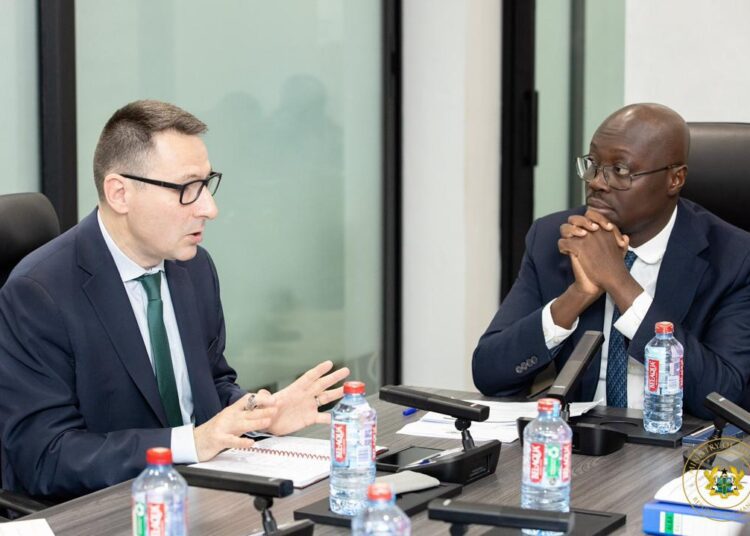
Led by the IMF’s Chief of Mission to Ghana, Dr. Ruben Atoyan, the team has already held discussions with fiscal and monetary authorities to assess the country’s economic performance and progress under the programme.
The second week of engagements is expected to bring greater attention to the government’s fiscal position, the management of public debt and the policy decisions that will shape the 2027 Budget.
These discussions could prove significant for Ghana as policymakers attempt to consolidate recent economic gains while addressing persistent fiscal vulnerabilities.
IMF Turns Up the Heat on Ghana’s Fiscal Performance
The IMF’s expanding engagements signal the importance of examining Ghana’s economic recovery beyond headline indicators such as inflation and currency stability.
While improvements in key macroeconomic indicators can provide some relief to households, businesses and investors, the sustainability of the recovery also depends on the government’s ability to manage expenditure, mobilise revenue and maintain fiscal discipline.
The current PCI review offers the Fund an opportunity to assess whether Ghana’s economic policies remain consistent with the commitments made under the programme.
Fiscal performance is expected to feature prominently in the discussions, particularly as the government prepares its 2027 Budget.
The budget will be an important test of the authorities’ ability to balance spending priorities with revenue constraints, debt obligations and the need to support economic activity.
Decisions on taxation, public expenditure and the allocation of resources could influence the pace of fiscal consolidation and the government’s capacity to protect essential public services.
The IMF’s assessment is therefore expected to examine not only the progress achieved so far but also the policy measures needed to preserve stability in the coming months.
State-Owned Enterprises Under the Spotlight
Beyond discussions with government authorities, the IMF mission has also engaged selected state-owned enterprises, including the Tema Oil Refinery (TOR).
The engagement reflects the importance of examining the financial health of public institutions and understanding how their operations could affect the wider economy.
State-owned enterprises can play a significant role in supporting economic development, providing essential services and generating revenue. However, financial difficulties within these institutions can create additional pressures on public finances when government support becomes necessary.
The financial position of such enterprises is particularly relevant to discussions about fiscal risks, as losses, unpaid obligations and operational inefficiencies can potentially expose the government to unexpected liabilities.
By engaging selected public institutions, the IMF can obtain a broader understanding of the financial pressures facing parts of the public sector.
The inclusion of TOR in the discussions also draws attention to the relationship between state-owned enterprises and Ghana’s wider economic management.
The refinery’s financial position and operational challenges form part of the broader questions surrounding the sustainability of public institutions and their contribution to national economic objectives.
However, the engagement does not, by itself, establish that the IMF has identified new financial problems at TOR. The outcome of the discussions and any specific findings have not yet been disclosed.
Ghana’s Public Debt Management Faces Renewed Attention
Public debt management is another major issue expected to feature during the second week of the review.
Ghana’s experience with fiscal pressures and debt restructuring has demonstrated how quickly weaknesses in public finances can affect economic confidence, borrowing conditions and the government’s ability to meet its obligations.
Consequently, maintaining a sustainable debt position remains central to efforts to protect the recovery and reduce the risk of renewed financial instability.
The IMF’s assessment is expected to consider the government’s progress in managing its debt obligations and maintaining policies consistent with its economic commitments.
Debt management extends beyond controlling the amount the government borrows. It also involves managing repayment schedules, limiting exposure to financial risks and ensuring that new borrowing supports priorities that the economy can sustain.
The government must also balance its financing requirements against the need to fund infrastructure, public services and development programmes.
These competing demands make fiscal discipline particularly important as preparations for the 2027 Budget advance.
The review could therefore provide an important assessment of the policy choices available to Ghana as it seeks to preserve economic gains without creating fresh pressures on public finances.
The 2027 Budget Becomes a Critical Test
The upcoming 2027 Budget is expected to provide an important indication of how the government intends to maintain fiscal discipline while pursuing its broader economic objectives.
Revenue mobilisation, expenditure management and the financing of public programmes will remain essential considerations in determining whether the country can sustain its recovery.
A budget that relies on realistic revenue projections and credible expenditure controls could support confidence in Ghana’s economic management. Conversely, weaknesses in implementation could complicate efforts to maintain fiscal stability.
The IMF’s discussions with the authorities are expected to help assess the consistency of the government’s plans with its policy commitments under the PCI.
The review also comes at a time when businesses and investors are watching developments in Ghana’s public finances for signs of sustained stability.
Greater predictability in fiscal policy can support business planning, improve confidence and help create conditions for private-sector investment. However, these benefits depend on the government’s ability to translate policy commitments into measurable results.
PCI Review Carries Implications Beyond Financing
Unlike a conventional IMF lending arrangement, Ghana’s Policy Coordination Instrument provides a framework for coordinating economic policies without direct financing from the Fund.
Its importance lies in the assessment of policy implementation, the identification of economic vulnerabilities and the promotion of credible measures to support stability.
The outcome of the first review will therefore matter for how the IMF evaluates Ghana’s progress and the measures required to sustain the recovery.
Although the mission has entered its second week, no final assessment or specific outcome has been announced in the information available.
The coming discussions will be important in determining how the Fund views Ghana’s fiscal performance, debt management strategy and preparations for the next budget cycle.
Ultimately, Ghana’s challenge will be to demonstrate that improvements in economic conditions can be sustained through sound fiscal management, stronger public institutions and consistent policy implementation.
As the IMF broadens its engagements, attention will remain firmly on whether the government can protect the progress achieved so far while addressing the financial risks that could undermine the recovery.
READ ALSO: Government Rejects GH¢874m in Treasury Bill Bids Despite Strong Demand