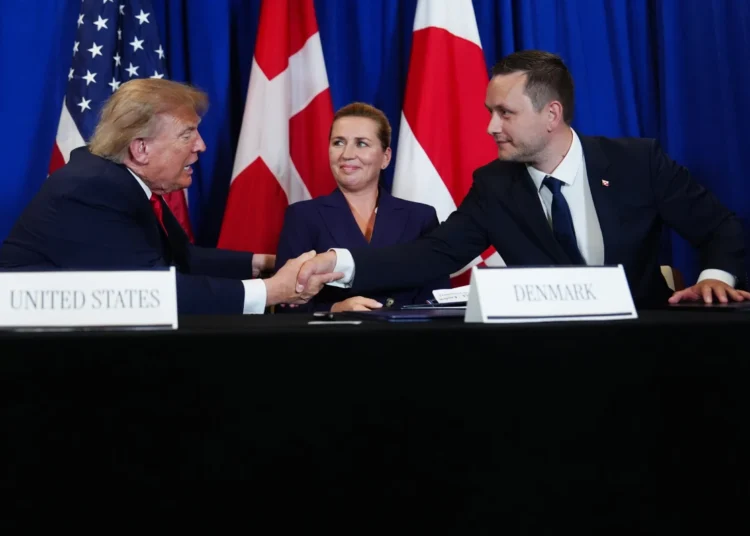
Greenlandic lawmakers have voted to approve a trilateral security agreement with Denmark and the United States, paving the way for an expanded American military presence on the Arctic island.
This comes after months of diplomatic tensions over President Donald Trump’s ambitions for the territory. The approval follows months of pressure from Trump, who has repeatedly expressed interest in bringing Greenland under US control, citing its strategic importance and the need to strengthen American security interests in the Arctic. Trump’s ambitions alarmed governments in Europe, triggering intense diplomatic efforts to calm the situation.

The agreement is intended to strengthen security cooperation in the Arctic and North Atlantic while maintaining Greenland’s status as a self-governing territory within the Kingdom of Denmark.
The vote, held in Greenland’s capital, Nuuk, saw 16 lawmakers support the agreement, with none voting against it and seven abstaining.
The deal provides a framework for an increased US military presence, including the possibility of establishing additional American bases in Greenland. However, it does not transfer sovereignty over the island to Washington.
Its provisions would also remain applicable if Greenland eventually chooses independence from Denmark, establishing a basis for continued security cooperation with the United States.
The agreement was signed in September by Trump, Danish Prime Minister Mette Frederiksen and Greenlandic Prime Minister Jens-Frederik Nielsen on the sidelines of the United Nations General Assembly in New York.
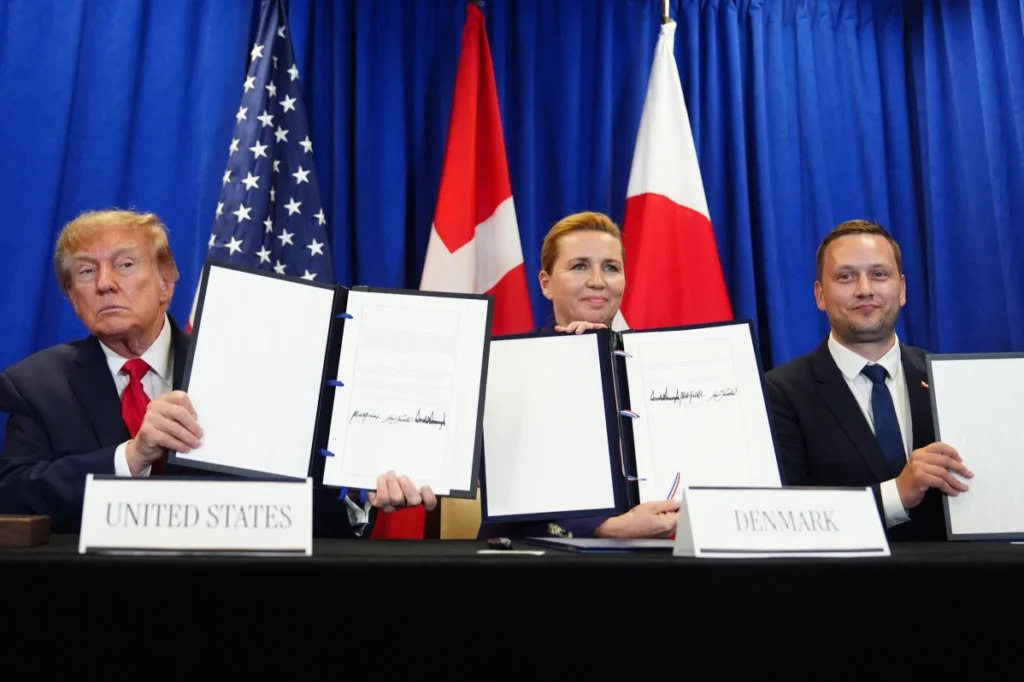
Trump has argued that a stronger US presence in Greenland would contribute to the defence of North America and Europe while strengthening NATO’s ability to respond to security challenges in the region. The agreement also came as Arctic security has gained greater attention amid competition over the region’s strategic position and growing interest in its resources and shipping routes.
Parliamentary Approval Deemed Important Step
Greenland’s Foreign Minister, Mute Egede, described the parliamentary approval as an important step, arguing that the changing security environment required the island to reconsider its approach to regional stability. “We must accept that peace and stability are no longer something we can take for granted,” Egede told lawmakers in Nuuk shortly before the vote.
His remarks reflected growing attention to the Arctic’s strategic significance, particularly as countries seek to strengthen their military and security presence in the region.
For the United States, Greenland occupies an important geographical position between North America and Europe, making it relevant to military operations and security arrangements in the Arctic and North Atlantic.
The trilateral agreement seeks to strengthen that cooperation without changing the island’s constitutional relationship with Denmark.
Independence Party Questions Economic Benefits
Despite the broad support for the agreement among lawmakers, opposition party Naleraq raised concerns about the economic benefits Greenland would receive from the arrangement.
Naleraq is the most prominent political voice advocating Greenlandic independence. Its chair, Pele Broberg, questioned whether the agreement offered sufficient advantages to the island, particularly if it eventually becomes an independent state.
“We are looking for a better agreement that we can benefit from when we become an independent state. But no economic benefit has been gained from the agreement.”
Pele Broberg
His criticism reflects the wider debate over Greenland’s future, including how the island can protect its strategic interests while pursuing greater political and economic autonomy.
Although the agreement provides for continued security cooperation with Washington, questions remain over the economic benefits and obligations attached to an expanded American military presence.
Danish Parliament Must Complete Ratification
Greenland’s approval is one stage in the process required for the agreement to take effect. Danish lawmakers are expected to debate the legislation later this month.
The Danish parliament is scheduled to hold its first reading on November 11, followed by a second reading and a vote on November 19.
The executive agreement will enter into force once the necessary parliamentary procedures in Denmark and Greenland have been completed. It does not require approval by the US Senate.
The agreement states that it will “enter into force” once the “necessary parliamentary processes of the Kingdom of Denmark, in conjunction with Greenland, have been completed.”
The Danish parliamentary process will therefore determine whether the agreement receives the remaining approval required for implementation.
The deal represents an effort to reconcile the United States’ interest in strengthening its Arctic military presence with Greenland’s self-government and Denmark’s sovereignty.
While its approval marks progress towards closer security cooperation, the debate over Greenland’s independence, economic interests and relationship with Washington is likely to remain significant as the agreement moves through its final ratification process.
READ ALSO: Bulgaria Votes As Russia-Ukraine War Dominates Presidential Race