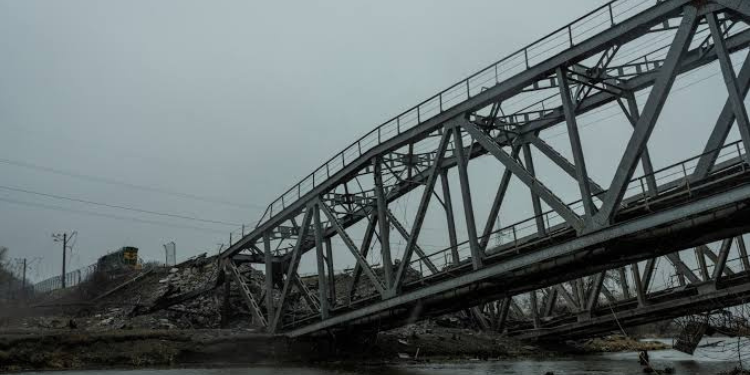
Human Rights Watch has warned that escalating Russian drone attacks on passenger trains and railway infrastructure in Ukraine are increasingly endangering civilians, including railway workers, while threatening a transportation network millions of people depend on for safety, evacuation and access to essential services.
Since Russia launched its full-scale invasion of Ukraine, the country’s state railway company, Ukrzaliznytsia, has evacuated more than four million people from areas under attack while maintaining essential transportation links across the country.
According to Human Rights Watch Associate Crisis, Conflict and Arms Director, Belkis Wille, “for millions of Ukraine’s civilians, trains are a lifeline, enabling them to escape danger, reunite with family members, and access essential services including medical care.”
“The increasing Russian drone attacks on passenger trains put civilian lives at risk, threatening a transportation system many depend on for safety and survival.”
Belkis Wille
Railway Attacks Intensify as Infrastructure Damage Mounts
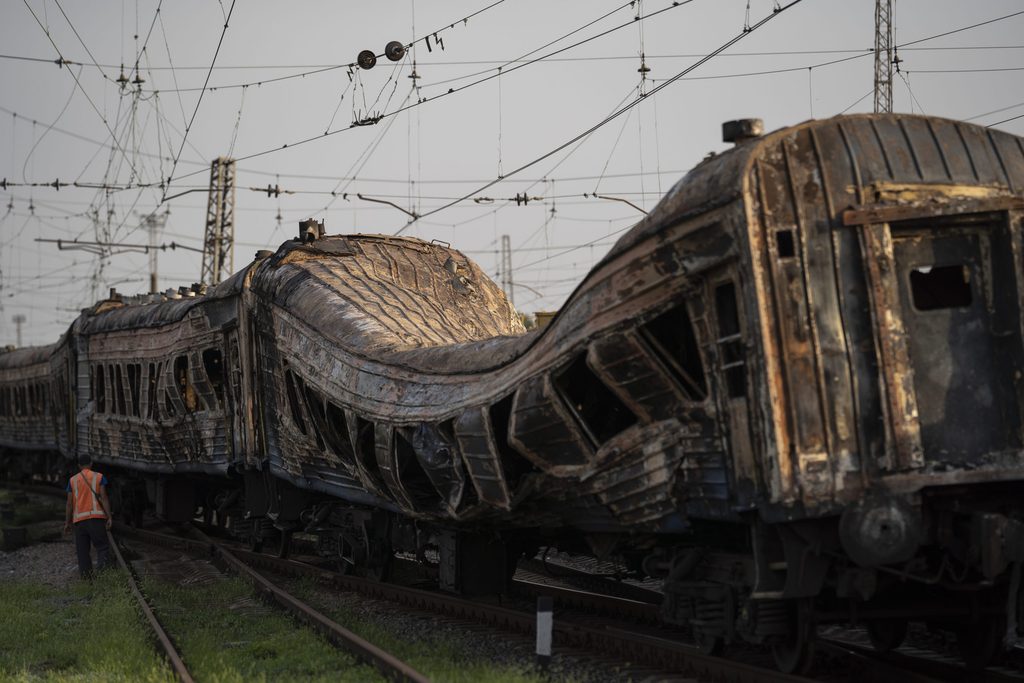
The growing attacks have placed additional pressure on Ukraine’s ability to maintain railway operations, with extensive damage to locomotives, railway facilities and other essential infrastructure complicating efforts to sustain passenger services.
Oleksandr Shevchenko, Deputy Head of Passenger Services at Ukrzaliznytsia, disclosed that Russian forces had damaged or destroyed more than 500 locomotives since the beginning of the full-scale invasion in 2022, including over 300 in 2026 alone.
He explained that limited domestic manufacturing capacity has made replacing damaged railway equipment increasingly difficult, despite the continued need to operate passenger transportation, medical evacuation and diplomatic train services.
The United Nations Office of the High Commissioner for Human Rights (OHCHR) has also documented a significant increase in attacks on Ukraine’s railway infrastructure.
Between June and November 2025, the organisation verified 78 Russian attacks on railway infrastructure. The figure rose to 142 between December 2025 and May 2026, an 82 percent increase over the preceding six months.
From June to September 2026, OHCHR verified another 130 Russian attacks targeting railway infrastructure, including railway tracks, stations, locomotives, energy infrastructure and passenger trains.
Ukrzaliznytsia also recorded more than 1,600 Russian attacks on its rolling stock and infrastructure during the first eight months of 2026.
More recently, a Russian jet-powered drone reportedly struck the main railway station in the eastern city of Dnipro on October 29, hitting a crowded platform and killing at least 13 people.
Human Rights Watch also acknowledged attacks by Ukrainian forces on railway infrastructure in Russian-occupied territories and examined one Ukrainian attack on a train in Crimea. OHCHR verified two such attacks between December 2025 and May 2026, followed by another 11 between June and September 2026 in the occupied regions of Donetsk, Luhansk and Crimea.
The organisation, however, emphasised that parties to the conflict must distinguish between civilian objects and military objectives under international humanitarian law.
Human Rights Watch Calls for Protection of Civilian Railways

Human Rights Watch has urged parties to the conflict to end deliberate and disproportionate attacks on civilian trains and railway facilities, while calling for investigations into strikes that may have unlawfully targeted civilian infrastructure.
Under international humanitarian law, particularly Article 52 of Additional Protocol I to the Geneva Conventions, civilian infrastructure can only qualify as a legitimate military target if it makes an effective contribution to military action and its destruction offers a definite military advantage under the circumstances at the time.
The organisation stressed that railway infrastructure is presumed to be civilian property, even when it may serve both civilian and military purposes. Attacks that cause excessive civilian harm or deliberately seek to disable the wider railway transportation system are prohibited.
Human Rights Watch further called on Ukraine’s international partners to continue supporting measures aimed at protecting civilians and critical transportation networks from attacks.
“Russian forces’ intensifying attacks on railways are placing civilians in peril. Railway workers are risking their lives to evacuate civilians multiple times in a single journey, with warnings only minutes before a strike.”
Belkis Wille
Human Rights Watch maintained that protecting civilian transportation infrastructure remains essential to ensuring that millions of Ukrainians can continue accessing evacuation routes, medical services and other critical assistance amid the ongoing war.
READ ALSO: Gold Must Enrich our People Without Impoverishing Our Land – Arma-Buah