The Ghana National Petroleum Corporation (GNPC) is seeking to strengthen its position in the country’s upstream petroleum industry, with a long-term ambition to evolve from an emerging operator into a globally competitive institution capable of managing complex petroleum assets.
The state-owned corporation’s strategic direction places greater operational responsibility, commercial competitiveness and increased Ghanaian participation at the centre of its next phase of development.
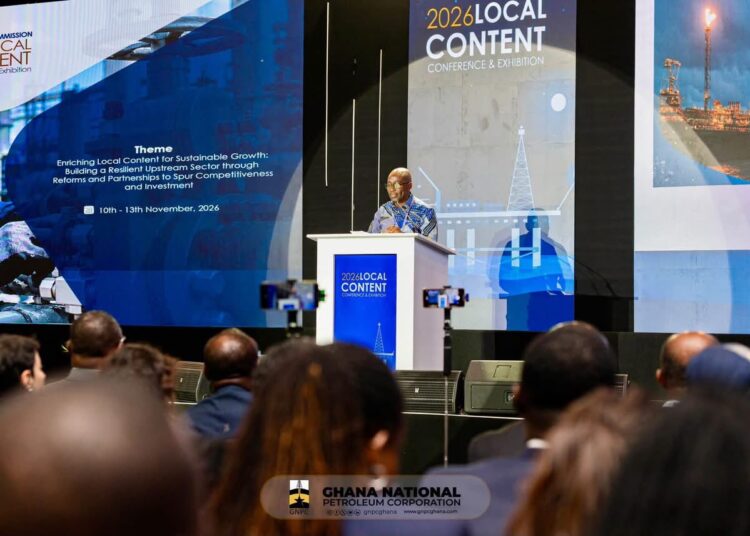
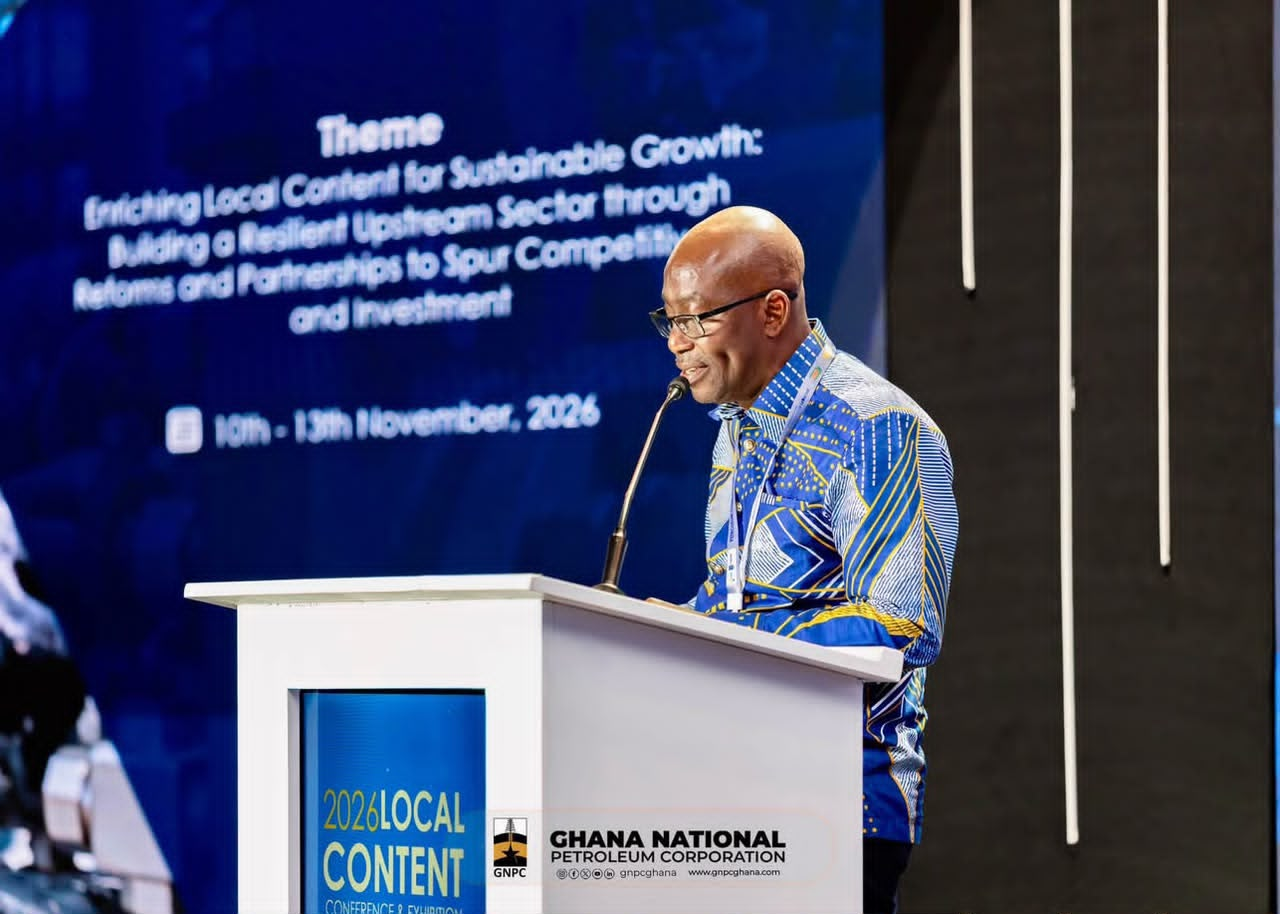
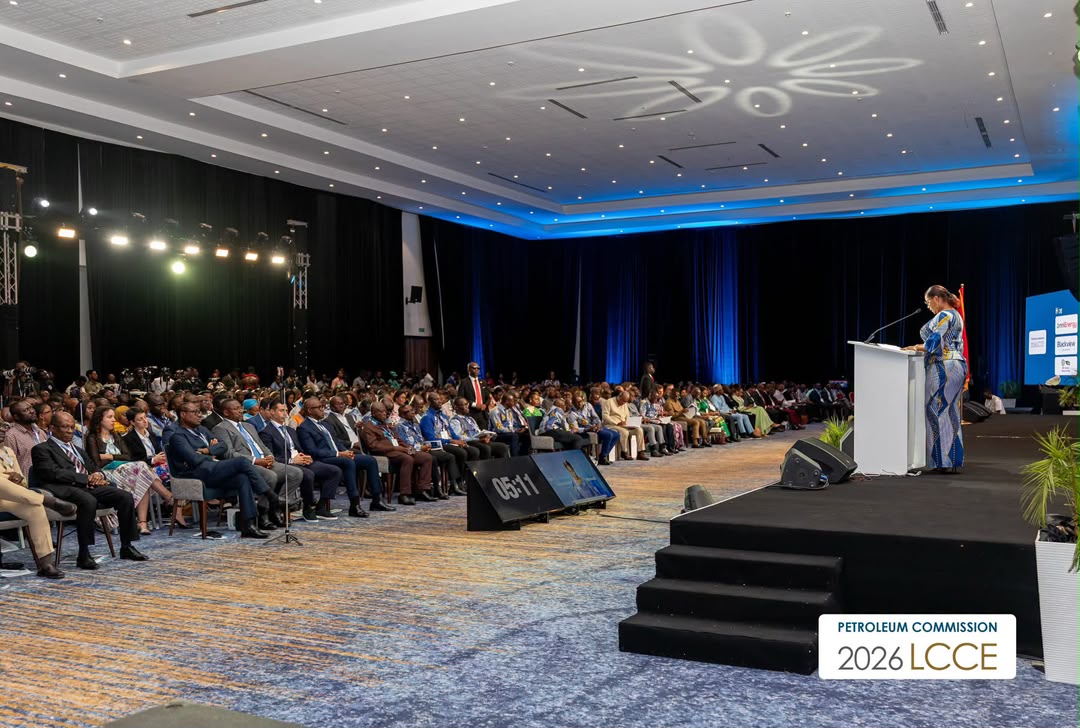
Speaking at the 2026 Local Content Conference and Exhibition (LCCE2026) in Takoradi, GNPC Chief Executive Kwame Ntow Amoah outlined the corporation’s ambition to assume greater responsibility across the petroleum exploration and production value chain.
The announcement signals an institutional shift in how GNPC intends to participate in Ghana’s petroleum industry. Rather than remaining primarily associated with its national oil company role, the corporation wants to build the technical and commercial capabilities required to operate more directly and manage increasingly complex petroleum interests.
Amoah described the ambition as a long-term transformation that would require the corporation to become technically proficient, commercially competitive and capable of delivering sustainable value from petroleum assets.
“Our long-term ambition remains to transform GNPC from an emerging operator to a world class operator – technically proficient, commercially competitive and able to manage complex petroleum assets to deliver sustainable value for Ghana.”
The statement places institutional capacity at the centre of GNPC’s future petroleum strategy. Its significance lies not simply in the corporation’s desire to expand its role, but in the capabilities it believes it must develop to take on greater responsibility.
From Participation To Operational Responsibility
GNPC’s ambition to assume greater responsibility across the exploration and production value chain raises an important question about the future role of Ghana’s national oil company.
Participation in petroleum operations can take different forms, including financial interests, partnerships, technical services and direct operational responsibilities. Becoming a world-class operator, however, requires a broader institutional capability.
An operator must be able to coordinate complex petroleum activities, manage technical risks and make commercial decisions that influence the performance of an asset.
This requires specialised expertise, effective management systems and the ability to work across different stages of petroleum development.
Amoah’s remarks suggest that GNPC wants to strengthen these capabilities as it seeks to move beyond its current position as an emerging operator.
The ambition is significant for Ghana because the country’s petroleum industry has historically relied heavily on international companies for major offshore operations and the technical expertise associated with complex projects.
Building a stronger national operator could provide Ghana with greater institutional capacity to participate in the management of its petroleum resources.
However, the transition will require more than an announcement of strategic intent. GNPC will need to demonstrate that it can develop and retain the technical personnel, commercial expertise and operational systems necessary to manage increasingly demanding petroleum assets.
The corporation’s ability to achieve that objective will ultimately determine whether its ambition translates into a more substantial role in the industry.
Explorco’s Expanding Role
A key component of the strategy is the growing operational role of GNPC Explorco, which Amoah highlighted during his address.
The development places the subsidiary within GNPC’s broader ambition to strengthen its operational presence in petroleum exploration and production.
An expanded operational role for Explorco could provide a platform for developing practical experience and building the technical capabilities required for more direct involvement in upstream activities.
For a national oil company seeking to become a more capable operator, operational experience is particularly important.
Technical competence cannot be developed solely through policy direction or institutional restructuring; it also requires involvement in the activities through which petroleum resources are explored, developed and managed.
The growing role of Explorco therefore forms part of the corporation’s wider effort to strengthen its position in the upstream value chain.
Nevertheless, the information announced at the conference did not specify the additional assets, projects or operational responsibilities that Explorco is expected to assume.
It also did not provide a timeline for the subsidiary’s expansion or identify the technical and financial resources that will support the process.
Those details will be important in assessing the scale of the proposed transformation.
New Commercial Structures Could Expand Ghanaian Ownership
Beyond operational capacity, GNPC is also considering new commercial structures intended to create opportunities for greater Ghanaian participation and ownership in the petroleum industry.
This is an important part of the corporation’s strategy because local participation has often been discussed in terms of employment, procurement and the provision of services to international petroleum operators.
Greater ownership introduces another dimension to the local content debate.
It raises the possibility of Ghanaian interests participating more substantially in the commercial arrangements through which petroleum assets and opportunities are developed.
Amoah’s remarks indicate that GNPC intends to establish structures that could widen the opportunities available to Ghanaian participants.
The potential significance is that local businesses and other domestic interests could have opportunities to participate beyond conventional supplier relationships.
However, the announcement did not explain what form these commercial structures would take, who would qualify to participate, how ownership interests would be allocated or what financial arrangements would support them.
Without those details, the extent of the opportunities remains unclear.
The distinction matters because increased local ownership must be supported by commercially sustainable arrangements.
Domestic participation should create genuine opportunities for Ghanaian businesses while ensuring that the financial and operational responsibilities associated with petroleum assets can be properly managed.
The effectiveness of the proposed structures will therefore depend on how they are designed and implemented.
Building A National Oil Company With Commercial Strength
GNPC’s ambition also brings attention to the relationship between national ownership and commercial performance.
A stronger national oil company could help Ghana develop greater control over its petroleum interests and build expertise that remains within the country.
But becoming a world-class operator requires the corporation to demonstrate that it can manage assets efficiently and make commercially sound decisions.
The emphasis Amoah placed on commercial competitiveness is therefore important. It suggests that GNPC’s transformation is not intended to be measured only by the expansion of its operational responsibilities, but also by its ability to create sustainable value.
For a state-owned petroleum institution, that balance is particularly important. Greater participation in the upstream industry can create opportunities, but it also exposes the corporation to technical, financial and operational risks.
The corporation will need to ensure that any expansion in responsibility is matched by the necessary institutional capacity.
This includes developing the expertise required to manage complex petroleum operations while maintaining the commercial discipline needed to protect the value of Ghana’s petroleum interests.
The Challenge Is Turning Ambition Into Capability
GNPC’s proposed transformation comes at a time when Ghana is seeking to strengthen its upstream petroleum industry and increase domestic participation in the sector.
The corporation’s strategic ambition could contribute to that objective by creating a stronger national institution capable of undertaking more demanding responsibilities.
But the transition from an emerging operator to a world-class operator will not happen through strategic declarations alone.
It will require demonstrable progress in technical capability, commercial performance, operational experience and the development of effective partnerships.
Similarly, the proposed commercial structures will need to move from broad intentions to clearly defined arrangements that explain how Ghanaian businesses and investors can participate.
The absence of specific timelines, investment requirements and implementation details means that the full scale of the strategy cannot yet be assessed.
For now, Amoah’s address establishes the direction GNPC intends to pursue: greater operational responsibility, a stronger role for Explorco and new opportunities for Ghanaian participation and ownership.
The more important measure will be whether the corporation can translate these ambitions into a stronger operational record and commercially sustainable petroleum interests.
Ultimately, GNPC’s transformation will be judged not by the size of its ambition, but by its ability to manage petroleum assets effectively and ensure that greater national participation delivers lasting value for Ghana.
READ ALSO: UN Urges New Approaches to Curb Asia-Pacific Poverty Crisis