Ghana is committing US$1 billion towards the full completion of the Pwalugu Multipurpose Dam, with the project expected to transform agricultural production, aquaculture, renewable energy generation and agro-industrial development across the wider Volta corridor.
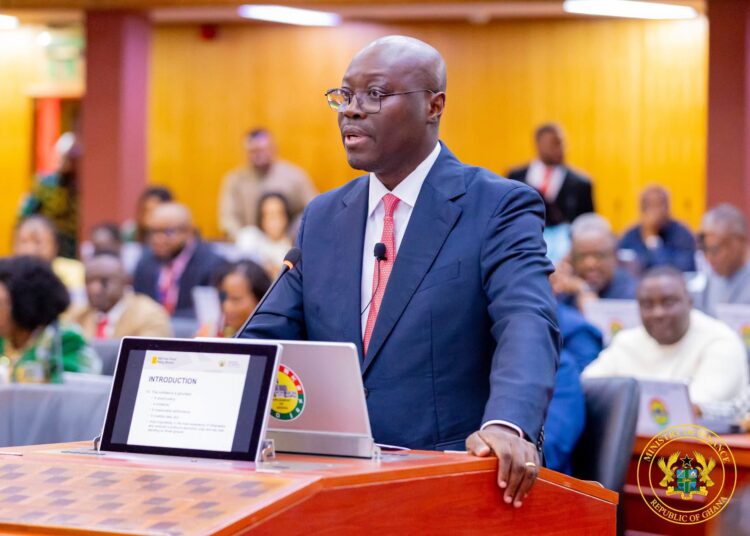
The investment commitment was announced by the Minister for Finance, Dr. Cassiel Ato Baah Forson, during the presentation of the 2027 Budget Statement and Economic Policy to Parliament on Thursday, November 12, 2026.
The project will combine large-scale irrigation, fish production, flood protection and hydropower generation to establish an integrated agricultural and industrial ecosystem, reducing production constraints and creating opportunities for businesses to process agricultural commodities closer to their sources.
“We will invest $1 billion towards the full completion of the Pwalugu Multipurpose Dam.”
Ministry of Finance, Hon. Cassiel Ato Forson
Irrigation and Aquaculture to Expand Production
A major component of the project will be the development of irrigation infrastructure to support year round vegetable cultivation, with Government targeting 25,000 hectares of land for vegetable production.
The irrigation system is expected to reduce farmers’ dependence on seasonal rainfall, allowing them to maintain production beyond the traditional farming seasons and improve the consistency of agricultural supplies.
Reliable water availability will also create opportunities for commercial vegetable farming, particularly tomatoes and other high-demand crops that supply domestic markets and agro-processing industries.
This is significant for Ghana’s agricultural economy, where seasonal production patterns, inadequate irrigation and post-harvest losses have affected the availability and pricing of fresh produce.
The project will further incorporate aquaculture through the development of 100,000 fish cages within the Pwalugu reservoir.
The proposed aquaculture component is expected to expand domestic fish production, create employment in fish farming and processing, and strengthen the supply of fish to local markets.
Ghana’s fisheries sector continues to face pressure from declining marine fish stocks and a gap between domestic fish production and national consumption requirements.
According to previous sector estimates, annual domestic fish demand stands at approximately 1.35 million metric tonnes, against local production of about 723,000 metric tonnes, leaving a supply gap of roughly 627,000 metric tonnes.
The introduction of large-scale cage aquaculture at Pwalugu is therefore intended to provide an additional source of fish supply while creating opportunities for fish feed producers, hatcheries, processors and distributors.
“The reservoir of the Pwalugu Multipurpose Dam will also house 100,000 fish cages for aquaculture.”
Minister for Finance, Hon. Cassiel Ato Forson
70MW Hydropower to Support Agro-Industry
Beyond agricultural production, the Pwalugu Multipurpose Dam is expected to generate 70 megawatts of hydropower to support industrial activities within and around the Pwalugu enclave.
Pack houses and cold storage facilities will also improve the handling, preservation and distribution of perishable produce, including vegetables and fish.
The development could support investment in tomato processing, vegetable packaging, fish processing and other agro-industrial activities, creating additional value from agricultural commodities before they reach consumers.
The hydropower component will therefore serve not only as an energy-generation investment but also as an important industrial infrastructure facility.
Official planning documents from the Volta River Authority previously identified the Pwalugu project as a multipurpose development incorporating hydropower, irrigation and flood management, with an earlier design providing for approximately 25,000 hectares of irrigation infrastructure.
The 70MW generation target announced in the 2027 Budget provides the latest specification presented by the Finance Minister.
“The electricity will support processing factories, irrigation systems, pack houses, agro cold storage facilities.”
Minister for Finance, Hon. Cassiel Ato Forson
Flood Protection and Project Completion Timeline
The Pwalugu Multipurpose Dam is also expected to strengthen water security and provide flood protection for communities along the wider Volta corridor.
The White Volta River Basin is exposed to seasonal flooding, including the effects of water releases from the Bagre Dam in neighbouring Burkina Faso.
Through improved water storage and management, the Pwalugu project is expected to contribute to flood risk reduction while providing water for agricultural activities and other economic uses.
The combination of irrigation, hydropower and flood management is intended to make the infrastructure useful beyond agricultural production, supporting communities, businesses and economic activities that depend on reliable water resources.
Dr. Forson told Parliament that the first phase of the project is expected to be ready by early 2029, with full completion scheduled for December 2030.
The implementation timeline places Pwalugu among the major infrastructure investments expected to support the Government’s broader 2027–2030 economic transformation agenda.
The US$1 billion commitment also comes against the background of earlier difficulties with the project, including delays and financing challenges.
In March 2026, the Minister for Energy and Green Transition, John Abdulai Jinapor, informed Parliament that the previous contractor had abandoned the project, prompting efforts to secure new financing for its revival.
The renewed investment commitment is therefore expected to provide a financing pathway for completing the project and delivering its agricultural, energy and industrial components.
Once completed, Pwalugu is expected to connect irrigation-based farming, commercial aquaculture, electricity generation and agro-processing within one development framework.
Its economic contribution will ultimately depend on the timely delivery of infrastructure, effective water management, private-sector investment and the ability of farmers and businesses to utilise the facilities.
By combining water resources with energy and industrial infrastructure, the project is intended to create an enabling environment for agricultural production, value addition, employment and stronger domestic food supply.
READ ALSO:Mahama Cuts Sod for $98.41m Takoradi Port Expansion