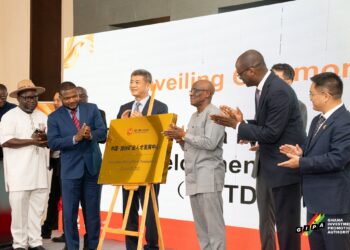
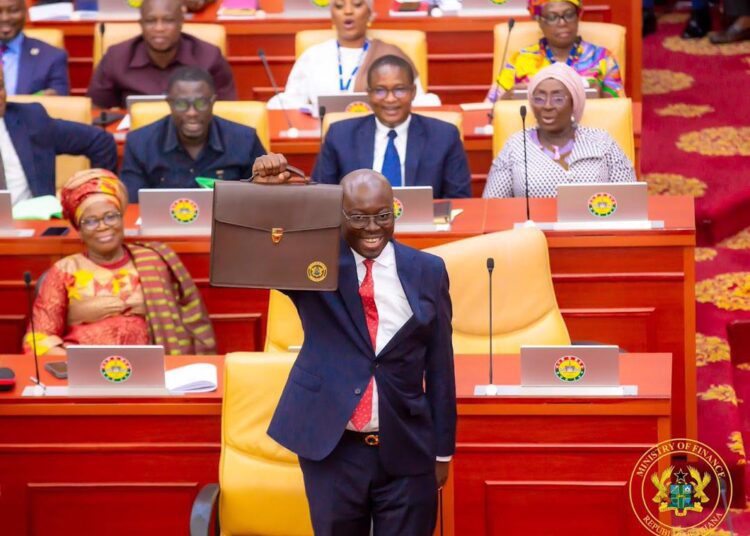
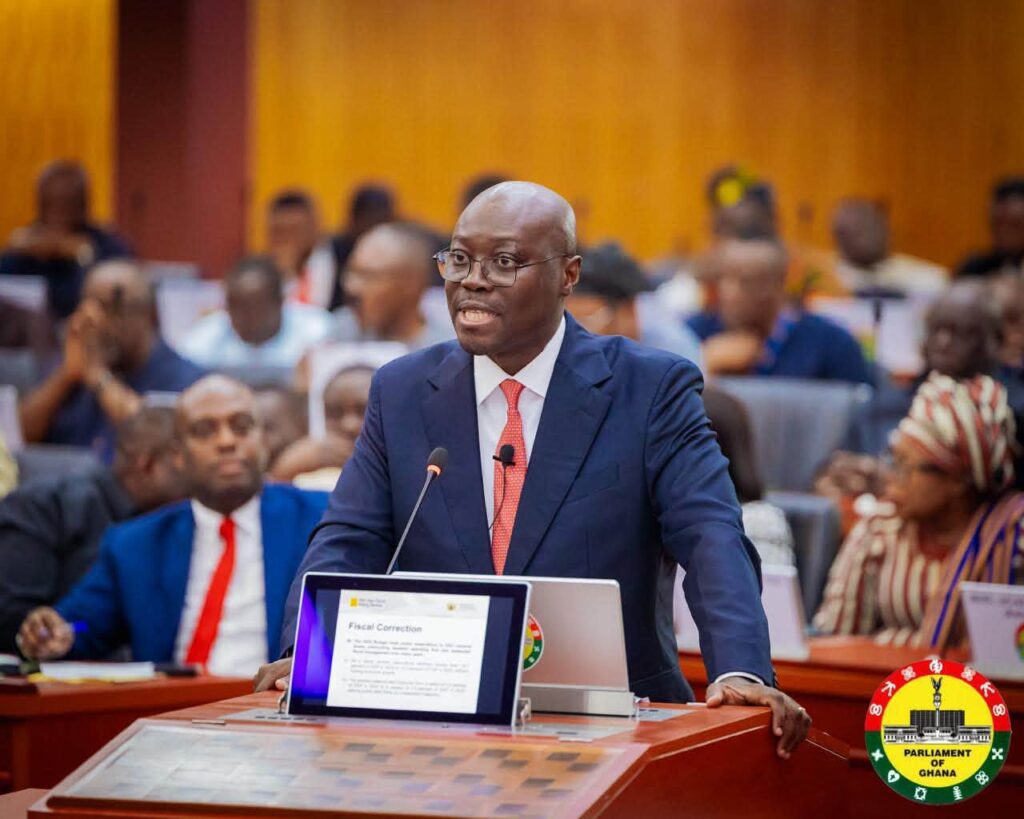
Finance Minister Dr. Cassiel Ato Forson has announced that the government will inject US$1.5 billion into critical minerals value addition under Pillar 4 of the New Economy Programme.
The capital commitment targets the domestic transformation of four strategic resources manganese, bauxite, lithium, and gold to end decades of raw material exports.
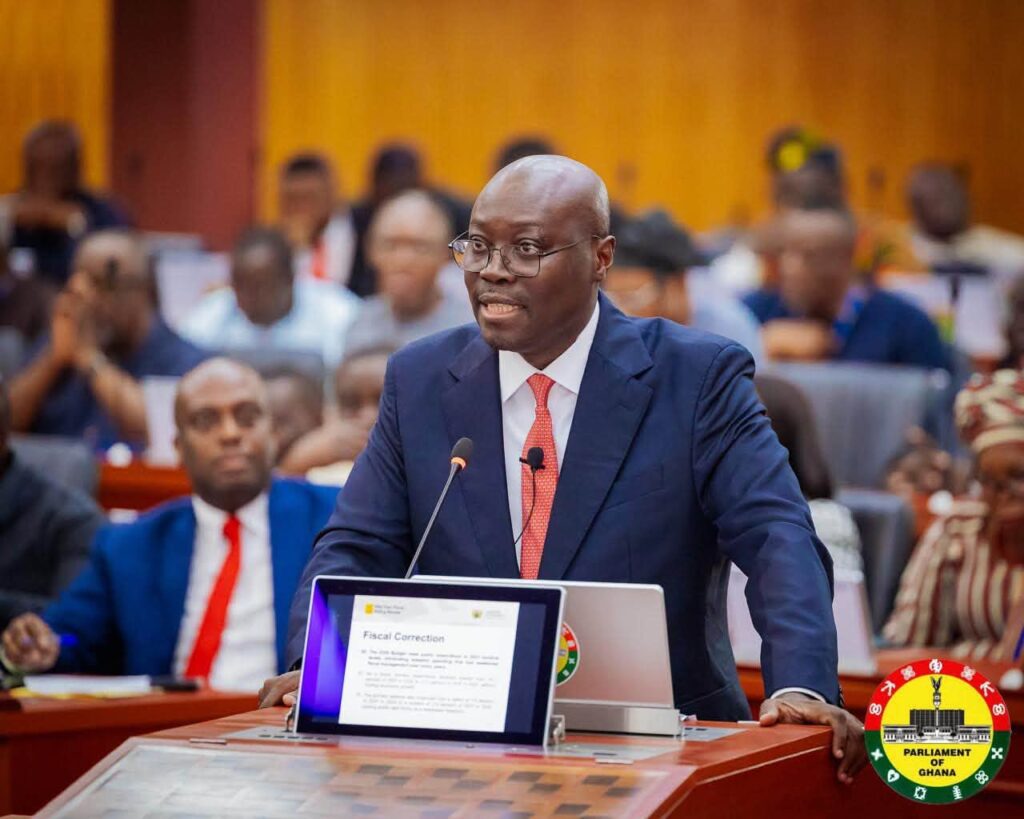
“Prohibit exports of raw artisanal, small-scale and medium-scale gold from 2028. Prohibit raw manganese and bauxite exports by 2030. Use bauxite for alumina refining and aluminium smelting.”
Finance Minister Dr. Cassiel Ato Forson
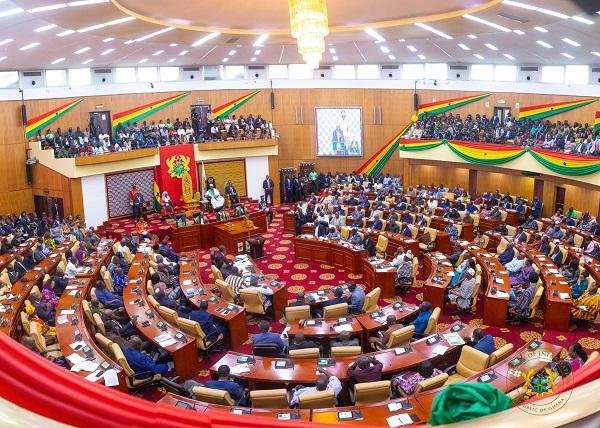
Delivered during the 2027 Budget Statement and Economic Policy presentation in Parliament, the initiative outlines strict timelines for local refining and bans on unprocessed ore shipments.
Financed through domestic fiscal space rather than new external borrowing, the policy anchors a broader US$10 billion economic transformation agenda running from 2027 through 2030.
Phased Refining Targets and Export Bans
To enforce domestic retention, Dr. Forson established staggered industrial benchmarks across the extractive sector.
In the gold subsector, authorities will mandate the local refining of at least 70 per cent of artisanal and small-scale output by December 2027, scaling to 100 per cent by December 2028 when raw shipments from small- and medium-scale operators become illegal.
For bulk industrial minerals, the administration targets 50 per cent local processing for both manganese and bauxite by the close of 2028, culminating in full domestic beneficiation by 2030.
Rather than shipping unprocessed bauxite abroad, the state intends to channel feedstock directly into integrated alumina refining and aluminium smelting operations.
Meanwhile, the lithium value chain will transition from basic extraction to high-tech manufacturing. Explaining the downstream roadmap to lawmakers, Dr. Forson stated that the state will begin with local lithium refining and “progressively develop the capacity to produce battery-grade chemicals, battery components, battery cells, and critical minerals processing infrastructure.”
The Western Enclave and Sahelian Rail Corridor
Supporting heavy industrial processing requires dedicated energy and logistics networks. Consequently, the Finance Minister confirmed plans to establish a 24-hour critical minerals processing enclave in the Western Region, backed by broader state investments in affordable baseload power.
To feed these facilities, construction will commence in 2027 on a dedicated railway line linking Takoradi to Nyinahin.
The rail corridor will connect major mineral-producing towns, including Nsuta and Awaso, streamlining the haulage of manganese and bauxite directly to Western Region processing plants.

Beyond domestic extraction, the logistics blueprint repositions Takoradi Port as Ghana’s principal maritime gateway to the Sahel.
By 2030, the government plans to extend the rail network northwards from Nyinahin to Hamile in the Upper West Region, establishing a modern inland port to facilitate cross-border trade with Burkina Faso, Mali, Niger, and neighboring landlocked markets.
Ending the Raw Export Trap
For decades, Ghana’s extractive industry has operated on an enclave model that exports raw ores while importing refined metals and finished industrial goods.
While the country ranks among Africa’s premier gold producers and holds vast deposits of bauxite, manganese, and green-transition lithium, exporting unrefined commodities forfeits the highest-margin tiers of the global supply chain.
Industry analysts note that raw bauxite fetches a fraction of the market value of smelted aluminium, just as spodumene concentrate captures minimal returns compared to battery-grade lithium hydroxide or finished cells.
Furthermore, unrefined artisanal gold exports expose the economy to illicit financial flows, smuggling, and severe foreign exchange leakages.
By pairing strict export prohibitions with heavy rail infrastructure and round-the-clock industrial zones, the US$1.5 billion allocation seeks to capture downstream rents domestically.
If executed on schedule, the strategy will insulate public finances from raw commodity price volatility, anchor ancillary manufacturing jobs, and position Ghana as West Africa’s premier mineral-processing and logistics hub.
READ ALSO: Ghana Targets Food Import Reduction Through Eight Value Chains