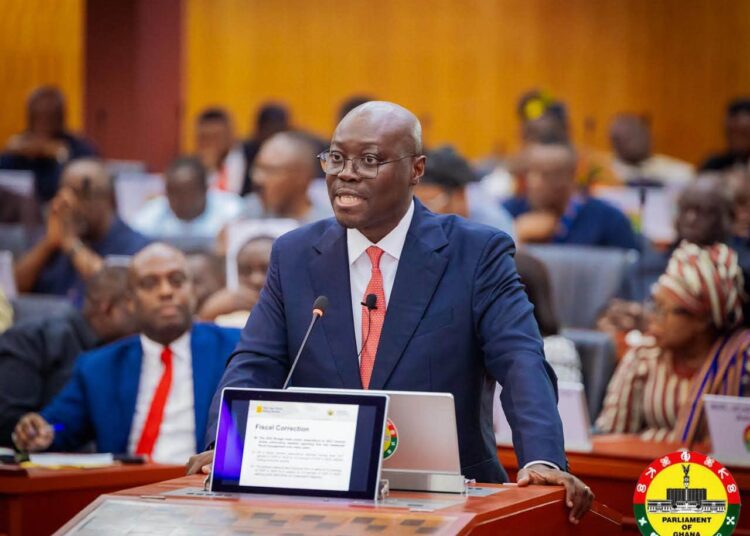
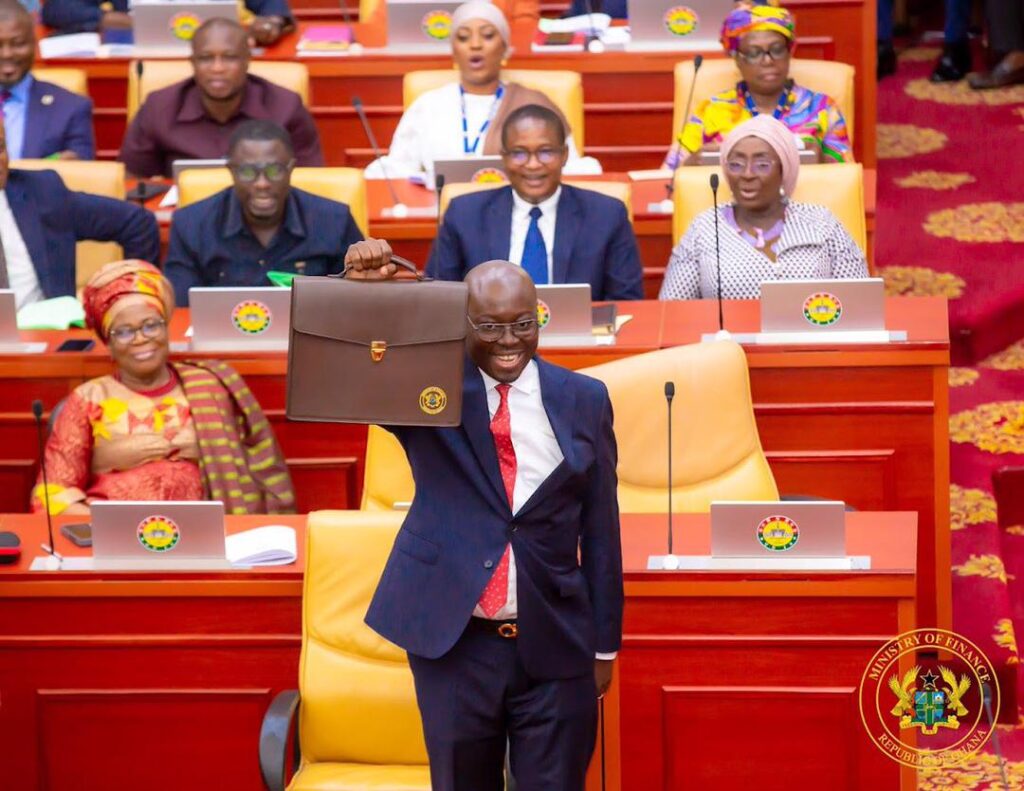
The Minister of Finance, Dr. Cassiel Ato Forson, has announced plans by the government to establish a dedicated 24-hour critical mineral processing enclave in the Western Region as part of an aggressive national strategy to halt raw mineral exports and retain maximum economic value within Ghana.
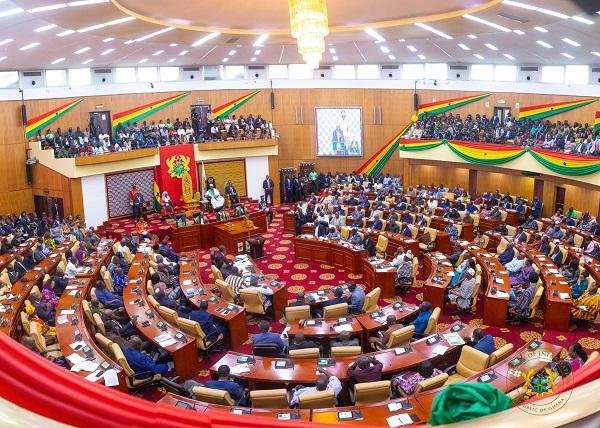
Delivering the 2027 Budget Statement before Parliament in Accra, the Finance Minister outlined a multi-year industrial and fiscal framework designed to transform the country from an exporter of unprocessed ores into a competitive hub for domestic refining and manufacturing.
“To support these industrial targets, the government is establishing a 24-hour critical mineral processing enclave in the Western Region, backed by Pillar 3 power infrastructure. Beginning in 2027, state resources will fund the construction of a strategic railway line running from Takoradi to Yenyinyi in the Ashanti Region, passing through key mineral hubs such as Insuta and Awaso. The rail network will transport manganese and bauxite directly to the western processing enclave for value addition.”
Minister of Finance, Dr. Cassiel Ato Forson
Under this comprehensive roadmap, the state will leverage dedicated energy infrastructure alongside a modernized rail corridor to feed raw industrial minerals directly into local processing plants.
The policy sets strict timelines across the extractive sector, mandating that at least 70 percent of Ghana’s artisanal and small-scale mining (ASM) gold be refined locally by the end of 2027, rising to full domestic refining capacity by December 2028, when an outright ban on raw ASM gold exports takes effect.
Furthermore, at least 50 percent of Ghana’s manganese and bauxite output will undergo domestic processing by the end of 2028, culminating in a total prohibition on exporting those commodities in raw form by 2030.
Industrial Infrastructure and Corridor Integration
The Western Region processing enclave is anchored on reliable energy supply and heavy-haul logistics to ensure continuous industrial operations.
By backing the industrial zone with Pillar 3 power infrastructure, authorities intend to eliminate the energy bottlenecks that have historically undermined round-the-clock metallurgical operations and escalated production costs for domestic smelters.
Complementing the power grid is a major state-funded railway expansion scheduled to commence in 2027. Routing freight from Takoradi through mining centers such as Nsuta and Awaso to Nyinahin in the Ashanti Region creates a direct supply artery for bulk manganese and bauxite ores.
Beyond domestic processing, the corridor integrates regional trade ambitions by positioning the Port of Takoradi as Ghana’s primary maritime gateway to the Sahel.
By 2030, the railway line is projected to extend northbound from Nyinahin to Hamile in the Upper West Region, paired with a modern inland port built to facilitate cargo transit for landlocked neighbors including Burkina Faso, Mali, and Niger.
Ending the Raw Export Paradigm
For decades, Ghana’s extractive sector has operated largely on a colonial-era model of extracting unprocessed ores for offshore refining, forfeiting billions of dollars in downstream industrial margins, technical skills transfer, and ancillary employment.
While bullion, bauxite, and manganese have consistently anchored foreign exchange inflows, exporting unrefined commodities leaves the economy vulnerable to external price shocks while exporting industrial jobs to foreign smelting hubs.
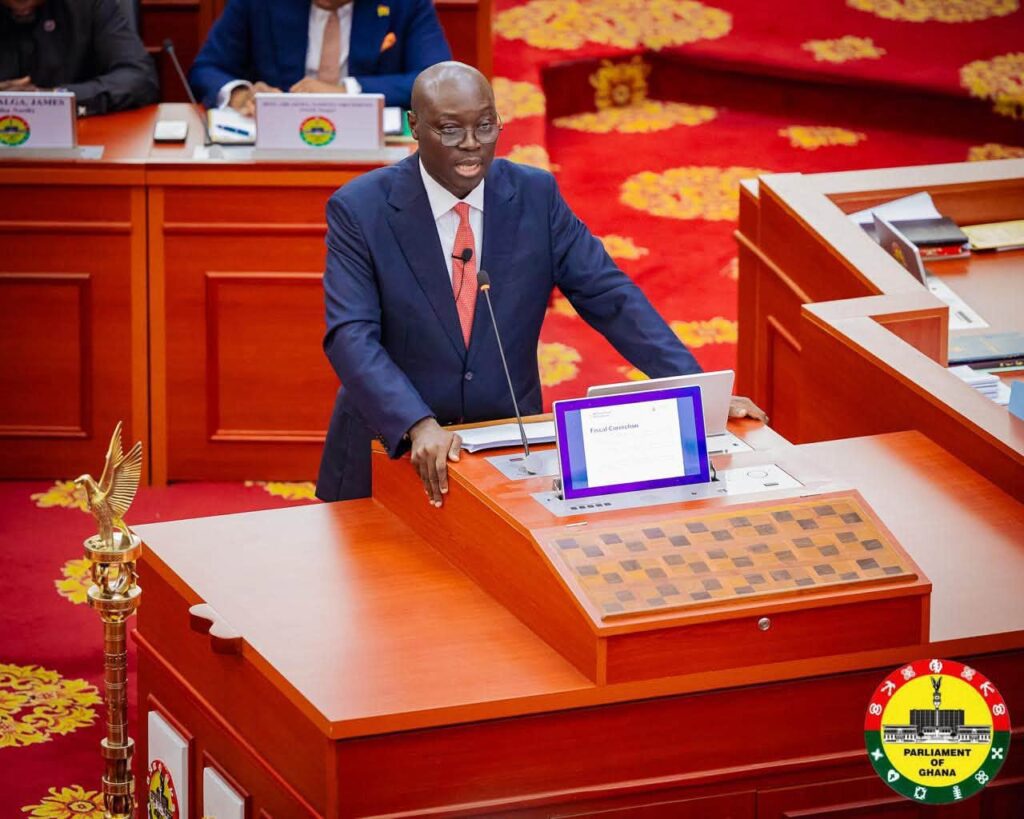
Addressing Parliament on the broader purpose of the infrastructure and policy overhaul, Dr. Forson declared that “this railway must power Ghanaian industries, support local processing, and create jobs for our people,” emphasizing that the overarching goal is to shift the nation’s minerals toward greater value and its citizens toward greater prosperity.
Industry analysts note that capturing downstream value is especially urgent as global demand accelerates for green-transition metals.
Rather than repeating past mistakes with newly discovered resources, the government’s blueprint requires lithium development to commence with domestic refining, progressing systematically into battery-grade chemicals, components, and cells. Similarly, bauxite reserves will be harnessed to support an integrated domestic alumina refinery and aluminum smelting industry.
Regulatory Alignment and Economic Outlook
Achieving complete local refining of artisanal gold by December 2028 requires tight synchronization between fiscal incentives, bullion assaying standards, and statutory enforcement.
The Finance Minister noted that the government “aims to achieve 100% local refining capacity by December 2028, at which point all exports of raw ASM gold will be prohibited,” signaling a decisive regulatory shift for licensed aggregators and small-scale operators.

To meet these benchmarks, domestic refineries will need streamlined access to doré gold from the small-scale sector, supported by competitive pricing mechanisms that discourage smuggling across porous borders.
Simultaneously, linking bauxite and manganese concessions to local processing quotas compels mining leaseholders to invest in domestic beneficiation plants ahead of the 2030 export ban.
If executed on schedule, the 24-hour Western Region enclave and its supporting rail network will anchor a resilient, value-driven extractive economy capable of generating sustainable industrial employment and long-term fiscal stability.
READ ALSO: Pwalugu Dam Gets $1bn Multipurpose Investment Boost