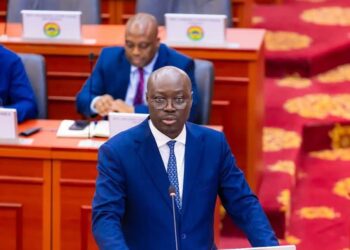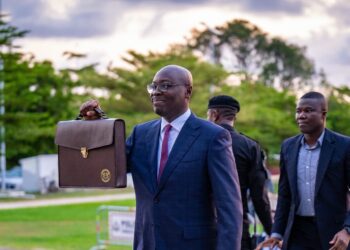
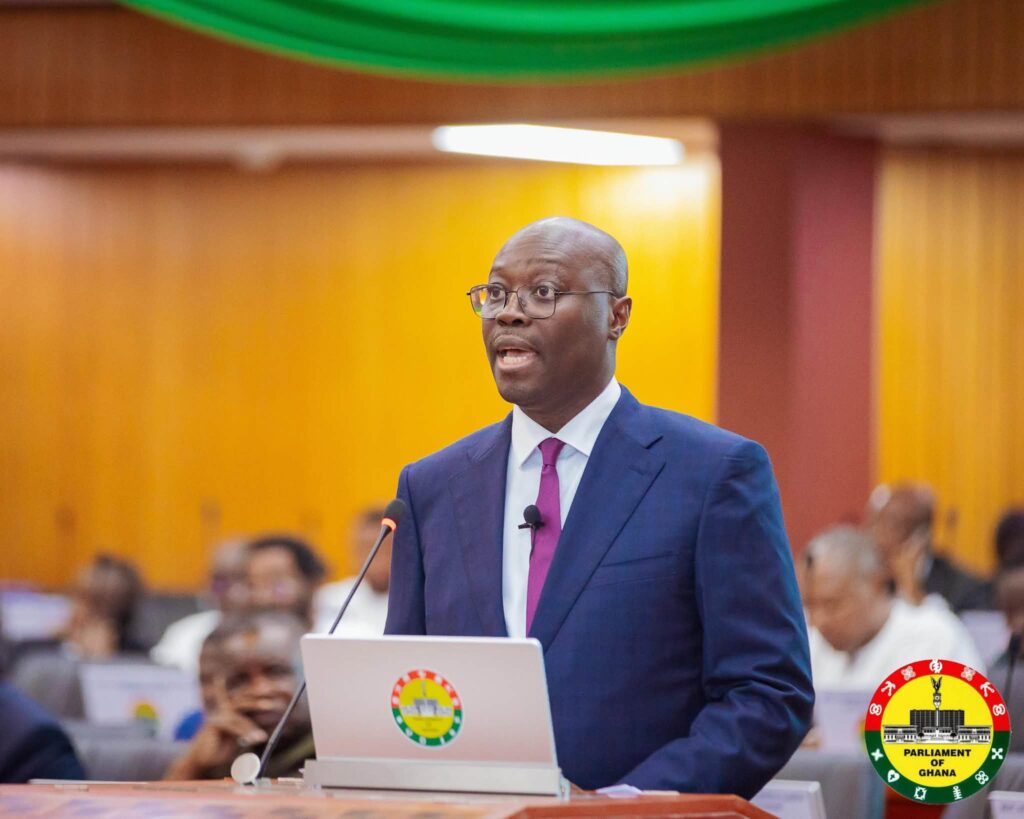
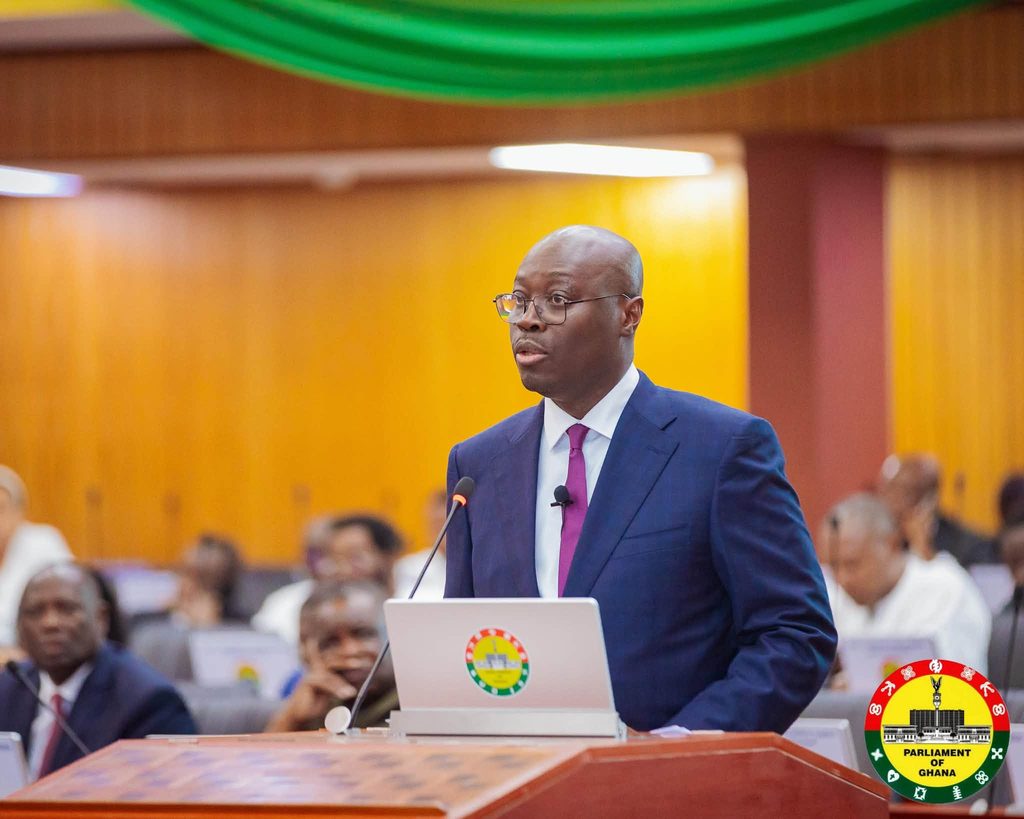
The 2027 Budget allocates GH¢28 billion to the Big Push Programme and GH¢11.3 billion to the Ministry of Roads and Highways. Finance Minister Dr Cassiel Ato Forson presented the figures to Parliament on Thursday, November 12, 2026.
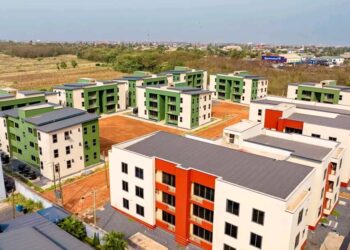
The Big Push is a separate infrastructure programme with its own funding, and it does not draw on the ministry’s allocation. The ministry’s money pays for road building and maintenance, and the budget reports progress on roads in Sekondi and Takoradi, four bypasses on the Accra-Kumasi Highway and a list of new trunk road projects.
“We have allocated a separate GH¢28 billion to the Big Push Programme to advance the infrastructure that connects people to opportunity.”
Dr Cassiel Ato Forson, Ghana’s Finance Minister
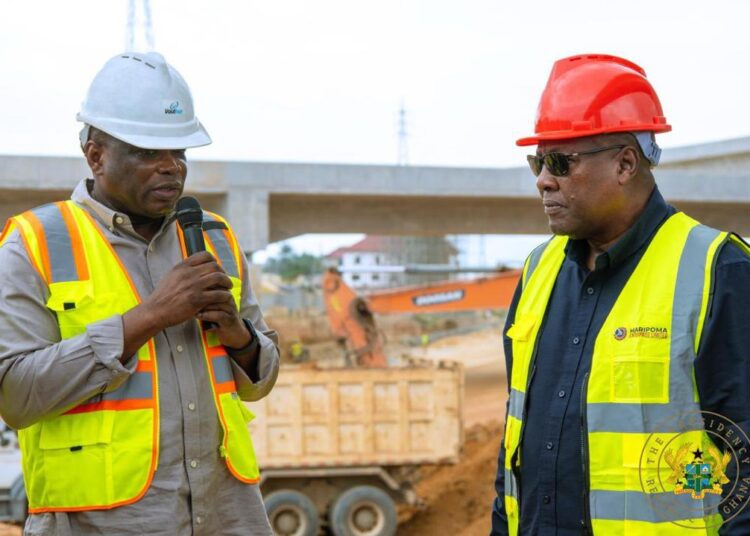
The budget names two items within the GH¢28 billion. GH¢2 billion goes to the Ghana Market Access and Connectivity Project, and GH¢400 million will begin construction of the Volivo Bridge.
The excerpt does not say how the remaining GH¢25.6 billion will be spent. A lawmaker has argued that the Big Push agenda must benefit every sector of the economy.
Roads Ministry Splits Funding Between Building and Upkeep
The government plans to use the ministry’s money to improve links between communities, production centres and markets. “We have allocated GH¢11.3 billion to the Ministry of Roads and Highways to improve the connections between our communities, production centres and markets.”
The allocation is divided into GH¢7.8 billion for the ministry’s capital expenditure and GH¢3.5 billion for the Road Maintenance Trust Fund. Work on selected roads in Sekondi and Takoradi has reached 96 percent for Phase 1, as at the end of August 2026. The package covers the Axim, Shippers Council and Harbour roads in Takoradi.
It also includes the widening of the Sekondi road between the Paa Grant Roundabout and the Effia Nkwanta Hospital, and the Adiembra roads between the hospital and the Regional Coordinating Council.
Accra-Kumasi Highway Bypasses Advance
The government is building four bypasses on the Accra-Kumasi Highway at Osino, Anyinam, Enyiresi and Konongo, to dualise the route and improve safety on a major trunk road. The bypasses are separate from the Accra-Kumasi Expressway, which Dr Forson says has its own full funding ready.
Progress differs by carriageway. At Osino, the southbound lane stands at 77 percent and the northbound lane at 70 percent, each 11.55 kilometres long. At Anyinam, the northbound lane is complete at 100 percent, while the southbound lane stands at 75 percent, each 6.10 kilometres long.
Enyiresi shows the slowest pace on the corridor, with its 9.10-kilometre lanes at 65 percent southbound and 64 percent northbound. At Konongo, the 13.60-kilometre southbound lane stands at 74 percent and the northbound lane at 62 percent.
New Trunk Road Works Begin in Seven Regions
The budget also lists trunk road projects where work has started, spread across the Central, Volta, Savannah, Eastern, Western, Bono and Bono East regions. Progress varies widely.
In the Central Region, the rehabilitation of the Apam to Afranse road and Afranse town roads, totalling 28.2 kilometres, stands at 50 percent. The 26-kilometre Bisease and Kokoben enclave roads are at 42 percent, and the 22.6-kilometre Enyeme to Techiman road is at 38 percent.
Bono Region projects include the Sunyani to Atronie road at 34.38 percent and the Berekum to Seikwa road at 25.92 percent. In the Eastern Region, the Kwahu Tafo to Adawso road is at 20 percent. The Bole to Madari to Chache upgrade in the Savannah Region, covering 35.5 kilometres, has reached 16 percent.
Several projects have barely started. The Volta Region’s Waya to Asiekpe road stands at 2 percent and the Ziope to Torda road at 3 percent. The Anyirawase to Bame to Kpeve road is at 0.2 percent, as are the Bono East’s Sunyani to Buoko to Techiman road and one section of the Wenchi to Sampa road.
However, the budget gives no completion dates, contract values, or funding source for the individual projects. It also does not show how the Big Push will use most of its GH¢28 billion. Parliament will have the chance to press the ministry on those details as it examines the budget.
READ ALSO: Ghana’s Oil Receipts Surge As US$556m Funds Big Push