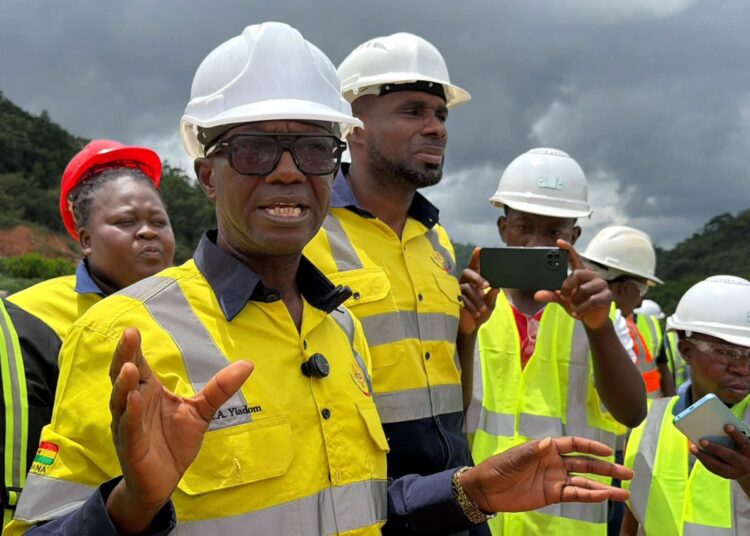
Western Regional Minister, Hon. Joseph Nelson has affirmed that indigenous leadership possesses the technical expertise and strategic discipline required to successfully manage Ghana’s lucrative extractive assets for national prosperity.
Delivering his assessment after a working inspection of Heath Goldfields’ operations in the Prestea-Huni Valley Municipality, the Minister pointed to the rapid stabilization of the Bogoso-Prestea Mine as definitive proof that domestic operators can revive distressed industrial ventures.
His remarks underscore a growing policy consensus in Accra and across resource-rich regions that local ownership must move from peripheral participation to full operational control.
“At a time when calls for greater Ghanaian participation in the management of our natural resources are growing louder, Heath Goldfields offers an encouraging demonstration of what Ghanaian leadership, professional competence and determination can achieve. It is a reminder that our people have the capacity to take responsibility for our resources and manage them in the interest of national development.”
Hon. Joseph Nelson
The turnaround at the historic concession comes barely a year after Heath Goldfields assumed control following a protracted period of operational paralysis, unpaid worker entitlements, and legal disputes involving previous leaseholders.
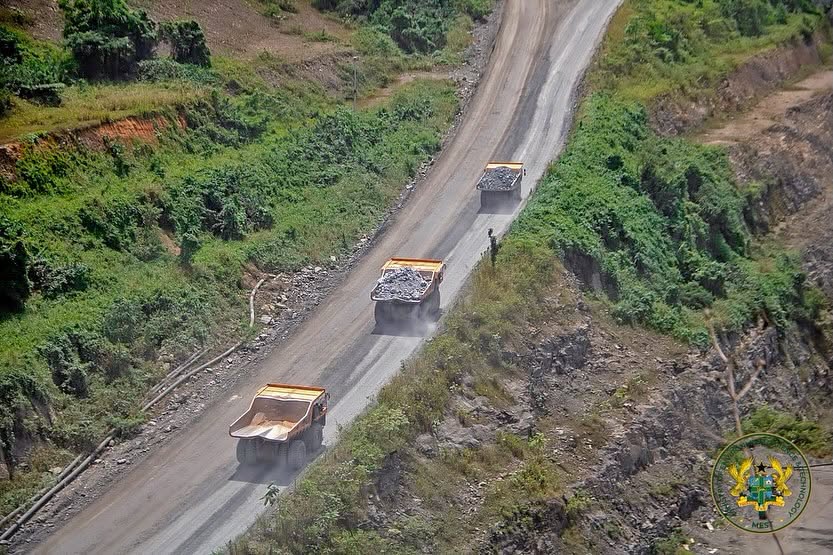
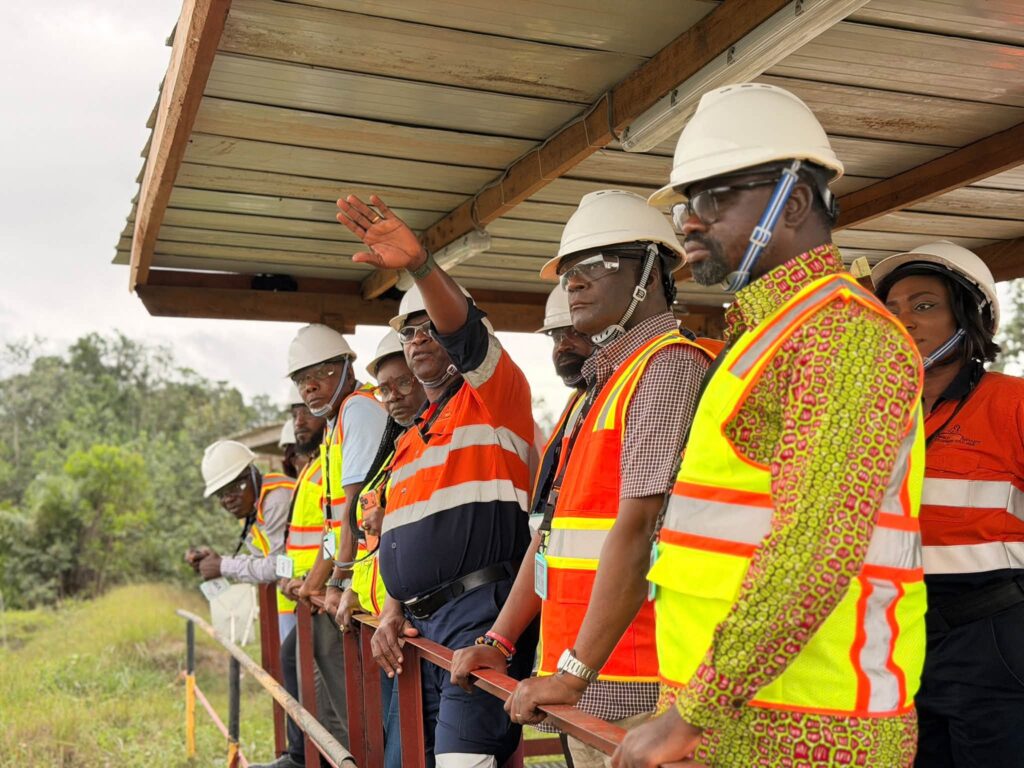
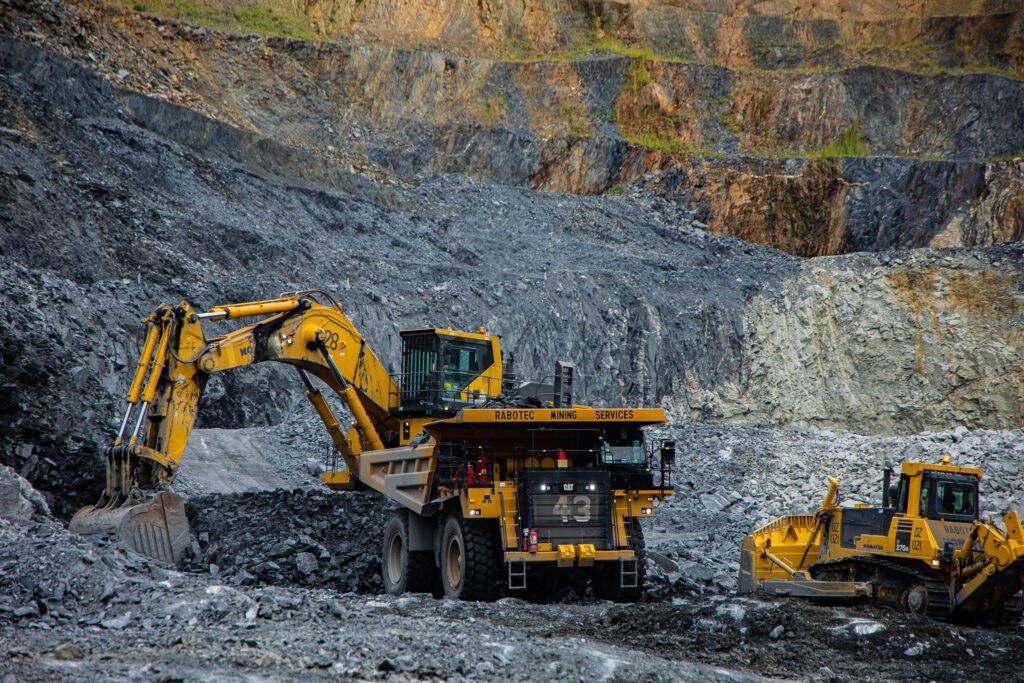
During his visit, Hon. Nelson observed that full production has been restored across all units of the facility, backed by substantial capital injections into the Prestea Underground Mine and blueprints for a modern sulphide processing plant.
By rescuing an asset that had previously triggered severe socioeconomic anxiety across host communities, the wholly Ghanaian-owned firm has effectively countered long-standing skepticism regarding domestic capacity in capital-intensive mining.
Overcoming a Legacy of Operational Distress
For decades, Ghana’s large-scale gold mining sector has been overwhelmingly dominated by multinational corporations, leaving domestic entities largely confined to artisanal and small-scale operations or ancillary service contracts.
When foreign-managed operators at Bogoso-Prestea faltered resulting in rusting infrastructure, halted underground development, and months of salary arrears the socioeconomic fabric of the Prestea-Huni Valley area faced near collapse.
Reviving the mine was therefore not merely a commercial necessity, but an urgent regional security and economic imperative to restore livelihoods and protect state royalties.
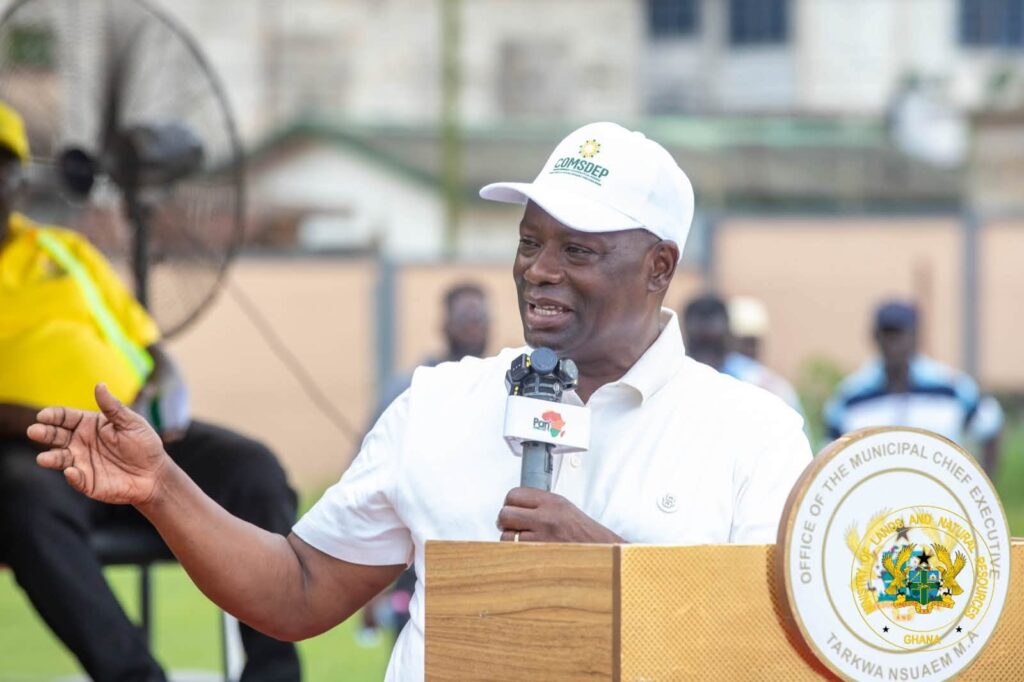
Reflecting on the stark transformation since the mine’s distressed era, the Minister noted that “what I encountered during my working visit to Heath Goldfields to assess the progress of its operations was a compelling story of resilience, determination and renewed hope”.
Industry analysts point out that unlocking refractory sulphide ore bodies at Prestea requires sophisticated metallurgical engineering and patient capital, making Heath Goldfields’ commitment to constructing a new sulphide processing facility a pivotal milestone.
Rather than stripping remaining surface deposits for short-term gains, the company’s long-term capital expenditure signals a strategic intent to extend the mine’s lifespan and maximize domestic value retention.
Deepening Local Content and Host Community Equity
Beyond underground rehabilitation and metallurgical upgrades, the revival model at Bogoso-Prestea addresses a persistent flaw in Africa’s extractive governance: the enclave economy phenomenon, where mineral wealth fails to stimulate surrounding local enterprises.
Sustainable mining in the Western Region requires intentional supply-chain integration so that host communities become active shareholders in the value chain rather than passive recipients of corporate philanthropy.
Hon. Nelson highlighted how community members in Prestea have organized themselves into a formal enterprise to participate directly in mining activities, a structure he described as “a fine example of local enterprise.”
Furthermore, Heath Goldfields has anchored its social license to operate through targeted investments in local procurement, alongside a dedicated community development fund financing healthcare, education, technical skills training, and public infrastructure.
Recognizing that mineral deposits are finite, the operator has also introduced the Heath Agrifield initiative to diversify the local economy through commercial agriculture.
This multi-sectoral approach ensures that while gold extraction drives immediate fiscal inflows, parallel investments in human capital and agribusiness build enduring economic resilience for residents long after mining ceases.
Institutional Synergy for Sustained Extractive Growth
Translating indigenous corporate milestones into permanent national wealth requires coordinated institutional backing from regional and traditional governance structures.
While acknowledging that “the journey is not over and that challenges remain,” Hon. Nelson emphasized that the progress achieved within twelve months warrants strong public-sector reinforcement.
To prevent bureaucratic bottlenecks and maintain industrial harmony, the Western Regional Coordinating Council has pledged seamless alignment with the Prestea-Huni Valley Municipal Assembly and local chiefs to resolve stakeholder grievances proactively.
Ultimately, the Bogoso-Prestea resurgence serves as a critical blueprint as Ghana pushes to indigenize ownership across its medium- and large-scale mineral concessions. As the Regional Minister concluded during his tour, “Ghanaian competence must translate into Ghanaian prosperity, and Heath Goldfields is showing the way“.
With sustained regulatory support, disciplined capital allocation, and robust community partnerships, the mine’s recovery demonstrates that domestic professionals can profitably steward complex extractive assets while securing equitable returns for the Ghanaian state.
READ ALSO: Popular Ghanaian Adaptation of ‘La Victoria’ Returns Free