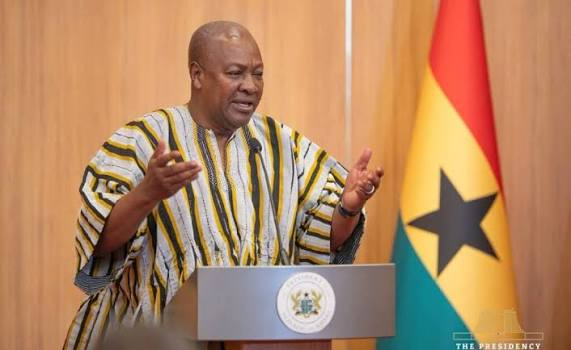
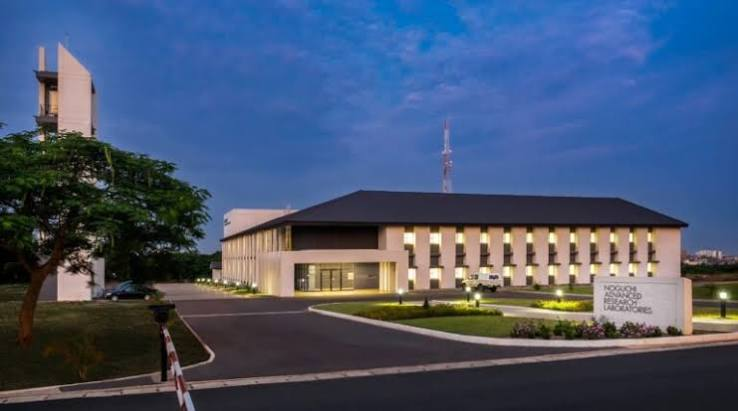
President John Dramani Mahama has commissioned a Human Identification Laboratory and new vaccine research and development facilities at the Noguchi Memorial Institute for Medical Research, describing the projects as critical investments in Ghana’s health security, scientific innovation and drive towards self-sufficiency.
The facilities are expected to strengthen forensic investigations, help families identify deceased relatives following tragedies and provide Ghanaian scientists with the infrastructure to research and develop vaccines. The President linked the projects to lessons from the August 8 tragedy and the COVID-19 pandemic.
“This laboratory will help us provide families with answers in times of tragedy, while the Vaccine Research Laboratories will give our scientists the means to develop our own vaccines here in Ghana.”
President John Dramani Mahama
President Mahama explained that the Human Identification Laboratory would address a major gap in Ghana’s emergency response and forensic capabilities.
He recalled the August 8 tragedy, which exposed the country’s limited capacity to identify victims locally. Authorities had to send tissue samples recovered from accident sites to South Africa for analysis, leaving families waiting several days for results.
DNA laboratory testing cases
The President described the experience as “a day of shame for us as a country,” insisting that such delays should become a thing of the past.
He also urged agencies that would depend on the laboratory to coordinate their work and provide families with clear, timely information.
“Behind every request for identification is a family waiting anxiously for news,” he stated, emphasising that delays could deepen the pain of bereavement.
Beyond identifying victims of disasters, President Mahama indicated that the laboratory would support police investigations involving rape, murder and other crimes requiring DNA evidence.
He also outlined its potential role in resolving paternity and maternity disputes, as well as inheritance cases in which relatives need to establish biological relationships. The facility could further assist families with DNA documentation when questions arise about children accompanying adults on international travel.
The President indicated these services would help resolve disputes through scientific evidence while strengthening national security.
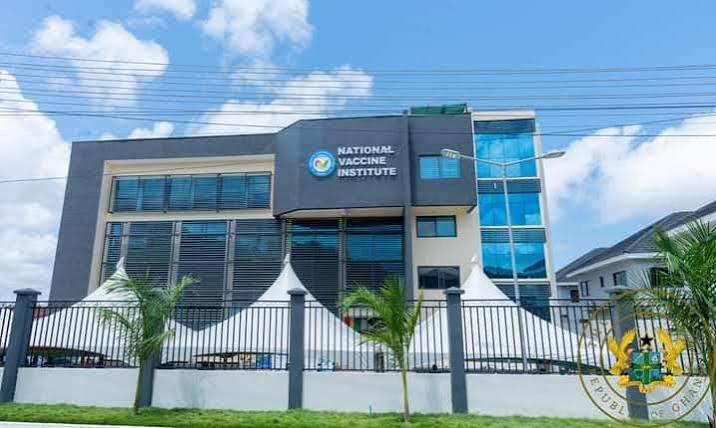
Vaccine laboratories address supply vulnerabilities
President Mahama described the vaccine research facilities as equally important, arguing that the COVID-19 pandemic had demonstrated the risks of depending on international supply chains during a global health emergency.
He recalled that demand for vaccines surged during the pandemic, leaving many countries struggling to secure supplies. African countries, he noted, were particularly disadvantaged because wealthier nations met domestic demand before making remaining doses available to the continent.
“We were just lucky that our immunity helped us survive the COVID-19 pandemic, even though we did not have enough vaccines,”
President John Dramani Mahama
He added that recurring threats, including mpox, Lassa fever and Marburg virus disease, reinforced the need for African countries to prepare for future outbreaks.
Research capacity and vaccine self-sufficiency
The President explained that the mRNA and protein laboratories under the National Vaccine Research and Development Facilities would give scientists space to conduct research, test ideas and collaborate on vaccine development.
He maintained that investment between outbreaks was essential because research, institutional partnerships and specialist training required sustained preparation. Such capacity, he argued, would enable Ghana to respond faster when new health threats emerged.
The facilities would also allow Ghanaian researchers to contribute to global health research while advancing vaccine self-sufficiency and health sovereignty.
Companies selected for vaccine development
President Mahama further recalled a meeting held in Accra on vaccine self-sufficiency for Africa, during which key decisions were taken to expand the continent’s production capacity.
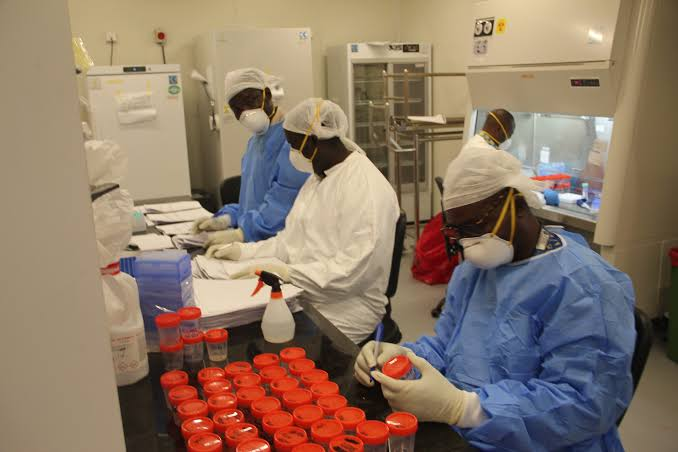
He disclosed that two Ghanaian pharmaceutical and biomedical companies, Atlantic Life Sciences and DEK Laboratories, had been selected to develop vaccines.
He congratulated the National Vaccine Institute and the Africa Centres for Disease Control and Prevention (Africa CDC) for their support, noting Ghana’s role alongside other African countries in building local vaccine production capacity.
He described the commissioning as a commitment to health security, scientific innovation and self-sufficiency. He acknowledged the Ministry of Health for pursuing reforms and building capacity.
The President urged agencies using the DNA laboratory to work together, ensuring its services provide timely support to families and assistance to investigations. He maintained that Ghana must build expertise before the next public health emergency.
READ MORE: Ghana Plans Child Protection Budgets for 261 Districts