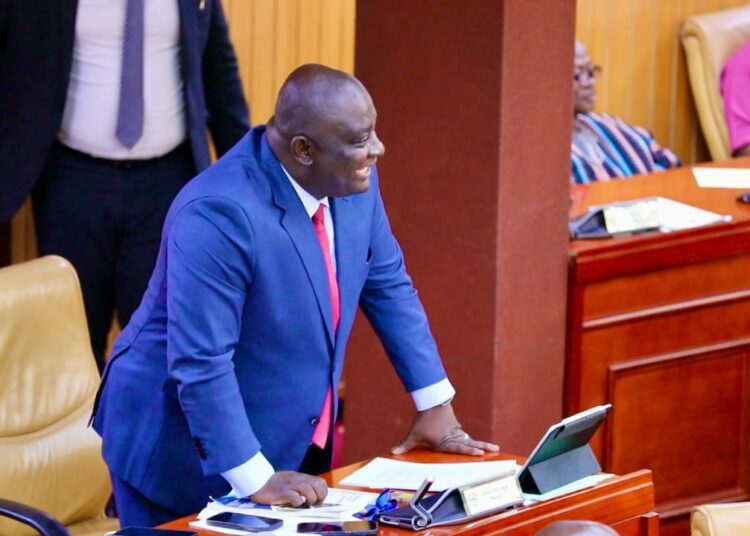
The Member of Parliament for Mpraeso, Davis Ansah Opoku, has urged the government to prioritize competent Ghanaian-owned enterprises in the management and operation of the nation’s mineral resources, insisting that the country must transition beyond its traditional 10% equity stake in major mining ventures.
Speaking during the parliamentary debate on the 2027 Budget Statement, the legislator contended that retaining mere minority interests deprives the domestic economy of transformative capital, deeper local content participation, and sustainable job creation.
Mr. Opoku anchored his argument on the premise that the administration’s widely promoted New Economy agenda will remain largely rhetorical unless domestic firms are positioned at the forefront of resource extraction rather than relegated to peripheral support roles.
Specifically referencing the upcoming decisions surrounding the renewal of the Tarkwa mining lease, he challenged the state’s persistent reliance on foreign operators and advocated for strict adherence to technical, financial, environmental, and regulatory benchmarks when awarding concessions to capable local firms.
“We need to move beyond the 10% that we always get from our mines. We need to look at how Ghanaians benefit, local content, how Ghanaians are able to benefit from this.”
Davis Ansah Opoku,
Challenging the Statutory 10% Free-Carried Interest Ceiling
Under the Minerals and Mining Act, 2006 (Act 703), the Republic of Ghana holds a mandatory 10% free-carried interest in large-scale mineral operations without making direct financial contributions to capital expenditure.
While this statutory baseline was originally designed to shield the national treasury from exploration risks and upfront capital intensity, decades of commercial extraction have demonstrated that passive minority shareholding yields limited dividends relative to the gross value of exported bullion, manganese, and bauxite.
Consequently, Mr. Opoku emphasized on the floor of the House that “we are Ghanaians, and Ghanaians must begin to own our own wealth.”
Recent fiscal reforms, including the sliding-scale gold royalty framework under L.I. 2517 which adjusts state royalties between 5% and 12% depending on international bullion prices have expanded top-line tax collections.
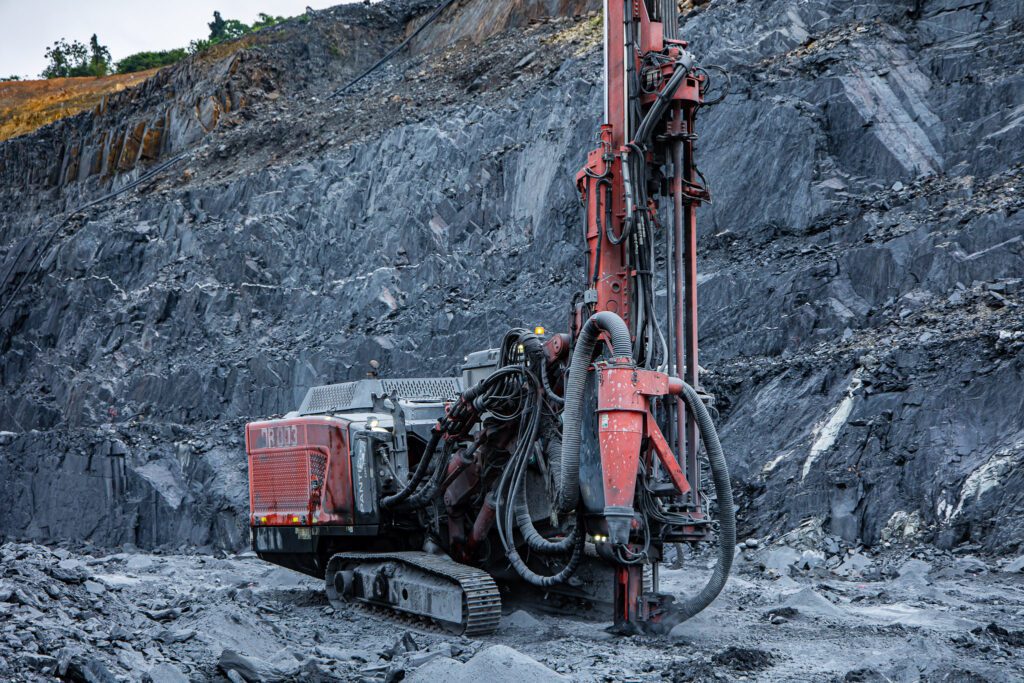
However, fiscal extraction alone does not cure the structural vulnerability of capital flight. When foreign multinationals hold 90% of operating equity, the bulk of net profits, treasury management, and strategic procurement decisions remain anchored in offshore financial centers.
Moving beyond the 10% threshold requires shifting from passive rent collection to active operational ownership, ensuring that profit margins remain within Ghana’s banking sector to stabilize the local currency and deepen domestic capital markets.
Leveraging Lease Renewals and Local Content Regulations for Indigenous Control
Critical inflection points such as the Tarkwa mining lease renewal offer immediate policy levers to restructure equity participation and operational control.
Historically, long-term stability and development agreements insulated foreign leaseholders from regulatory shifts while limiting domestic equity expansion.
Re-evaluating expiring concessions allows the Ministry of Lands and Natural Resources and the Minerals Commission to enforce more ambitious joint-venture structures and direct indigenous operatorship where local technical capacity exists.

Ghana’s regulatory architecture already provides a foundation through the Minerals and Mining (Local Content and Local Participation) Regulations, 2020 (L.I. 2431), which mandates progressive localization of expatriate roles and enforces a strict local procurement list for mine support services.
Yet, industry analysts frequently note that domestic participation remains concentrated in lower-margin logistics, catering, and civil works rather than core mine management and engineering.
Addressing this disparity in Parliament, Mr. Opoku stressed that “we need to look for local competent Ghanaians to be able to manage our mines,” insisting that qualified local entities must not be sidelined when major assets become available for renegotiation.
Building Sovereign Industrial Capacity and Retaining Generational Wealth
Empowering indigenous mining houses carries profound macroeconomic implications beyond immediate dividend payouts.
Finite mineral reserves cannot be replenished once depleted, making uncompensated or under-leveraged extraction a permanent loss of generational national wealth.
When competent Ghanaian firms manage large-scale operations, they naturally anchor supply chains within the domestic economy stimulating local manufacturing, engineering consultancy, geological surveying, and specialized insurance underwriting.
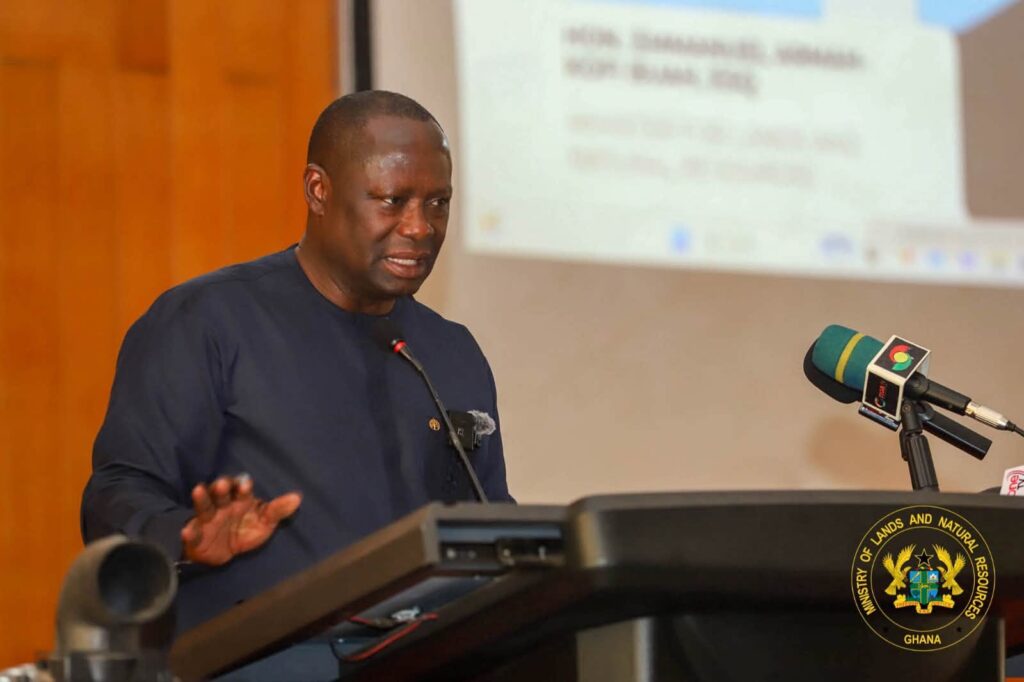
Furthermore, cultivating Tier-1 Ghanaian mining operators creates regional champions capable of competing across West Africa’s lucrative mineral belts, reversing the historical dynamic in which African jurisdictions import foreign technical expertise for resource development.
Rejecting the notion that local enterprises lack the sophistication to run complex pits, the Mpraeso legislator declared that “our money is ours, our roads are ours, our businesses are ours, and it’s important that we encourage a lot more Ghanaians to be involved in this process.”
By pairing rigorous regulatory enforcement with deliberate access to financing and mineral concessions, Ghana can transform its extractive sector from an enclave export industry into an enduring engine of sovereign industrial growth.
READ ALSO: Ghana Wins ITU Council Seat for 2027–2030 Term in Doha