Plans for the establishment of the proposed University of Science and Technology in Damongo have advanced, with a ministerial and local planning committee inspecting two existing tertiary institutions earmarked to accommodate its initial academic activities ahead of a planned 2027 commencement.
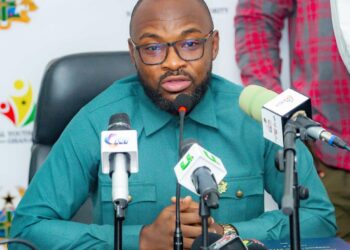
The inspection, led by Savannah Regional Minister Salisu Be-Awuribe Issifu, covered the Damongo College of Agriculture and Allied Sciences and the Damongo Nursing and Midwifery College. The institutions are expected to serve as temporary campuses while infrastructure is developed at the university’s designated permanent site in Soalpe, within the West Gonja Municipality.
The exercise forms part of preparations to establish the university, which is expected to expand access to specialised tertiary education and strengthen science and technology training in the Savannah Region.
According to information from the Savannah Regional Coordinating Council, the proposed arrangement will enable the institution to begin academic operations using existing facilities while construction proceeds at its main campus.
Committee Inspects Existing Institutions Ahead Of University Launch
During engagements with tutors at the two colleges, Mr Be-Awuribe encouraged academic staff to pursue higher qualifications to improve their prospects of securing teaching appointments at the proposed university.

He emphasised the importance of continuous professional development, urging tutors to prepare themselves academically rather than wait until vacancies arise before seeking further education.The Regional Minister also disclosed plans to collaborate with the Ghana Scholarship Secretariat to explore scholarship opportunities for some existing tutors.
The proposed initiative is intended to help qualified staff advance their education while building the human resource capacity required to support the university’s academic programmes.
Soalpe Site Designated For University’s Permanent Campus
Following the inspection of the two institutions, the committee proceeded to Soalpe, where approximately 3,000 acres of land have been demarcated for the university’s permanent campus.
The site, located in the West Gonja Municipality, is expected to accommodate the infrastructure and facilities required to support the institution’s long-term academic and administrative operations. Under the proposed phased development arrangement, the university will initially operate from the two existing colleges while construction progresses at Soalpe.
Students are expected to relocate to the permanent campus once the necessary facilities have been completed. The approach is intended to allow academic activities to commence without requiring the entire permanent campus to be completed before the institution admits its first students.

However, the committee’s inspection represents a preparatory step, and the availability of the proposed facilities, staffing arrangements and other operational requirements will remain important to the university’s readiness.
China Commits US$30 Million Towards Initial Construction Works
The proposed university has also received financial backing from the Chinese Government, which has committed US$30 million towards the initial construction works. The funding agreement was signed on January 20, 2026, following discussions between Finance Minister Dr Cassiel Ato Forson and China’s outgoing Ambassador to Ghana, Tong Defa.
The agreement forms part of Ghana-China development cooperation and is intended to support the establishment of the institution. President John Dramani Mahama had earlier announced the funding during his two-day working tour of the Savannah Region in May 2026, indicating that additional resources were being pursued to advance the project.
The Education Minister, Haruna Iddrisu, subsequently disclosed that the proposed university would require more than US$100 million to construct and fully equip. Speaking during an engagement with Chinese Ambassador Cong Song in September 2026, Mr Iddrisu highlighted the need for additional financial support and partnerships to meet the project’s overall requirements.
He also outlined the institution’s intended academic direction, which includes science and technology, robotics, digital sciences and artificial intelligence.At an earlier citizen engagement in Bolgatanga, Mr Iddrisu disclosed that the project had progressed beyond preliminary planning.

“We have just concluded work on the design and build of the proposed university,” he stated, adding that the government was mobilising additional resources to commence the project. The funding gap therefore remains an important consideration as preparations move towards construction and the university’s planned commencement.
The university is expected to contribute to the government’s broader objective of establishing tertiary institutions in regions without public universities, reducing geographical disparities in access to higher education.
Its proposed focus on emerging technological disciplines could also create opportunities for students in northern Ghana to access specialised training without necessarily travelling to other regions.
With the planning committee’s latest inspection, attention now turns to the completion of the necessary academic, infrastructure and human resource arrangements ahead of the proposed 2027 commencement.
READ ALSO: Mahama Positions Ghana as Gateway for German Investment