• About
  • Advertise
  • Privacy Policy
  • Contact
Friday, September 4, 2026
  • Login
The Vaultz News
  • Top Stories
  • News
    • General News
    • Education
    • Health
    • Opinions
  • Economics
    • Economy
    • Finance
      • Banking
      • Insurance
      • Pension
    • Securities/Markets
  • Business
    • Agribusiness
    • Vaultz Business
    • Extractives/Energy
    • Real Estate
  • World
    • Africa
    • America
    • Europe
    • UK
    • USA
    • Asia
    • Around the Globe
  • Innovation
    • Technology
    • Wheels
  • Entertainment
  • 20MOBPL2DNew
  • Jobs & Scholarships
    • Job Vacancies
    • Scholarships
No Result
View All Result
The Vaultz News
  • Top Stories
  • News
    • General News
    • Education
    • Health
    • Opinions
  • Economics
    • Economy
    • Finance
      • Banking
      • Insurance
      • Pension
    • Securities/Markets
  • Business
    • Agribusiness
    • Vaultz Business
    • Extractives/Energy
    • Real Estate
  • World
    • Africa
    • America
    • Europe
    • UK
    • USA
    • Asia
    • Around the Globe
  • Innovation
    • Technology
    • Wheels
  • Entertainment
  • 20MOBPL2DNew
  • Jobs & Scholarships
    • Job Vacancies
    • Scholarships
No Result
View All Result
The Vaultz News
No Result
View All Result
in Agribusiness

Ghana: Closing the Gender Gaps in Informal Oil Palm Industry to Benefit Women Workers- CGIAR

Maynard Championby Maynard Champion
January 21, 2022
Reading Time: 4 mins read
Add as Preferred on Google
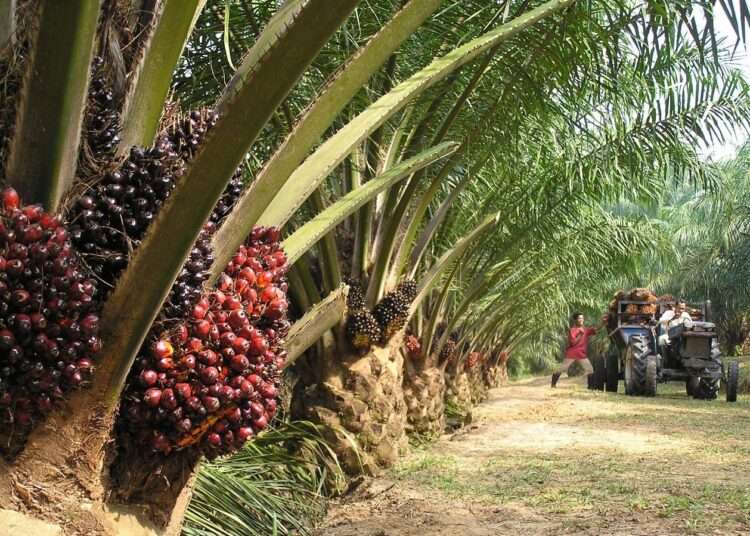
Oil Palm Plantation

Oil Palm Plantation

‘Oil palm mamas’ or ‘market queens’, as they are descriptively referred to, in the informal oil palm industry in Ghana, because of their high-profile operations throughout the oil palm value chain play a highly competitive role in the sector.

Representative of all women workers within the oil palm industry, these oil palm mamas, unlike their male counterparts (oil palm kings) face gendered challenges that grossly shrink the benefits and opportunities open to them in the sector.

The timely research conducted by scientists with the CGIAR Research Programs on Forests, Trees and Agroforestry (FTA), Policies Institutions and Marketplaces (PIM) and partners, identified the opportunities and challenges for realizing sustainable and gender equitable value chain participation across different types of palm oil processing mills.

Notably, the findings of the research lifts the veil off the sector, and proposes that palm oil enterprises and stakeholders in formal and informal sectors improve their production systems without disproportionately disadvantaging women workers.

ADVERTISEMENT

CGIAR’s Center for International Forestry Research and World Agroforestry (CIFOR-ICRAF) in carrying out the gendered analysis, used sex-disaggregated surveys, semi-structured interviews and stakeholder forums, to measure the social footprint of informal and formal market value chains for oil palm in Ghana’s Eastern Region.

Emily Gallagher, a scientist at CIFOR-ICRAF with specialty in integrated rural development, said:

“What we want to demonstrate with this social footprint analysis is that both formal and informal oil palm processors serve functional niches in this highly gendered economy,”  while defining “highly gendered” as an economy structured by gender norms in which women and men each have specific roles with little crossover or transgression of those norms.  

“The methodology proposed in the manual allows us to share our findings visually with palm oil enterprises so that they can take actionable steps to upgrade processing conditions and improve employee satisfaction without sacrificing labor opportunities for women and men.”

Emily Ghallagher, Scientist, CIFOR-ICRAF
More Women are less competitive in the industry

Previous research on the subject within the oil palm sector revealed that by formalizing the sector, women could be disproportionately disempowered. While it is easy for men to find decent jobs in the formal sector, women are more likely relegated to temporary work and lower-paying positions.

In most cases, women have slim chances to receive formal education and training, which makes them less competitive in a formalized industry with rapidly evolving technologies.

ADVERTISEMENT

“We must address issues of fair competition, contract loyalty and basic environmental and occupational health standards while finding ways to support a vibrant palm oil economy that works for producers and processors of different genders.”

Emily Ghallagher, Scientist, CIFOR-ICRAF

 In making this happen, the research revealed that there are means by which the formal sector could accommodate some of the social structures and flexible work arrangements that make artisanal processing mills appealing to female workers.

Also, both formal and informal sectors in a very profound sense, can choose to upgrade to new technologies so that the industry would not drop unskilled laborers but rather provide intrinsic opportunities to all.

The research made references to the development of gender-responsive oil palm sustainability standards through CIFOR-ICRAF’s ongoing engagement with certification bodies such as the Roundtable on Sustainable Palm Oil (RSPO) and the Tree Crops Development Authority (TDCA).

ADVERTISEMENT

By bringing together stakeholders and interest groups would help develop standards that are equitable for women and men of different ethnicities, classes and generations, the research noted. As a result, ‘oil palm mamas’ and ‘market queens and kings’ can continue to demonstrate, fairly-compensated roles in Ghana’s oil palm sector and beyond.

Indeed, the informal oil palm sector is saddled with long-standing problems including low oil extraction rates, poor working conditions and negative environmental impacts linked to carbon emissions, air and water pollution which poses greater risk to workers within this space.

The gender gaps within the sector show that about 80 percent of informal mills are owned by men, even though the operators and majority of laborers are women; this creates a barrier to equal benefit sharing between the genders.

By extension, other issues have become of interest in the sector, that is, the government’s decision to indefinitely suspend the review of the 50% benchmark reduction policy. Of which the Oil Palm Development Association of Ghana (OPDAG), in a statement, has called on the government to reconsider its decision in order to salvage local businesses.

READ ALSO: UK Gov’t Supports Company to Export Emergency Bridges for Flood-Hit Areas in Ghana

ADVERTISEMENT

Sign Up to Our Newsletter

Fresh updates, Straight to your inbox

Tags: extractionForestrygenderghanaOil palm
Please login to join discussion
Previous Post

Political Ambition Sparks Chaos In Davido’s Family

Next Post

Top US & Russian diplomats meet in Switzerland as tensions over Ukraine rise

Related Posts

Officials of MoTAI and JICA at a Folloe-Up Meeting in Accra to Advance the Agro-Processing Value Chain Project Under AfCFTA
Agribusiness

Ghana, JICA Plan to Boost Agro-Processed Exports Under AfCFTA Initiative

September 3, 2026
Deputy Minister of Food and Agriculture, John Dumelo
Agribusiness

Dumelo Urges Youth to Become Agripreneurs at Africa Food Systems Forum in Rwanda

September 2, 2026
c653427b 444f 4b06 beb3 9279ccf7fa69
Agribusiness

COCOBOD Pays GH¢2.68bn to Complete 2026 DDEP Obligations, Clears GH¢162m Cocoa Bills

September 1, 2026
Representatives of the 24-Hour Economy and Accelerated Export Development Secretariat, Aquarium Capital,  the Tony Blair Institute, Petra Pension Trust and Axis Pension Trust in a Photo after Signing the Heads of Terms Agreement for the US$270 Million Poultry Value Chain Investment in Accra
Agribusiness

24-Hour Economy Secretariat Secures $270m Deal to Revamp Ghana’s Poultry Industry

August 31, 2026
ADVERTISEMENT

Sign Up to Our Newsletter

Fresh updates, Straight to your inbox

ADVERTISEMENT

Recent News

Kaneshie Trotro Station

Fuel Costs Consuming Daily Earnings Of Drivers — GPRTU Deputy PRO

September 4, 2026
Minister for Foreign Affairs, Samuel Okudzeto Ablakwa

MFWA Boss: Ablakwa Practises in Government What He Preached in Opposition

September 3, 2026
Government’s Bond Payments Drive Domestic Debt Surge — Now GH¢323.7bn and Counting

GH¢282bn SOE Debt Threatens Ghana’s Economic Stability, Atuahene Warns

September 3, 2026
H.E. Sadiq Abdulai Abu, Ghana's Ambassador to Nigeria and the Deputy CEO of GEPA, Mr. Raymond Rashid Kramer together with other Officials in a Group Photo.

GEPA Showcases Ghana at GITEX Nigeria 2026

September 3, 2026
U Urges Israel To Abandon Move To Cancel Waiver On Cooperation With Palestinian Banks

Ben-Gvir Proposes Plan To Remove Palestinians From Gaza

September 3, 2026
ADVERTISEMENT
Next Post
Russia

Top US & Russian diplomats meet in Switzerland as tensions over Ukraine rise

The Vaultz News

Copyright © 2025 The Vaultz News. All rights reserved.

Navigate Site

  • About
  • Advertise
  • Privacy Policy
  • Contact

Follow Us

Welcome Back!

Login to your account below

Forgotten Password?

Retrieve your password

Please enter your username or email address to reset your password.

Log In
No Result
View All Result
  • Top Stories
  • News
    • General News
    • Education
    • Health
    • Opinions
  • Economics
    • Economy
    • Finance
      • Banking
      • Insurance
      • Pension
    • Securities/Markets
  • Business
    • Agribusiness
    • Vaultz Business
    • Extractives/Energy
    • Real Estate
  • World
    • Africa
    • America
    • Europe
    • UK
    • USA
    • Asia
    • Around the Globe
  • Innovation
    • Technology
    • Wheels
  • Entertainment
  • 20MOBPL2D
  • Jobs & Scholarships
    • Job Vacancies
    • Scholarships

Copyright © 2025 The Vaultz News. All rights reserved.

This website uses cookies. By continuing to use this website you are giving consent to cookies being used. Visit our Privacy and Cookie Policy.