Tag: Romania

  • Bomb Threats Disrupt Flights Across Europe

    Bomb Threats Disrupt Flights Across Europe

    Authorities in Denmark, the Czech Republic and Romania investigated fresh security threats on Friday as a series of suspected hoax bomb alerts targeting flights disrupted air travel across Europe.

    A Romanian Tarom flight travelling from Prague to Bucharest received a bomb threat during its journey, prompting security concerns. The aircraft landed at its intended destination, where airport officials confirmed that the threat was false.

    In Denmark, police said that they had maintained a presence at Copenhagen Airport for a second consecutive day in response to threats directed at air traffic.

    Their initial assessment found no danger to passengers or other people at the airport, with flights continuing safely and without disruption. “It is our immediate assessment that there has been no danger to passengers or others at the airport,” Danish police said, adding that operations were proceeding normally.

    Czech police also reported renewed threats against aircraft on Friday, saying they had introduced security measures in coordination with Prague’s Václav Havel Airport.The authorities said that the measures were designed to address the threats while limiting disruption to airport operations.
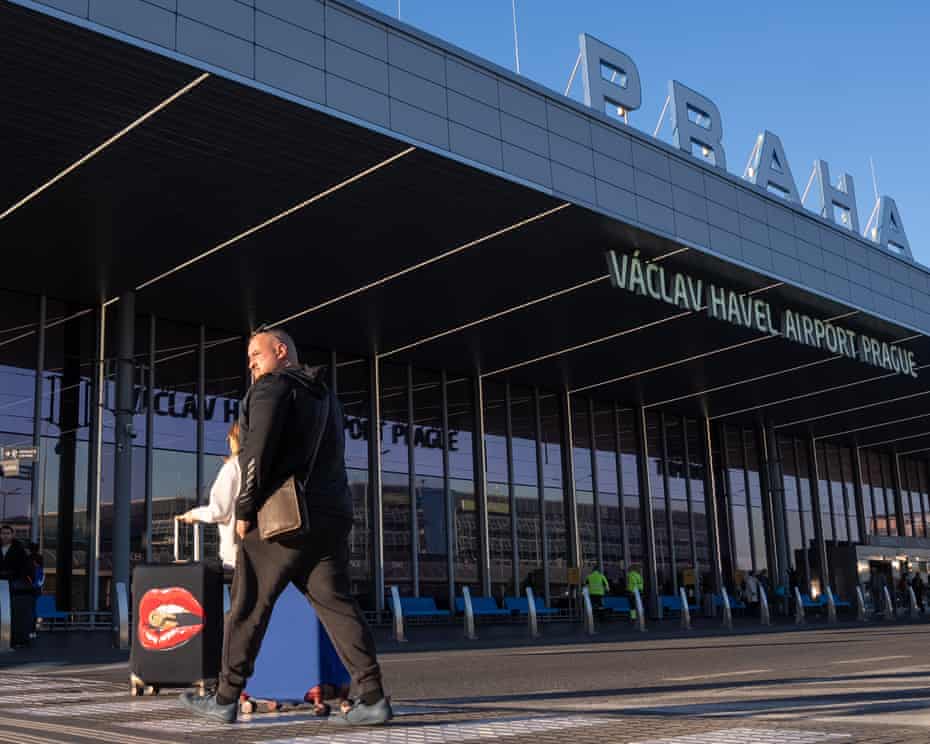
    Passengers walk towards Vaclav Havel Airport Prague after multiple flights bound for Prague received bomb threats.

    A Bulgarian transport ministry spokesperson disclosed that alerts were also received for two flights to Sofia on Friday, and that both flights coming in from London Stansted Airport in Britain and from Brussels landed safely. Looking at the airport’s arrivals board, that would be W64328 from Brussels and FR1730 from London Stansted.

    Defence Minister Romulusz Ruszin-Szendi said on Facebook that Hungary’s fighter jets have also been scrambled three times this morning to escort civilian flights in Hungarian airspace after reported bomb threats. He said that the first alert came in response to a threat issued against a WizzAir flight from Brussels to Sofia (W64328), and two more for flights from Prague to Cyprus and Bucharest.

    Ireland Broadcaster Evacuated After Bomb Threat

    The security concerns extended beyond aviation to Ireland, where the headquarters of national broadcaster RTÉ in Dublin was evacuated on Friday following a bomb threat.

    The broadcaster suspended live programming and replaced its broadcasts with pre-recorded material while the situation was assessed.

    Bomb threats against Irish media organisations disrupted broadcasts and prompted staff evacuations and police searches. RTÉ Radio One’s Today With David McCullagh went off air this morning and was replaced with music as staff huddled outside buildings at the national broadcaster’s Donnybrook campus.

    Staff at other outlets including Newstalk Radio, Today FM, Virgin Media and the Irish Independent were also evacuated. Radio One’s regular broadcast returned to air at 10.13am. “It has been quite an interesting morning on RTÉ,” McCullagh said.

    The email, received before 9am, said an explosion would detonate within 45 minutes, said McCullagh. Police with sniffer dogs remained at the campus. The Taoiseach, Micheál Martin, told the programme that such threats had to be taken seriously and that Ireland’s police and defence forces would seek to identify those responsible. He said, “It shows how relatively simple it can be to cause disruption and undermine the normal operation of society.”

    The emailed threats came after separate threats to airlines on Thursday disrupted dozens of flights across Europe.

    Ireland’s police force, An Garda Síochána, said it was aware of threats directed at media organisations in Ireland and elsewhere in Europe. It said officers were liaising with media organisations and would investigate the threats.

    The evacuation added to a series of security incidents reported across the continent in recent days, raising concerns about the potential impact of repeated false alerts on public services and transport operations.

    More Than Two Dozen Flights Affected

    More than two dozen flights were affected by threats earlier in the week, with some aircraft diverted as authorities carried out security checks to establish whether there was any danger.

    Although the latest incidents have not been confirmed as genuine attacks, the frequency of the threats has placed additional pressure on airport security and emergency response teams.

    Authorities have had to assess each report while seeking to minimise disruption to passengers and normal airport operations.

    False bomb threats are not uncommon, but the concentration of incidents over a short period has drawn particular attention.

    The developments come amid heightened geopolitical tensions and warnings from European authorities about the possibility of increased hybrid threats against countries across the region.

    Such threats can include cyberattacks, disinformation campaigns, sabotage and other activities intended to disrupt public institutions and essential services.

    European countries have also reported other forms of disruption in recent months, including attacks on supermarket refrigeration systems, drone incursions and unexplained activations of public alert applications.

    While the incidents have raised questions about possible links to wider security tensions, the information available does not establish that the flight threats or the evacuation at RTÉ were coordinated or connected to any particular state.

    Authorities continue to investigate the reported incidents as European airports and public institutions remain alert to further security threats.

  • Zelenskyy Hosts Inaugural Carpathian Eight Summit

    Zelenskyy Hosts Inaugural Carpathian Eight Summit

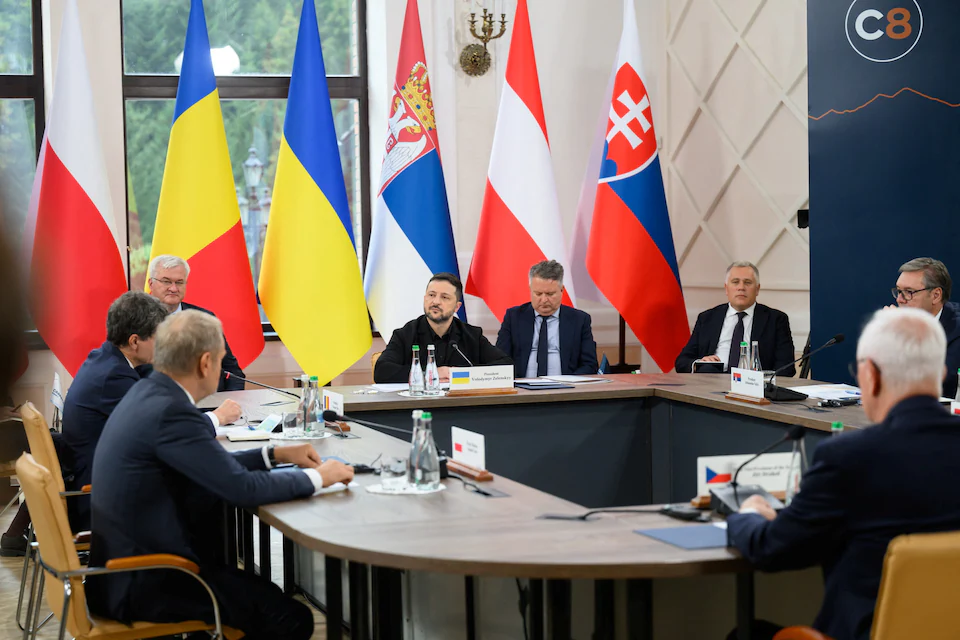
    Ukrainian President, Volodymyr Zelenskyy has hosted leaders and representatives from seven European countries for the inaugural summit of the “Carpathian Eight,” as Kyiv seeks to deepen regional cooperation amid the continuing war with Russia.

    The summit, held in Ukraine’s western Ivano-Frankivsk region, brings together Ukraine, Romania, Serbia, Poland, Slovakia, the Czech Republic, Austria and Hungary, with the European Union also involved. The new regional format is intended to strengthen cooperation across security, energy, logistics, cross-border economic ties and support for local communities.

    Ukraine’s President Volodymyr Zelenskiy and other participants at the first-time Carpathian Eight Summit meeting, amid Russia’s attack on Ukraine, in Ivano-Frankivsk region, Ukraine, September 18, 2026.

    Zelenskyy described the gathering as a “significant beginning” of a movement aimed at bringing the participating countries closer together and creating another element of cooperation at the European Union level.

    “Zelenskyy said as he opened the summit.

    “Today, for the first time, here in Ukraine, in our part of the Carpathians, we hold a Summit that brings together all the Carpathian states, the regions and communities of our countries. We are launching a new format – C8, the Carpathian Eight – bringing together us and our neighbors in Europe.”

    Volodymyr Zelenskyy

    The initiative brings together countries with differing positions on Ukraine and its war with Russia. Poland and Romania have been among Kyiv’s supporters, while Hungary, Serbia and Slovakia have not provided Ukraine with direct military assistance.

    The summit comes as diplomatic efforts to end Russia’s full-scale invasion have stalled. U.S.-mediated negotiations have faced disagreements over territorial concessions in eastern Ukraine, while Kyiv has continued to seek security guarantees from its partners as part of any potential settlement.

    Ukraine’s President Volodymyr Zelenskiy, Czech politician Jiri Drahos, Polish Prime Minister Donald Tusk, Romanian President Nicusor Dan, Ukrainian first lady Olena Zelenska, Serbian President Aleksandar Vucic and Austrian politician Christine Schwarz-Fuchs pose for a photo at the first time Carpathian Eight Summit, amid Russia’s attack on Ukraine, in Ivano-Frankivsk region, Ukraine September 18, 2026.

    Against that backdrop, the Carpathian Eight gives Ukraine an additional regional platform for cooperation with neighbouring states. Zelenskyy has identified security, energy and logistics as key areas, alongside expanding cross-border economic cooperation.

    The initiative also has an economic dimension. A business forum being held alongside the summit has brought together hundreds of representatives, with trade and investment agreements worth about €1 billion expected to be signed.

    Close to 550 business representatives were expected to attend the forum. “It’s a good start: energy, logistics, ⁠infrastructure and cross-sector agreements,” he said in a speech transmitted on Ukrainian TV.

    For Ukraine, strengthening regional transport and trade links has become increasingly important since Russia’s full-scale invasion disrupted established routes and created additional pressure on the country’s economy and infrastructure.

    Russian Strikes Kill Two in Zhytomyr

    The summit is taking place against the backdrop of renewed Russian attacks across Ukraine, with overnight strikes killing two people and injuring others in the Zhytomyr region.

    Ukraine’s State Emergency Service said that two people were killed and two others injured in overnight Russian strikes in the region west of Kyiv. The attacks triggered fires in warehouse and production buildings, while emergency responders had to withdraw during repeated air raid alerts before returning to contain the fires. Emergency deminers also inspected the affected area for explosive devices.

    A separate Russian drone attack in Zaporizhzhia destroyed a shopping complex, injured one person and caused a fire, according to Ukrainian authorities.

    The attacks came as both Russia and Ukraine continued to report extensive overnight drone activity. Russia’s Defence Ministry said its air defences intercepted and destroyed 629 Ukrainian drones over 14 Russian regions, as well as areas around Crimea and the Azov and Black seas.

    Moscow Mayor Sergei Sobyanin said more than 350 drones had been heading toward Moscow, with most destroyed before reaching the capital and 64 intercepted as they approached the city.

    In Russia’s Rostov region, near the Ukrainian border, local authorities reported damage to houses and residential buildings following an attack. Rostov Governor Yuri Slyusar said that there were no casualties.

    The Russian military also said it had carried out overnight drone strikes against Ukrainian ports, vessels and logistics facilities that it said were supporting Ukraine’s military.

    Among the sites reported hit was a bulk carrier in the Ukrainian port of Chornomorsk. Russian forces also struck a Nova Poshta logistics facility northwest of Odesa. Russia’s Defence Ministry said the facility was being used to store and distribute military cargo from Europe.

    The reports reflect the continuing intensity of the conflict even as diplomatic efforts remain underway.

    The Carpathian Eight summit therefore comes at a moment when Ukraine is simultaneously pursuing diplomatic channels aimed at ending the war and strengthening its regional relationships. By bringing together countries with different levels of political and military support for Kyiv, the new format seeks to establish areas of cooperation that can continue despite differences over the conflict.

    Zelenskyy said the participating countries would work toward stronger ties in areas including security, energy, logistics and economic cooperation. The initiative is also intended to create closer links with the wider European Union framework.

    As Russia and Ukraine continue exchanging long-range attacks, Kyiv is using the summit to broaden its regional partnerships while maintaining its efforts to secure international support for its security and economic priorities.

  • Former Kotoko Winger Amidu Acquah Joins CSM Unirea Alba in Romania

    Former Kotoko Winger Amidu Acquah Joins CSM Unirea Alba in Romania

    Former Asante Kotoko winger Peter Amidu Acquah has completed a permanent move to Romanian side CSM Unirea Alba Iulia.

    The 20-year-old Ghanaian has joined the Liga III club after leaving Asante Kotoko at the end of the 2025/26 Ghana Premier League season after the expiration of his contract.

    The move represents the first overseas experience of Acquah’s career, with the young winger now set to continue his development in Europe away from Ghana after three seasons with the Porcupine Warriors. I’m

    Acquah joined Kotoko in 2023 from PAC Academy after impressing during a trial with the Kumasi-based club. He subsequently signed a three-year contract as part of the club’s plans to develop young talent for the first team.

    Peter Amidu Acquah won the MTN FA Cup with Asante Kotoko in 2025

    He gradually established himself in the senior setup and enjoyed his most productive campaign during the 2025/26 season, scoring four goals in 26 Ghana Premier League appearances.

    One of his memorable moments came in March 2024 when he scored in first-half stoppage time to give Kotoko a 1-0 victory over Bibiani Gold Stars at the Baba Yara Stadium.

    Unirea Alba Iulia’s History and Acquah’s New Challenge

    Acquah’s departure from Kotoko came as part of a wider squad reshuffle ahead of the 2026/27 campaign, with his contract expiring at the end of the season.

    He now joins a Unirea Alba Iulia side with a history stretching back to 1924, although the club currently competes in Romania’s third tier.

    Unirea Alba Iulia

    Unirea have previously played in the country’s top division, recording their best Liga I finish with a sixth place finish in the 2003/04 season.

    The club have also won the Romanian second division twice, in 2002/03 and 2008/09, while they have three third-tier championships to their name.

    Their most notable Romanian Cup achievement came in the 1990/91 season when they reached the semi-finals after eliminating Steaua București in the quarter-finals.

    Unirea have experienced a significant rebuilding process in recent years and became CSM Unirea Alba Iulia under municipal ownership in 2022.

    The former PAC Academy forward is the club’s 26th signing, highlighting the extent of their recruitment ahead of the campaign.

    Acquah will now look to adapt to Romanian football, compete for regular playing time and build on the experience gained during his spell with Kotoko.

    The move gives the player a fresh opportunity to establish himself in Europe and take another step in his developing career.

  • EU Warns Of Rising Threats After Romania Destroys Naval Drone

    EU Warns Of Rising Threats After Romania Destroys Naval Drone

    European Commission President Ursula von der Leyen has warned of an escalating campaign of threats against the European Union after Romania destroyed a naval drone near a major offshore gas project in the Black Sea.

    Von der Leyen described the incident as part of a broader pattern of hybrid threats aimed at unsettling European citizens and testing the unity of the bloc, although she did not directly name Russia in her remarks.

    “An escalating campaign of threats is underway, unsettling our citizens and seeking to divide our Union. This is hybrid warfare.”

    Ursula von der Leyen

    Her comments came after Romania’s military destroyed a marine drone that had been detected only a few hundred metres from the Neptun Deep platform, a major offshore gas project in the Black Sea.

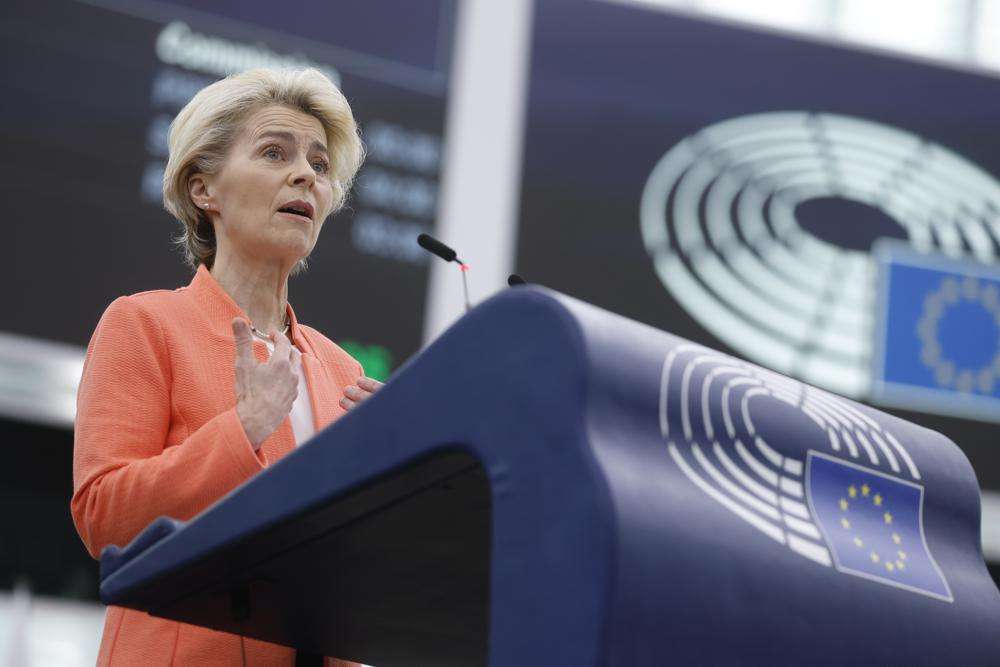
    European Commission President Ursula von der Leyen as EU Pauses Trump Tariff Countermeasures For 90 Days
    European Commission President Ursula von der Leyen.

    Romanian Defence Minister Radu Miruță said that the drone was spotted close to the Neptun Deep extraction works, located about 80 miles east of Constanța. Following an assessment by Romanian authorities, a Romanian F-16 fighter jet was ordered to destroy the drone. “Following the analyses carried out and in coordination with the President of Romania, in order to protect the lives of the several hundred people working on the platform and to secure the critical infrastructure, the decision was made to destroy the drone,” Miruță said in a Facebook post.

    The Neptun Deep project is one of Romania’s most significant offshore energy developments and is expected to play an important role in the country’s future gas production. Miruță said that Romanian authorities had checked with Kyiv and confirmed that the vessel was “not of Ukrainian origin,” raising further concerns about possible Russian involvement amid heightened tensions in the Black Sea.

    The incident follows other drone-related security concerns near the same gas project. Earlier this month, Romanian army divers destroyed two Gerbera-type drones that were drifting in the country’s Black Sea exclusive economic zone close to the Neptun Deep development.

    Responding to the latest incident, von der Leyen said that the European Union was facing an increasingly complex security environment, arguing that preserving peace in Europe now also requires the capacity to deter what she described as provocation and aggression. “The founding mission of our Union is to preserve peace. Today, that also means having the capacity to deter provocation and aggression,” von der Leyen said.

    She pointed to the European Union’s Readiness 2030 agenda, which she said is mobilising up to €800 billion to strengthen Europe’s defence capabilities. According to von der Leyen, initiatives including the European Drone Defence Initiative and the Eastern Flank Watch are intended to expand European defence production and provide member states with capabilities needed to respond more quickly to emerging threats.

    “With the European Drone Defence Initiative and the Eastern Flank Watch, we are scaling up production in Europe to deliver capabilities Member States need. So we can respond to emerging threats with speed, unity and resolve.”

    Ursula von der Leyen

    Ukraine Accuses Russia Of Widening Regional Risks

    Ukraine’s Foreign Minister, Andrii Sybiha also raised concerns about security threats beyond Ukraine’s borders, saying that Russia had violated the airspace of both Moldova and Romania during overnight attacks on Ukraine. “These are not isolated incidents. They are part of Russia’s deliberate and systemic terrorist attacks,” Sybiha said.

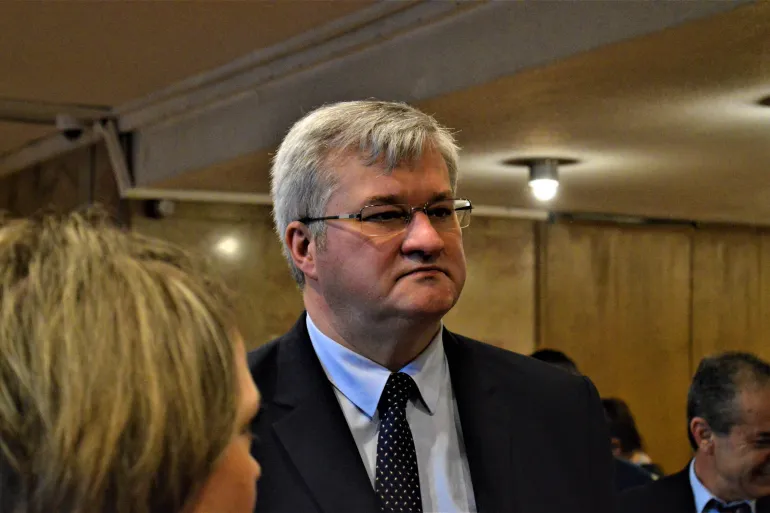
    Andrii Sybiha, Ukraine’s Foreign Minister as White House Hails US-Ukraine minerals deal
    Andrii Sybiha, Ukraine’s Foreign Minister.

    He warned that Moscow was increasingly testing the resolve of NATO and its partners by violating the sovereignty of neighbouring countries and expanding the risks associated with the war beyond Ukraine. “The aggressor state is increasingly testing the resolve of NATO and its partners, violating the sovereignty of neighbouring states and deliberately expanding the risks posed by its war far beyond Ukraine,” he said.

    Sybiha said that he would work with counterparts in Moldova and Romania to develop what he described as a stronger and more effective regional response.

    “Our collective response must be stronger than Russia’s attempts to test our unity and resolve. The security and stability of the entire region are at stake.”

    Andrii Sybiha

    Romania, a member of both the European Union and NATO, has repeatedly reported incidents involving drones and other military debris near or within its territory and exclusive economic zone since Russia’s full-scale invasion of Ukraine. The proximity of the latest drone to the Neptun Deep platform is likely to heighten concerns about the vulnerability of offshore energy infrastructure, particularly as European countries seek to strengthen energy security and reduce dependence on Russian supplies.

    While Romanian officials have not publicly identified who was responsible for the naval drone, the confirmation that it was not of Ukrainian origin has added to speculation about its source. For now, the incident is expected to reinforce calls for closer coordination among European and NATO partners as countries on the alliance’s eastern flank confront growing security risks linked to the continuing war in Ukraine.

  • Danube River Hits Record Low Amid Heatwave, Drought

    Danube River Hits Record Low Amid Heatwave, Drought

    Persistent drought and successive extreme heatwaves have driven water levels on the Danube River to historic lows.

    The prolonged dry conditions have severely reduced water levels along one of Europe’s most important rivers, disrupting navigation, threatening ecosystems and raising concerns about water supplies and electricity demand across several countries.

    In Hungary, the Danube’s level in the capital, Budapest, fell to around 10 centimeters (4 inches), well below the previous record low of 33 centimeters (13 inches) recorded in 2018. The unusually low level has exposed large sections of the riverbed and highlighted the severity of the ongoing drought affecting the region.

    The Danube’s water flow has also fallen to 1,500 cubic meters per second in Romania, less than a third of its July average.

    Water levels are not expected to rise on the Danube in the coming days or even weeks as no significant rainfall is forecast, and as a renewed extreme heat wave bears down on the region with daytime highs topping 38 Celsius (100 Fahrenheit), electricity and water use are on the rise.

    Authorities in several countries along the Danube are closely monitoring the river’s condition as low water levels begin affecting traffic on one of Europe’s busiest inland waterways.

    Boats sit on the ground as Danube water levels have reduced.

    The Danube stretches nearly 2,900 kilometers from Germany’s Black Forest to the Black Sea, passing through or bordering 10 countries and serving as a vital transport corridor for trade, tourism and agriculture. Millions of people also rely on the river for drinking water, irrigation and industrial activities.

    Governments Taking Measures To Avert Energy Crisis

    Meanwhile, numerous governments across Central and Eastern Europe are taking steps to conserve electricity and avert an energy crisis as record low water levels on the Danube River.

    The Danube’s record low levels have pushed Hungary’s only nuclear power plant, the Soviet-built, four-reactor plant at Paks, to the brink of powering down entirely for the first time in its 44 years in service.The Paks plant, which uses water from the Danube to cool its reactors, on Monday was producing only 240 megawatts of power rather than the usual 2,000 due to successive power-downs of its four reactors.

    MVM Paks nuclear power plant.

    In video posted to Facebook today, Hungarian Prime Minister Péter Magyar said that engineers had managed to keep the plan’s final operating turbine temporarily running, averting an expected shutdown on the weekend.

    Magyar stated that a full power-down will likely only happen on Tuesday or Wednesday. “This is very good news, because the complete shutdown of the Paks power plant can still be avoided, at least temporarily, on one of the biggest consumption days,” he said.

    The Paks plant, located around 90 kilometers (55 miles) south of Budapest, accounts for nearly half of Hungary’s electricity production and around a third of its consumption. Hungary has relied on regional electricity imports as well as renewable sources to try to make up for the deficit from the Paks plant.

    Last week, Hungary’s government asked major industrial users to curb their electricity consumption and sought voluntary savings from households in order to conserve supply, particularly in peak demand hours between 5 p.m. and 10 p.m.

    It also announced that electric-powered freight trains would not be permitted to run during peak hours beginning on Monday in order to conserve an estimated 70 to 90 megawatt-hours of electricity per day.

    While conservation measures were initially voluntary, Magyar’s government on Saturday issued a decree allowing for them to be made mandatory for large industrial or commercial consumers. He said today that the conservation push had resulted in 700 fewer megawatts of electricity being used the previous day, and thanked Hungarians for their efforts.

    Meanwhile, plants in neighboring countries have also seen dramatic drops in power generation, as well as disruptions to shipping and agriculture. Today, Romania’s military used 180 kilograms (397 pounds) of explosives to blast rock near the lower Danube’s Bala Canal in an effort to redirect water into the river’s main channel and toward the state-owned Cernavoda nuclear power plant.

    Authorities have already shut down one reactor unit at the Cernavoda plant, which is operating at about half its normal capacity. Acting Prime Minister Ilie Bolojan announced a nationwide state of alert in the energy sector on Friday, and warned that the Danube’s low water levels threatened the shutdown of Cernavoda’s second reactor. He appealed to citizens to voluntarily limit electricity usage in peak evening hours.

    In Serbia, record-low Danube levels have pushed the country’s key hydroelectric plant to operate with only 20% of its capacity, prompting Prime Minister Djuro Macut to preside over an emergency meeting today focusing on energy problems. Macut appealed to residents to “minimize the use of big consumers of electricity in their homes, such as air conditioners.”

  • Ukrainian Sea Drone Detonates in Romanian Port

    Ukrainian Sea Drone Detonates in Romanian Port

    A Ukrainian naval drone has exploded near an oil terminal in Romania’s Black Sea port of Constanta after reportedly being knocked off course by Russian electronic warfare systems, prompting a large-scale evacuation and raising fresh concerns about the growing spillover risks of the war beyond Ukraine’s borders.

    Romanian authorities stated that the unmanned surface vessel self-destructed without causing casualties, although the incident triggered a major security response in one of the country’s most important maritime hubs and highlighted the increasingly direct impact of the conflict on neighbouring NATO members.

    According to Romania’s Defence Ministry, the drone detonated at approximately 500 metres from an oil terminal in the port of Constanta.

    The Defence Ministry added that the device was not part of Romania’s military inventory and was identified as a type of sea drone currently being used in the war in Ukraine.

    Ukrainian Navy later confirmed ownership of the vessel, explaining that it had lost control of the drone while it was operating in the Black Sea.

    “While carrying out missions in the Black Sea operational area, one of the Ukrainian Navy’s unmanned surface vessels came under the influence of the enemy’s electronic warfare systems, lost control, and ended up near the coast of Romania,”

    Ukrainian Navy

    The explosion prompted the evacuation of more than 1,000 people from nearby beaches and areas around the Danube Delta. Authorities also temporarily cleared parts of the port while helicopters, ships and coast guard teams searched for additional devices.

    Deputy Interior Minister Raed Arafat mentioned that two helicopters and several maritime units were deployed to monitor the area and ensure no further threat existed. Restrictions were lifted later in the day after authorities concluded there was no immediate danger.

    Romanian President Nicusor Dan stated, Ukraine had informed his government that it had lost control of four naval drones in total. Besides the drone that exploded inside the port, a second device detonated under the supervision of the Romanian Coast Guard off the coast of Constanta, while two others exploded approximately 145 kilometres east of the city.

    Dan described the incident as a direct consequence of Russia’s ongoing war against Ukraine.

    “The entry of this drone into Romanian sovereign space is a direct consequence of the war waged by Russia against Ukraine.”

    Nicusor Dan

    He added that the latest incident represented the second major security event affecting Romania within a week.

    Last week, two people were injured after a drone struck an apartment building in the southeastern city of Galati near the Ukrainian border. Romanian authorities later confirmed the aircraft was a Russian-made Geran-2 drone.

    Black Sea Tensions Rise After Drone Blast Near Romanian Coast

    Romania has faced repeated airspace violations, falling drone debris and drifting naval mines since Russia launched its full-scale invasion of Ukraine in February 2022, underscoring the growing instability along NATO’s eastern frontier as the war continues to spill beyond Ukraine’s borders.

    Earlier this week, Romanian naval forces were forced to destroy a Russian YaRM-type anti-landing mine that washed ashore on the country’s Black Sea coast, adding to a growing list of maritime and aerial security incidents in the region.

    Russia, however, has rejected any suggestion that it bore responsibility for the incident involving a Ukrainian sea drone that exploded near Romania’s Constanta port.

    The Russian Embassy in Bucharest said the drone belonged to Ukraine and dismissed attempts to link the event to Moscow, insisting the accusations were “completely unfounded.” “These are Ukrainian unmanned maritime vehicles,” the embassy stated, maintaining that any connection to Russia was baseless.

    However, Ukrainian Foreign Ministry spokesman Georgii Tykhyi argued that the incident highlighted the broader risks posed by Russia’s ongoing military campaign, which he said continues to destabilise the wider region.

    “This incident shows once again that Russia’s ongoing full-scale aggression poses a threat not only to Ukraine, but to the entire region.”

    Georgii Tykhyi

    European Commission President Ursula von der Leyen also warned that the war was increasingly extending beyond Ukraine, stating that “it is increasingly becoming a direct threat to countries on our Eastern border.”

    NATO officials also confirmed they were closely monitoring developments following the explosion, after being briefed by Romanian authorities, as concerns grow over repeated security incidents affecting alliance territory.

    The incident further highlights the strategic importance of the Black Sea, a vital corridor for global trade, including grain exports and energy shipments, much of which has been disrupted since the outbreak of the war.

    Romania’s Constanta port, the largest on the Black Sea, has taken on increased significance since 2022, serving as a key alternative export route for Ukrainian grain and an important logistics gateway for fuel and other supplies heading into Ukraine.

    The port handles millions of tonnes of cargo annually and features 156 berths along more than 30 kilometres of quays, making it one of the most important maritime hubs in the region.

    As the conflict enters its fifth year, security concerns along NATO’s eastern flank continue to intensify. Repeated incidents involving drones, missiles and naval mines have highlighted the risks facing countries bordering the war zone, even as Romania and its allies attempt to avoid direct involvement in the conflict while strengthening defensive readiness.

  • NATO Slams Russia Over Drone Strike in Romania

    NATO Slams Russia Over Drone Strike in Romania

    NATO has condemned what it described as Russia’s “recklessness” after a Russian drone crashed into a residential apartment building in the Romanian city of Galați during an overnight wave of strikes linked to the war in Ukraine, injuring civilians and intensifying fears that the conflict is increasingly spilling across borders into allied territory.

    The drone struck the roof of a 10-storey residential block after being detected by Romanian radar systems entering national airspace.

    The impact triggered a fire and forced emergency evacuations. Authorities confirmed that two people suffered injuries requiring medical treatment, while several residents were temporarily relocated as firefighters and security services secured the site.

    Romania’s Defence Ministry explained the drone was part of a broader Russian attack targeting Ukrainian infrastructure near the border region.

    The military scrambled two F-16 fighter jets and a helicopter in response, with forces authorised to engage airborne threats if necessary. Emergency alert systems were also activated for residents in affected areas as authorities monitored further incursions.

    Romanian officials described the incident as a “grave and irresponsible escalation” and a “serious breach of international law,” vowing diplomatic action in response.

    According to Romania’s Foreign Ministry, “Romania has informed allies and NATO’s secretary general about the circumstances and requested measures to accelerate the transfer of anti-drone capabilities to Romania.”

    NATO swiftly responded, warning that the alliance would strengthen its defences across its eastern flank and remain vigilant against any threats posed by drone warfare or cross-border escalation.

     A NATO spokesperson stated,  “We condemn Russia’s recklessness, and NATO will continue to strengthen our defences against all threats, including drones.”

    The Romanian drone incident occurred amid a broader escalation of aerial attacks across the region. Ukrainian officials reported that Russian drones struck three foreign-flagged merchant vessels operating along Ukraine’s maritime export corridor in the Black Sea. The strikes caused fires on board, though crews were able to extinguish them without any reported fatalities.

    Ukraine’s Deputy Prime Minister, Oleksiy Kuleba

    Ukraine’s Deputy Prime Minister Oleksiy Kuleba highlighted that the vessels were moving through a vital export route when they were targeted, underlining the continued vulnerability of commercial shipping routes in the region.

    At the same time, Russian authorities have reported a significant Ukrainian drone offensive inside Russian territory.

    According to Russia’s Defence Ministry, it had intercepted more than 200 drones overnight across multiple regions, including over 80 in the southern Rostov area. Local officials said air defences were heavily engaged, reflecting what they described as a coordinated aerial assault.

    The intensifying exchange of drone strikes highlights the evolving nature of the conflict, with both sides increasingly targeting infrastructure beyond the immediate front lines.

    United Nations Secretary General Antonio Guterres speaks at the U.N. headquarters on January 16.

    Meanwhile, United Nations has repeatedly warned about the widening humanitarian and geopolitical consequences of the war. UN Secretary-General António Guterres recently told the Security Council that rising civilian casualties and repeated attacks on infrastructure demonstrate the urgent need for restraint, renewed diplomacy and an immediate de-escalation of hostilities.

    He warned that continued escalation could produce “unknown and unintended consequences,” as the conflict increasingly affects civilian populations, international shipping routes and neighbouring countries.

    European Leaders Condemn Russian Drone Incidents

    European Commission President, Ursula von der Leyen

    The incident in Romania triggered strong reactions across Europe, with leaders warning that the war in Ukraine is increasingly threatening wider regional stability.

    European Commission President Ursula von der Leyen said Russia had “crossed yet another line” and reaffirmed the European Union’s solidarity with Romania.

    “We stand in full solidarity with Romania and its people. As we continue strengthening our security and deterrence, especially on our eastern border, we will keep increasing the pressure on Russia.”

    Ursula von der Leyen

    France also condemned the strike, with European Affairs Minister Benjamin Haddad warning that Russia’s actions demonstrated a broader threat to the continent’s security architecture.

    European Affairs Minister Benjamin Haddad

    “Russia has not only attacked Ukraine, but also threatened the European security architecture. A Russian drone crashed in Romania again last night, posing a threat through its interference.”

    Benjamin Haddad

    He added that NATO forces stationed in Romania as part of reassurance missions underscore the alliance’s commitment to defending member states and deterring further escalation.

    Moreover, Poland’s Foreign Minister Radosław Sikorski echoed similar concerns, stressing that Russia remained a persistent threat regardless of intent.

    Poland’s Foreign Minister Radosław Sikorski

     “Regardless of whether it was on purpose or the result of ineptitude, Russia is still dangerous, and we must defend ourselves against it.”

    Radosław Sikorski

    Moldova’s President Maia Sandu also issued a strong condemnation, stating, “the Republic of Moldova stands in full solidarity with Romania and wishes a swift recovery to those injured in Galați.”

    She added, “Russia is a danger to all and must be stopped.”

  • Romania Urges Continued Support For Ukraine and Moldova

    Romania Urges Continued Support For Ukraine and Moldova

    Romania’s President, Nicușor Dan has urged for allies to continue their support for Ukraine and Moldova.

    Opening the Bucharest Nine meeting, President Nicușor Dan said that the meeting was taking place in a “dynamic international situation,” pointing to the ongoing conflicts in Ukraine and the Middle East, and the threats experienced by surrounding countries, including Romania, but also Moldova.

    The format, established in 2015, brings together the leaders of central eastern Europe and the Baltics with the leaders of Bulgaria, the Czech Republic, Estonia, Hungary, Latvia, Lithuania, Poland, Romania and Slovakia.

    This year, they were joined by some representatives of the Nordics. The Romanian President and Poland’s Karol Nawrocki are the hosts, and they were joined by NATO’s Secretary General Mark Rutte.

    NATO General Secretary Mark Rutte (R), Poland’s President Karol Nawrocki (C) and Romania’s President Nicușor Dan react during their meeting the presidential Cotroceni Palace in Bucharest.

    Talking about Ukraine and Moldova, Dan stressed the continuing support for the two countries, adding that “we must not only make [it] declarative, but we must make it effective, because our security depends on their security.”

    He also urged countries to increase defence spending and turn it into capabilities, developing a “solid transatlantic military industrial base” and confirming their commitment to act at the upcoming NATO summit in Ankara.

    Also, Poland’s President Karol Nawrocki said that when the format was first invented, “some believed that we were sounding the alarm too loudly.”

    “We warned that Russia’s revisionism was not temporary; we warned that imperial thinking had returned to Europe, and that deterrence could not exist only on paper. Today, nobody can say they were not warned.”

    Karol Nawrocki

    He said that Russia’s continued aggression against Ukraine “is not an isolated conflict,” but rather “a direct challenge to the entire Euro-Atlantic security order.” He added that the region is no longer NATO’s periphery but rather NATO’s’s strategic centre of gravity.

    General view shows the participants sitting around a table at the start of the summit of the Bucharest Nine (B9) and the Nordic countries at the Cotroceni Palace in Bucharest, Romania.

    Also, Nawrocki said that the Ankara summit will need to send a clear signal that NATO is united, ready, will defend every inch of allied territory. “The Ankara summit must therefore strengthen Nato’s forward defence posture and demonstrate that the alliance possesses both the political will and the military capabilities necessary to deter aggression on every part of allied territory,” he noted.

    Poland’s President ended with strong words of support for Ukraine.

    “There should be no doubt as to who launched this brutal war. We must also remain fully aware of the role played by Belarus, which continues to support Russia’s war effort and enables hostile hybrid activities to be launched from its its territory against NATO allies and partners. We must collectively make sure that if a peace is to be reached just east of our borders, it has to be just. The nations represented in this room understand, perhaps better than anyone, the cost of complacency. We know what happens when aggression is underestimated and when democratic nations hesitate.”

    Karol Nawrocki

    Ukraine Warns Against Russian Drones Attack During Day

    Emergency services personnel work to extinguish a fire following a Russian drone attack on a gas pipeline in Dnipropetrovsk region, Ukraine.

    Meanwhile, Ukraine’s President Volodymyr Zelenskyy warned of possible waves of Russian drone attacks throughout the day, saying that more than a hundred drones were in Ukraine’s airspace, as Moscow has shifted tactics to strike increasingly during daylight hour.

    He said in a post on X that Russia continues its strikes and “is doing so brazenly – deliberately targeting our railway infrastructure and civilian sites in our cities.” “Unfortunately, people were wounded and killed in these strikes; my condolences to all their families and loved ones,” he said.

    He noted that yesterday, 14 regions came under attack throughout the day, adding that overnight strikes targeted residential and railway infrastructure in the Dnipro and Kharkiv regions, port infrastructure in the Odesa region, and energy facilities in the Poltava region. “At all levels, our warriors are countering these attacks, and 111 drones were shot down or jammed overnight alone,” he asserted.

    “It is important to support Ukraine and not remain silent about Russia’s war. Every time the war disappears from the top of the news, it encourages Russia to become even more savage. It is important that our diplomats implement the agreements we reach at the leaders’ level as quickly as possible. Ukraine needs the capacity to defend itself every day, and only strong joint action can ensure this. I thank everyone who is helping!”

    Volodymyr Zelenskyy
  • Romania’s Prime Minister Fails No-confidence Vote

    Romania’s Prime Minister Fails No-confidence Vote

    Lawmakers have voted in favor of a no-confidence motion against Romania’s Prime Minister Ilie Bolojan.

    Romania’s pro-European coalition collapsed as a result, triggering a fresh period of turmoil in the European Union country less than a year after the coalition was sworn in.

    After a parliamentary debate, 281 lawmakers voted in favor and four voted against the motion. Lawmakers from Bolojan’s center-right National Liberal Party, or PNL, and coalition partners Save Romania Union party and the small ethnic Hungarian UDMR party did not cast votes.

    The joint effort was launched April 28 when the leftist Social Democratic Party, or PSD, which withdrew from the coalition in late April, and the hard-right opposition Alliance for the Unity of Romanians party, or AUR, submitted the motion to Parliament.

    Speaking before the vote, Bolojan called the motion “cynical and artificial” and said before the vote that it “seems to be written by people who were not in government every day and did not participate in all the decisions.”

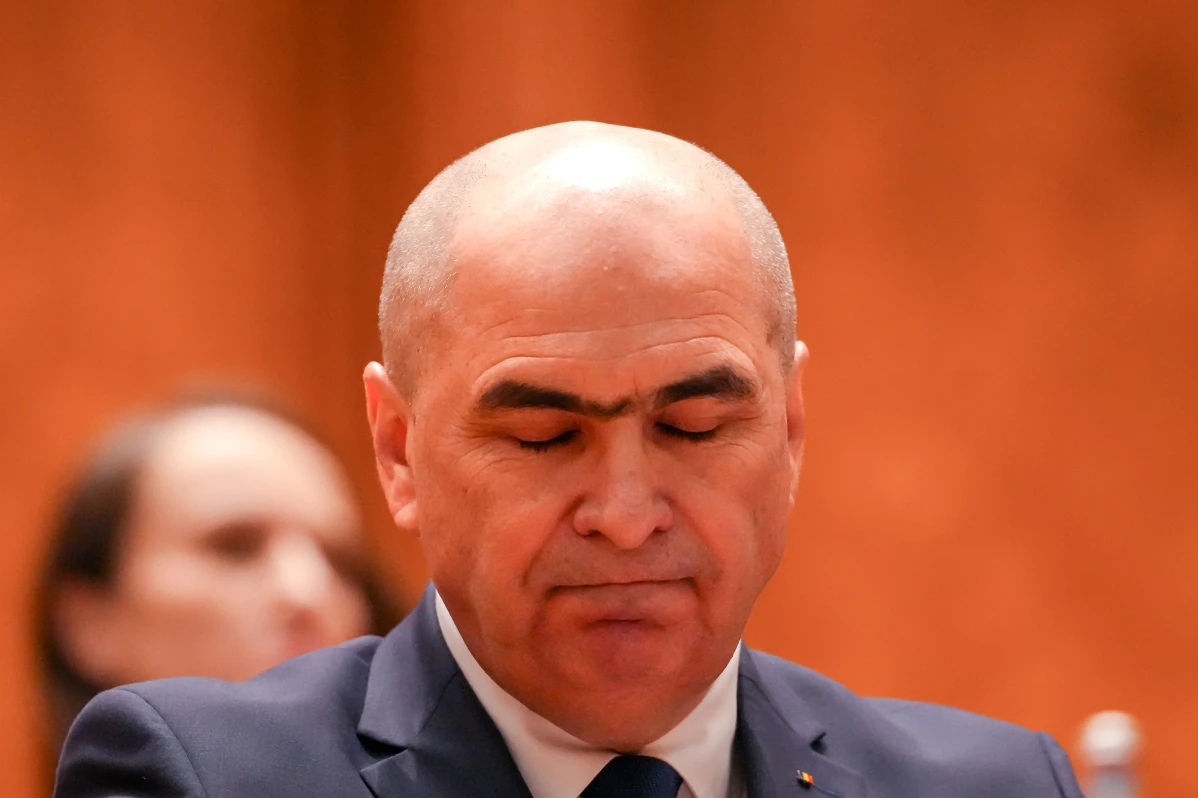
    Romania’s Prime Minister Ilie Bolojan speaks before the vote of no confidence.

    “It is cynical, because it does not take into account the context in which we find ourselves. I assumed the position of Prime Minister, being aware that it comes with enormous pressure and that I would not receive applause from the citizens. But I chose to do what was urgent and necessary for our country.”

    Ilie Bolojan

    Romania has faced a long period of instability after a presidential election was annulled in December 2024, and the country is grappling with one of the highest budget deficits in the EU, rampant inflation and a technical recession.

    In June, when the coalition was voted in, it pledged pledged to make reducing the budget deficit a top priority. The PSD often found itself at loggerheads with Bolojan over some of the austerity measures, which included tax hikes, public sector wage and pension freezes, and cutting public spending and public administration jobs.

    Last week, PSD said that Bolojan “failed to implement any genuine reform” in his 10 months leading the government, and said Romania needs a leader who is “capable of collaboration.” Bolojan said that he took tough but necessary fiscal measures that effectively “regained the trust of the markets in the Romanian government.”

    George Simion, the AUR leader, said today that voters had “supported and wanted water, food, energy,” but had “received taxes, war and poverty.”

    “We assume the future of this country, a future government and restore the hope of the Romanians. Romania must go back to the vote of the Romanians.”

    George Simon

    Bolojan Told To Appoint Interim Prime Minister

    PSD President Sorin Grindeanu said that Bolojan should appoint an Interim Prime Minister due to the margin of support, adding that he expects Romanian President Nicusor Dan to consult PSD.

    “I would like us to quickly find a solution … together with the other parties and move forward. PSD is willing to quickly find a solution. All options are open.”

    Sorin Grindeanu

    The prime ministerial position was set to be rotated in 2027 from Bolojan to a PSD Premier as part of a power-sharing agreement. A general election is scheduled for 2028.

    PNL Secretary General, Dan Motreanu wrote in a social media post that PSD and AUR “have a duty to take over the government, to come up with a prime minister proposal and a clear program,” accusing the two parties of “playing political theatre.”

    “You cannot overthrow a government and then run away from accountability. In the economy, any signal of political chaos quickly translates into real costs to people.”

    Dan Motreanu

    The PSD would be needed to form a pro-European parliamentary majority. The party has previously ruled out entering a government with AUR.

    Cristian Andrei, a Bucharest-based political consultant, said the crisis will likely lead to a stalemate, since “no one has a majority, or a coalition, and it will take the President … weeks to find such a majority and name a new Prime Minister, prolonging the indecision.”

    “At this moment, there are two tentative options for a new Cabinet, both difficult to achieve; either a reshuffled coalition, without Bolojan, in the same formation … or a minority Cabinet, rather led by PSD and satellites from populist parties, like AUR, or other small groups.”

    Cristian Andrei

    He added that a PSD-AUR official Cabinet is not a possibility today “because the President will not endorse it.”

  • Thousands Protest Against Romanian Government’s Austerity Measures

    Thousands Protest Against Romanian Government’s Austerity Measures

    Thousands in Romania have expressed their displeasure of government’s austerity measures through protest.

    The protesters marched in Romania’s capital, demanding higher wages, measures to curb inflation and tax reductions for workers as the government pushes on with austerity to tackle the country’s large budget deficit.

    They gathered outside government headquarters in Bucharest, then marched toward the Palace of Parliament. They honked horns and banged drums, and some held placards.

    Trade union workers protest Romanian government’s austerity measure.

    The rally was organized by the National Trade Union Bloc, made up of dozens of professional federations, and comes as Romania’s government pursues measures to reduce the budget deficit.

    It stood at over 9% in 2024 — one of the highest in the 27-nation European Union. Romania has agreed with the EU to reduce the deficit to 8.4% this year.

    The government austerity measures include tax hikes, public sector wage and pension freezes and cutting public spending and public administration jobs.

    The union bloc said in a statement, “Workers are once again being sacrificed for their jobs — even though we work harder, we are getting poorer.” The bloc added, “The impoverishment of the population has become state policy.”

    A woman holds a banner that reads “We want investments in the railway network” as trade union members protest against the government’s austerity measures, outside Victoria Palace, the government headquarters, in Bucharest, Romania, Wednesday, Nov. 12, 2025.

    The bloc later said that it had been invited by the ruling parties for discussions. Protesters also seek an end to public sector job cuts and intensified efforts to combat tax evasion.

    When Romania’s governing coalition was voted in earlier this year, it pledged to make reducing the budget deficit and reforming state institutions a top priority.

    Analyst Points To Romanian Government’s Economic Struggle

    Cristian Andrei, a Bucharest-based political analyst, said the government will struggle to close the economic gap without significant upheaval, because it failed to deliver “fast and decisive reform measures” and lost public support.

    “The perception now is that only regular people are struggling, not people (at the) top. There is already a lot of fear from politicians of making more cuts or reforms. Unions are just one voice of this choir.”

    Cristian Andrei