• About
  • Advertise
  • Privacy Policy
  • Contact
Friday, May 15, 2026
  • Login
The Vaultz News
  • Top Stories
  • News
    • General News
    • Education
    • Health
    • Opinions
  • Economics
    • Economy
    • Finance
      • Banking
      • Insurance
      • Pension
    • Securities/Markets
  • Business
    • Agribusiness
    • Vaultz Business
    • Extractives/Energy
    • Real Estate
  • World
    • Africa
    • America
    • Europe
    • UK
    • USA
    • Asia
    • Around the Globe
  • Innovation
    • Technology
    • Wheels
  • Entertainment
  • 20MOBPL2DNew
  • Jobs & Scholarships
    • Job Vacancies
    • Scholarships
No Result
View All Result
The Vaultz News
  • Top Stories
  • News
    • General News
    • Education
    • Health
    • Opinions
  • Economics
    • Economy
    • Finance
      • Banking
      • Insurance
      • Pension
    • Securities/Markets
  • Business
    • Agribusiness
    • Vaultz Business
    • Extractives/Energy
    • Real Estate
  • World
    • Africa
    • America
    • Europe
    • UK
    • USA
    • Asia
    • Around the Globe
  • Innovation
    • Technology
    • Wheels
  • Entertainment
  • 20MOBPL2DNew
  • Jobs & Scholarships
    • Job Vacancies
    • Scholarships
No Result
View All Result
The Vaultz News
No Result
View All Result
in Top Stories, One Top Story

‘CHRISTMASCOVID’– A CHRISTMAS DOOMED BY A PANDEMIC

M.Cby M.C
December 25, 2020
Reading Time: 10 mins read
‘CHRISTMASCOVID’– A CHRISTMAS DOOMED BY A PANDEMIC

Christmas Decorations

Christmas is one of the joyful moments on the Christian calendar. December 25 each year, the birth of Jesus Christ is commemorated and in the spirit of festivity and goodwill, it is predominantly characterized by merry-making, presentation of gifts, and an occasion to exhibit fellow feeling and good natured-ness to loved ones. The celebration, however, is going to be a muted affair in most parts of the world this year due to the resurgence of the virus in some countries.

CHRISTMASCOVID, therefore, considers how the pandemic has affected this year’s celebration of the birth of our Lord and Savior– Jesus Christ, across the globe.

GHANA

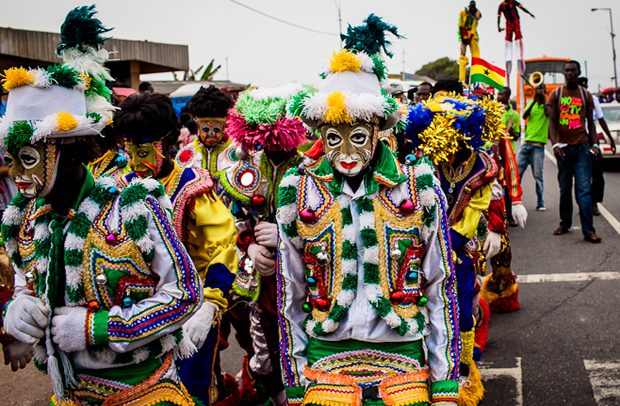
Christmas is one of the biggest festivities celebrated across Africa including Ghana, being a Christian dominated country. For individuals in Ghana, such festivities usually commence as early as the 20th of December and spans to the first week of January.

ADVERTISEMENT

During this season, people use the opportunity to visit family members and precious ones as well as return to their countryside to celebrate the festivity. It’s common to find children making ornaments from crepe paper as part of the celebrations.

Also, during church services at this time of the year, children present a native play or a festive drama, which is an essential part of how Ghanaians celebrate this holiday; not forgetting the numerous Christmas carol events that are organized to mark the festive season. It’s also common to see people going to the beaches, pubs and other places of recreation just to have fun and make merry without any restrictions. This is the Christmas Ghanaians are used to since time immemorial.
GH 1
‘CHRISTMASCOVID’– A CHRISTMAS DOOMED BY A PANDEMIC 5

However, with the entrance of COVID-19, things have now taken a new turn. Even though Ghana has not been impacted greatly by the coronavirus as compared to other countries, the effect of the virus has unavoidably been felt in the loss of jobs, lives, and livelihoods. Workers who are fortunate not to have lost their jobs have often had their salaries slashed to the barest minimum. This makes it difficult for affected persons to celebrate as they would have done during pre-COVID periods.

Moreover, COVID 19 protocols are still expected to be observed as there’s a new surge in the number of infections. Even so, these protocols and measures will not stop most Ghanaians from having all the fun and enjoyment since some restaurants, beaches, and pubs are beginning to open for business except the fact that they are going to accommodate a few people.

AUSTRALIA

In Australia, Christmas is celebrated at the beginning of the summer holidays which normally falls between mid-December and early February.

Decorations of Christmas trees and Christmas lights on homes and gardens during Christmas subtly spark competitions among neighbors to see who has got the best decorations in their homes.

Christmas displays are sometimes put out as early as 1st December. Estimates show that a street at Sidney-Australia’s capital raises about AUS$35,000 every year with their coordinated street displays, with the proceeds being donated to charity. 
ADVERTISEMENT

AUS
‘CHRISTMASCOVID’– A CHRISTMAS DOOMED BY A PANDEMIC 6

During Christmas, Australians hang wreaths on their front doors and sometimes go out to sing Christmas carol on Christmas Eve. In each state capital city, large carol services are organized and televised as families also exchange presents.

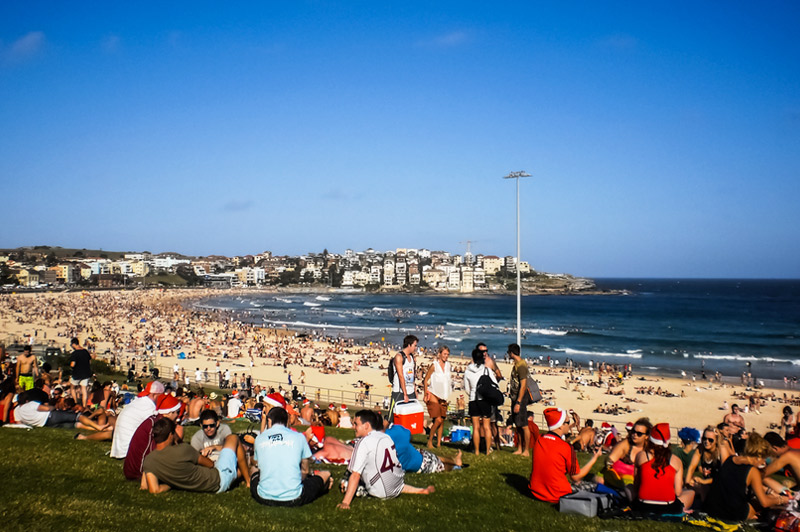
On Christmas Day, people who live on the outskirt of town send Christmas greetings to each other over the radio network and on Boxing Day, most families go out to hang out with friends and make merry at the beaches.  A famous Yacht race from Sidney to Hobart in Tasmania is also held on Boxing Day.

However, the outbreak of the COVID-19 will affect the once joyous season in Australia this year. To add insult to injury, the new strain of the COVID-19 has also been detected in Australia and as of Thursday, December 24, 2020, there were a total of 28, 262 COVID-19 cases, 25,486 recoveries, and 908 deaths in Australia. Victoria has the highest number of cases of 20,361 with 820 deaths.

A temporary divide has been imposed between the northern and southern sections of the northern beaches on Thursday with restrictions relaxed to varying degrees, allowing outsiders to enter parts of the locked-down hotspot over a three-day window from Christmas Eve to Boxing Day – Thursday to Saturday.

New South Wales health authorities are worried undetected COVID cases among office workers in Sydney’s CBD could spread the virus at Christmas gatherings, as the number of infections linked to the northern beaches cluster grew to 104 on 24th December 2020. With these restrictions, it is obvious that Australians will not be able to celebrate this year’s Christmas as they would have loved to. Thus, the joy of children may be fundamentally stripped from their faces by the surge in COVID cases.

AMERICA – “Zoom Christmas Parties”

Like all other places, Christmas in America comes with an atmosphere of pomp, plush, celebrations, spending time with family and friends, but not only that, gifts are exchanged between families, and ultimately, people give out to charity.

Whilst this celebration finds meaning among Christian folks, it is also widely observed by non-Christians and non-religious individuals although not for the same reasons.

In a year like no other, Christmas celebration in the US is not immune to the debilitating effects of the COVID-19 pandemic.

With rising COVID-19 cases and deaths in several states in the US, the director of the National Institute of Allergy and Infectious Diseases (NIAID) has advised Americans to avoid congregating with families for Christmas parties, but they could alternatively adopt “zoom Christmas parties” with families.

AME
‘CHRISTMASCOVID’– A CHRISTMAS DOOMED BY A PANDEMIC 7

The luster in the celebration that is better felt meeting together with loved ones cannot be replaced with another, and zoom will do little in that regard. For Children, Santa Claus brings out the magic in Christmas. However, quite unfortunately, Santa is going to encounter a hard time having kids around, hugging, and taking pictures with them.

Most Americans blend both the spiritual and secular activities with family traditions, often incorporating food, decorations, and rituals from places they or their ancestors once called home. Roast turkey and ham are popular Christmas dinners throughout the country, but depending on the region.

In Southwest America, lanterns made from brown paper bags called luminarias spotted with sand and illuminated by a lit candle are displayed. Many Mexican Americans celebrate ‘Las Posadas’, a procession that re-enacts Mary and Joseph’s search for a place to lay their heads in Bethlehem.

Swedish Americans hold St. Lucia festivals, and in Puerto Rico, there are ‘Parrandas’, where friends go from one house to the next singing traditional songs.

However, in this ‘Covid-Christmas’ some traditions likely to be experienced include: families getting their Christmas Trees and decorating them with pop-corn threaded on strings; making gingerbread houses to eat, going to church, decorating houses and streets with lights, and caroling.

ASIA

It is interesting to note that not all parts of Asia celebrate Christmas, to the extent that, some countries do not mark it as a holiday. Asian countries have a smaller number of Christians and Catholics compared to the rest of the world.  

As a result, in many Asian countries, Christmas has a more secular view than a religious one. Christmas wreaths, Merry Christmas banners, colorful lights, and ornaments can be seen everywhere since most of these decorations are made in China anyway. But in most Asian countries, Christmas is not recognized as a public holiday, which means that offices, as well as schools, colleges, and universities, remain open.

For countries like Tokyo, Korea, Philippines amongst others who celebrate Christmas, this is not the case. The Philippines, for example, is known for celebrating the world’s longest Christmas season, which begins on 1st September. Their celebrations are mostly marked with outdoor merry-making activities.

However, due to the ongoing pandemic and the fresh surge in new cases, most of these celebrations will be done indoors as some countries are currently on lockdown.

In some parts of Asia, there have been a massive resurgence and their governments have restored some social distancing restrictions in recent weeks which will clamp down on private social gatherings of five or more people between Christmas Eve to January. 

Restaurants have been cautioned about the possibility of being fined if they accept large groups. Ski resorts and national parks will be closed, and hotels cannot sell more than 50% of their rooms during this period, changing the whole scope of the Christmas celebrations to a rather solemn and hushed one.

EUROPE

Christmas is arguably Europe’s favorite holiday with indoor family gatherings and traveling; a traditional fixture of the holiday season.

However, the Covid-19 pandemic has generally given governments in Europe a Christmas dilemma; play carefree Santa or responsible Grinch, as the second wave of the virus remains in full swing.

This has been compounded by the discovery of the fast-moving new variant of the virus in the UK, which is said to be 70% more transmissible than existing strains.

One after the other, the governments have announced new and varied emergency restrictions imposed on their already-exhausted citizens to slow the spread of the deadly coronavirus. In many jurisdictions, this has to a large extent resulted in the cancellation of Christmas.

Considering the impact of the COVID on various European countries, a quick tour to a few countries will reveal how this year’s celebration will be impacted by the novel coronavirus pandemic. 

ITALY– “More sober Christmas…”

Italy is currently seeing the highest number of deaths since the end of March and Prime Minister Giuseppe Conte has told Italians to expect a “more sober Christmas, without Christmas Eve gatherings, hugs and kisses”.

The government has imposed a ban on travel and the traditional midnight mass over the Christmas period. Therefore, between December 21 and January 6, Italians will only be allowed to move between regions for work, medical reasons, and emergencies.

On top of the regional travel bans, people will not be allowed to leave their hometowns on Christmas Day, Boxing Day, and New Year’s Day.

NETHERLANDS

Prime Minister Mark Rutte announced the country will go into a strict lockdown for five weeks, from 15 December to 19 January. The lockdown is currently underway.

Citizens have been told to refrain from booking non-essential travel abroad until mid-March.

Restrictions will be eased slightly for the three days of Christmas, where Dutch households are allowed three instead of two guests, not counting children under 13.

THE UK

Millions of people in London and the U.K.’s southeast will be forced to cancel their Christmas plans after the region was placed under the strictest lockdown rules as a result of the new variant.

As a result, nonessential shops, gyms, cinemas, hairdressers, and bowling alleys have been forced to close for two weeks and this will be reviewed on December 30, while people will be restricted from mixing up with anyone outside their household at Christmas.

The rest of England, Scotland, and Wales have not been left out as initial plans to relax indoor mixing rules over the holidays have been cut from five days to Christmas Day only.

CROATIA

Croats won’t be able to leave the county of their residence between Dec. 23 and January 8. Also, not more than ten (10) people from a maximum of two households will be allowed at private gatherings during the holiday season.

GERMANY

Only essential shops will be allowed to open from Dec. 16, 2020, until at least Jan. 10, 2021. Private gatherings will remain limited to no more than five people from two households, with rules to be eased over the Christmas holidays when up to ten (10) people will be allowed to gather, not counting children.

While these stories may seem a tad gloomy, the closeness which the pandemic has paradoxically brought on globally will be all the warmth needed to celebrate Christmas this year in anticipation of a more blissful one in the coming years.

Sign Up to Our Newsletter

Fresh updates, Straight to your inbox

Tags: ChristmasCOVID-19December 25
Share12Tweet8Share2SendSend
Please login to join discussion
Previous Post

This year was very tough for businesses – Charles Mensah

Next Post

Ghana, others don’t ban use of corrupt funds in political financing

Related Posts

IMF Ghana Review Ends in Dramatic Cliffhanger
Economy

IMF Ghana Review Ends in Dramatic Cliffhanger

May 15, 2026
Ing. Kenneth Ashigbey, the Chief Executive Officer of the Ghana Chamber of Mines.
Extractives/Energy

Chamber of Mines Warns Against State Ownership Failures Amidst IEA Policy Dispute

May 14, 2026
Dr. Kenneth Ashigbey, the Chief Executive Officer of the Ghana Chamber of Mines.
Extractives/Energy

Let Data and Science Drive Ghana’s Mining Policy Debate – Kenneth Ashigbey

May 14, 2026
Commodity Markets Tremble as Rising Food Costs Trigger Global Economic Anxiety
Economy

Commodity Markets Tremble as Rising Food Costs Trigger Global Economic Anxiety

May 14, 2026

Sign Up to Our Newsletter

Fresh updates, Straight to your inbox

Recent News

GettyImages 1855339841

36 Countries, EU Approve Agreement To Establish Special Tribunal For Ukraine

May 15, 2026
Professor Ernest Kofi Davis, Acting Director-General, Ghana Education Service

GES Assures Placement for All Qualified BECE Candidates

May 15, 2026
UK Prime Minister, Keir Starmer

UK Bars Far-Right Agitators as Starmer Vows Zero Tolerance

May 15, 2026
Fidelity Demands Africa Own Its Digital Future At a time when Africa’s digital economy is accelerating at an unprecedented pace, Fidelity Bank Ghana has delivered one of the strongest messages yet on the continent’s technological future. The bank made a bold and urgent case for Africa to stop depending on foreign controlled digital systems and begin building its own infrastructure capable of retaining value, strengthening currencies, and driving long term economic sovereignty. As one of the key sponsors of the 3i Africa summit, Fidelity Bank did not just show up to participate. It arrived with a message that resonated deeply across conference halls and policy discussions. Fidelity Bank emerged as one of the loudest voices championing a future where African nations control the very digital rails that power their economies. Digital Infrastructure Is The New Economic Power One of the defining moments of the summit came during a high level panel discussion on digital public infrastructure, where Adeline Aryee delivered a statement that immediately captured the attention of participants. She declared that if Africa builds its own digital rails, it naturally retains the value created by those systems. Her message was clear and uncompromising. In previous decades, national infrastructure was measured by roads, bridges, ports, and airports. Today, the true engines of economic power are payment platforms, identity systems, financial technology ecosystems, and digital marketplaces. According to Aryee, digital public infrastructure is no longer a luxury. It is now a strategic national asset. Her remarks struck at the heart of one of Africa’s most pressing economic concerns. Despite growing digital adoption, many transactions across the continent still pass through foreign payment systems, resulting in value leakage and continued pressure on local currencies. Ghana’s Success Story Becomes A Continental Blueprint Aryee highlighted Ghana’s progress in financial inclusion, mobile payments, and digital banking, describing the country as an emerging model for other African economies. Over the years, Ghana has invested heavily in domestic payment systems such as GhIPSS and its flagship platform, Gh-link. These systems have significantly expanded access to financial services while promoting digital transactions across urban and rural communities. Yet Aryee argued that inclusion alone is no longer enough. The next chapter for Africa, she insisted, must focus on ownership. She questioned why local transactions continue to depend on foreign rails when domestic infrastructure already exists. According to her, such dependence creates unnecessary external exposure and limits the continent’s ability to fully capture the economic benefits of its growing digital market. Her comments triggered intense debate among summit participants, many of whom acknowledged the urgent need for policy reforms and infrastructure investments. Market Driven Innovation Takes Center Stage Beyond infrastructure, Fidelity Bank also made a strong case for innovation that begins with real market needs. During the Ecosystem Roundtable on platforms, talent, and digital markets, Prince Osei Hyeaman-Addai shared insights from the bank’s years of digital financial innovation. He stressed that successful digital products are not built in boardrooms or based on assumptions. Instead, they are created by listening carefully to the market and understanding customer pain points. According to him, the market itself reveals the problems that need solving, the type of platform required, and the path toward scalable growth. His comments reflected a growing shift in African fintech circles, where customer centered design is becoming essential for product adoption and long term relevance. Trust And Credibility Remain The Real Currency Prince also emphasized that technology alone does not guarantee success. In his view, trust, credibility, and strong operational structures remain the real foundations of successful innovation. He noted that while investor interest in African fintech continues to rise, startups must prove they can deliver sustainable solutions, maintain transparency, and build products that respond to local realities. This perspective reflects Fidelity Bank’s own journey in digital transformation. Over the years, the bank has built strategic collaborations with leading fintech players, including IT Consortium, helping pioneer wallet to bank integrations and mobile financial solutions in Ghana. These partnerships have helped position Fidelity as one of Ghana’s most innovation driven financial institutions. A Defining Moment For Africa’s Digital Future Fidelity Bank’s participation at the 3i Africa Summit 2026 was more than a corporate appearance. It was a strategic declaration. At a time when Africa is racing to build competitive digital economies, the bank’s message was impossible to ignore. Africa cannot simply consume technology created elsewhere. It must own the infrastructure, shape the platforms, and capture the value generated by its digital future. As conversations from the summit continue to ripple across financial and policy circles, one thing is becoming increasingly clear. Africa’s next economic revolution may not be built on oil, gold, or minerals. It may be built on digital rails designed, owned, and powered by Africans. READ ALSO: IMF Ghana Review Ends in Dramatic Cliffhanger Fidelity Demands Africa Own Its Digital Future At a time when Africa’s digital economy is accelerating at an unprecedented pace, Fidelity Bank Ghana has delivered one of the strongest messages yet on the continent’s technological future. The bank made a bold and urgent case for Africa to stop depending on foreign controlled digital systems and begin building its own infrastructure capable of retaining value, strengthening currencies, and driving long term economic sovereignty. As one of the key sponsors of the 3i Africa summit, Fidelity Bank did not just show up to participate. It arrived with a message that resonated deeply across conference halls and policy discussions. Fidelity Bank emerged as one of the loudest voices championing a future where African nations control the very digital rails that power their economies. Digital Infrastructure Is The New Economic Power One of the defining moments of the summit came during a high level panel discussion on digital public infrastructure, where Adeline Aryee delivered a statement that immediately captured the attention of participants. She declared that if Africa builds its own digital rails, it naturally retains the value created by those systems. Her message was clear and uncompromising. In previous decades, national infrastructure was measured by roads, bridges, ports, and airports. Today, the true engines of economic power are payment platforms, identity systems, financial technology ecosystems, and digital marketplaces. According to Aryee, digital public infrastructure is no longer a luxury. It is now a strategic national asset. Her remarks struck at the heart of one of Africa’s most pressing economic concerns. Despite growing digital adoption, many transactions across the continent still pass through foreign payment systems, resulting in value leakage and continued pressure on local currencies. Ghana’s Success Story Becomes A Continental Blueprint Aryee highlighted Ghana’s progress in financial inclusion, mobile payments, and digital banking, describing the country as an emerging model for other African economies. Over the years, Ghana has invested heavily in domestic payment systems such as GhIPSS and its flagship platform, Gh-link. These systems have significantly expanded access to financial services while promoting digital transactions across urban and rural communities. Yet Aryee argued that inclusion alone is no longer enough. The next chapter for Africa, she insisted, must focus on ownership. She questioned why local transactions continue to depend on foreign rails when domestic infrastructure already exists. According to her, such dependence creates unnecessary external exposure and limits the continent’s ability to fully capture the economic benefits of its growing digital market. Her comments triggered intense debate among summit participants, many of whom acknowledged the urgent need for policy reforms and infrastructure investments. Market Driven Innovation Takes Center Stage Beyond infrastructure, Fidelity Bank also made a strong case for innovation that begins with real market needs. During the Ecosystem Roundtable on platforms, talent, and digital markets, Prince Osei Hyeaman-Addai shared insights from the bank’s years of digital financial innovation. He stressed that successful digital products are not built in boardrooms or based on assumptions. Instead, they are created by listening carefully to the market and understanding customer pain points. According to him, the market itself reveals the problems that need solving, the type of platform required, and the path toward scalable growth. His comments reflected a growing shift in African fintech circles, where customer centered design is becoming essential for product adoption and long term relevance. Trust And Credibility Remain The Real Currency Prince also emphasized that technology alone does not guarantee success. In his view, trust, credibility, and strong operational structures remain the real foundations of successful innovation. He noted that while investor interest in African fintech continues to rise, startups must prove they can deliver sustainable solutions, maintain transparency, and build products that respond to local realities. This perspective reflects Fidelity Bank’s own journey in digital transformation. Over the years, the bank has built strategic collaborations with leading fintech players, including IT Consortium, helping pioneer wallet to bank integrations and mobile financial solutions in Ghana. These partnerships have helped position Fidelity as one of Ghana’s most innovation driven financial institutions. A Defining Moment For Africa’s Digital Future Fidelity Bank’s participation at the 3i Africa Summit 2026 was more than a corporate appearance. It was a strategic declaration. At a time when Africa is racing to build competitive digital economies, the bank’s message was impossible to ignore. Africa cannot simply consume technology created elsewhere. It must own the infrastructure, shape the platforms, and capture the value generated by its digital future. As conversations from the summit continue to ripple across financial and policy circles, one thing is becoming increasingly clear. Africa’s next economic revolution may not be built on oil, gold, or minerals. It may be built on digital rails designed, owned, and powered by Africans. READ ALSO: IMF Ghana Review Ends in Dramatic Cliffhanger Fidelity Demands Africa Own Its Digital Future

Fidelity Demands Africa Own Its Digital Future

May 15, 2026
Bruno Fernandes has won Manchester United's Player of the Year award twice in succession

Fernandes Crowned Manchester United Player of the Year Again After Remarkable Season

May 15, 2026
Next Post
Ghana, others' law on the ban of political financing has loopholes

Ghana, others don’t ban use of corrupt funds in political financing

The Vaultz News

Copyright © 2025 The Vaultz News. All rights reserved.

Navigate Site

  • About
  • Advertise
  • Privacy Policy
  • Contact

Follow Us

Welcome Back!

Login to your account below

Forgotten Password?

Retrieve your password

Please enter your username or email address to reset your password.

Log In
No Result
View All Result
  • Top Stories
  • News
    • General News
    • Education
    • Health
    • Opinions
  • Economics
    • Economy
    • Finance
      • Banking
      • Insurance
      • Pension
    • Securities/Markets
  • Business
    • Agribusiness
    • Vaultz Business
    • Extractives/Energy
    • Real Estate
  • World
    • Africa
    • America
    • Europe
    • UK
    • USA
    • Asia
    • Around the Globe
  • Innovation
    • Technology
    • Wheels
  • Entertainment
  • 20MOBPL2D
  • Jobs & Scholarships
    • Job Vacancies
    • Scholarships

Copyright © 2025 The Vaultz News. All rights reserved.

This website uses cookies. By continuing to use this website you are giving consent to cookies being used. Visit our Privacy and Cookie Policy.

Discover the Details behind the story

Get an in-depth analysis of the news from our top editors

Enter your email address