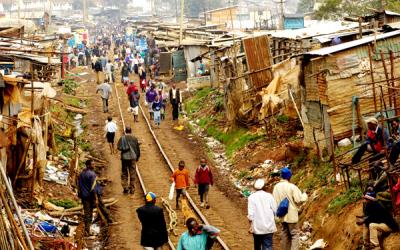
The outbreak of the novel coronavirus has had severe strains on the global economy which is now projected to contract by 4.4% this year. Whist the virus has claimed several lives across the globe, one major challenge is a sure retrogression in the progress made in reducing poverty across the world.
The latest analysis cautions that COVID-19 could push an additional 88 million people into extreme poverty this year in the baseline, and in the worst-case scenario, the figure could be as high as 115 million people. The World Bank Group forecasts that the largest share of the “new poor” will be in South Asia and Sub-Saharan Africa.
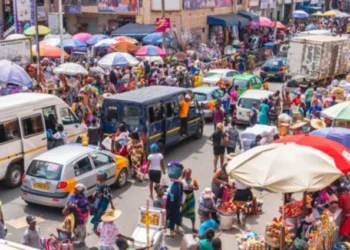
In Ghana, the situation is not different. Measures put in place to contain the virus has had severe repercussions on households and businesses. Although there are signs of a rebound in economic activities, some sectors have been severely affected and are yet to get out of the woods. The majority of Ghanaians are in the informal sector which has been severely hit.
Surveys conducted by the GSS show that currently 73.8 percent of businesses are fully open whilst 16.2 percent of firms continue to be closed. 38% of firms report that they reduced workers’ wages and 3.5% of firms reported to have laid-off workers, corresponding to 2.3% of employment.
Also, 77.4% of households reported that the total household income has reduced since March 16 and 3.1% reported an increase in income. The reduction in incomes of households has impacted heavily on their consumption patterns. The survey shows that 52.1% of households reduced food consumption as a coping mechanism for the effects of COVID-19
Several people have lost their livelihoods but have not been captured by the survey due to one reason or the other. As schools remained closed, all those who provide services to educational institutions have halted operations. The hospitality industry has also been hit very hard, with several people losing their jobs.
How are these people surviving? Government stimulus packages alone may not be enough to compensate all these people for their loss.
Most people who lost their jobs will have to look for menial jobs to make ends meet. But how much can they make a day to help them meet their daily nutritional requirements?
Thus, this is a clear indication that the progress made by Ghana over the years to reduce poverty will be undermined, the severity which depends on how long the virus lingers.
Current poverty trends in Ghana
Ghana has made significant progress on poverty reduction over time, with deprivations of Ghanaians from the perspectives of health, education, and living standards reducing by nine percent from 55 percent in 2011 to about 46 percent in 2017.
This implies that with the current population of 31 million, 14 million Ghanaians are estimated to be multi-dimensionally poor, according to Ghana’s Multidimensional Poverty Index (MPI), released by the Ghana Statistical Service.
The national MPI was computed using data from the Ghana Living Standards Survey (GLSS) 2016/2017 and the 2011 and 2018 Ghana Multiple Indicator Cluster Surveys (MICS).
Following the country’s ability to halve its money-metric poverty by 2015, the 2017 data showed that at least two out of every five Ghanaians are identified as poor beyond monetary deprivations.
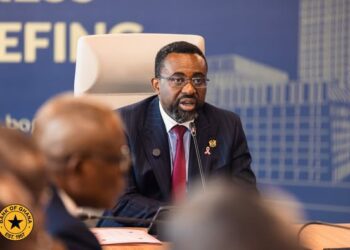
“The MPI provides detailed information regarding public policy instruments to motivate the design of coordinated programs between different sectors to ensure effectiveness in reducing poverty in all its dimensions”, noted the Minister of Planning, Prof. George Gyan-Baffour during the launch of the maiden edition of the MPI earlier this year.
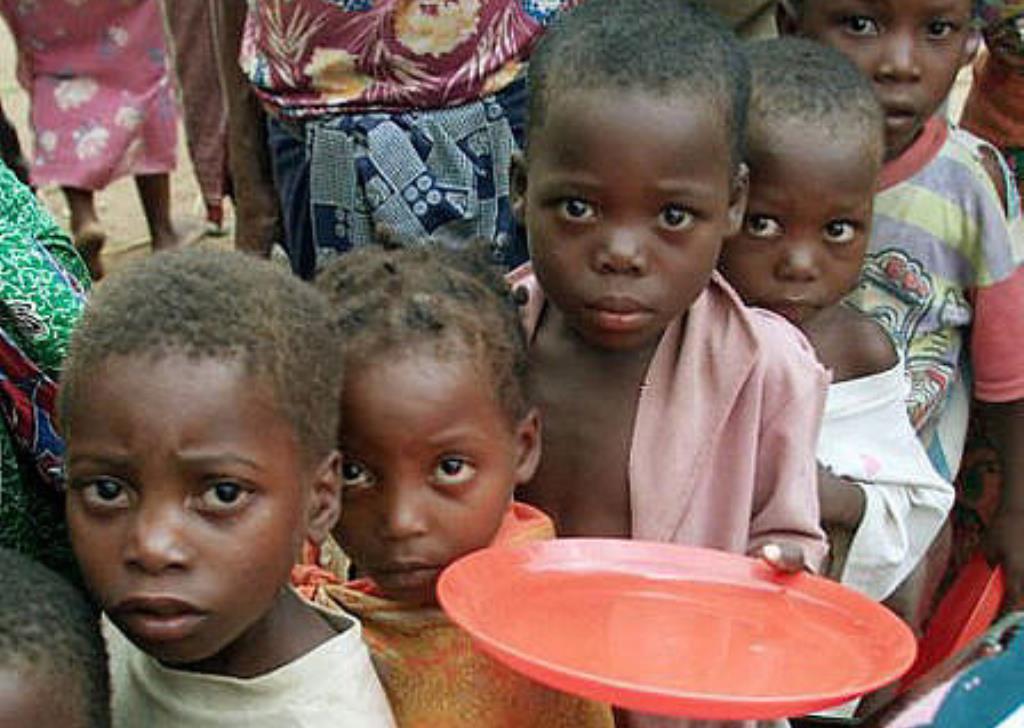
The findings in the MPI report shed light on the different kinds of deprivations that affect citizens, using the three dimensions (health, education, and living standards), with twelve (12) corresponding indicators reflecting national priorities. For health, the indicators or areas examined are nutrition and health insurance; whereas education used data on school attendance, attainment, and lag.
In terms of living standards, indicators used are electricity, water, sanitation, cooking fuel, assets, overcrowding, and housing. Households with 33% deprivations are identified as living in multidimensional poverty. The two leading indicators that contributed most to multidimensional poverty in Ghana are deprivations in sanitation and health insurance coverage, while school attendance and nutrition scored the lowest respectively.
“The Ghana MPI is an important milestone, as it provides disaggregated data that sheds light on the realities of the most vulnerable. This information is key for identifying and tailoring effective interventions that reflect the development needs of all Ghanaians,” noted Regina Bauerochse, Country Director GIZ Ghana in the report.
There are still some levels of inequalities particularly relating to rural-urban, geographical divides, and age, which needs to be addressed. For instance, data analysis for the previous ten classified regions of Ghana shows Northern Region recorded the highest rate of multidimensional poverty, with every eight out of ten persons being multi-dimensionally poor, followed by the Upper East Region, with close to seven out of every ten persons being multi-dimensionally poor.
Despite policy interventions, we may see a surge in the number of people living in poverty in Ghana as a result of the outbreak of the pandemic. More people could be multi-dimensionally poor at the end of 2020 over and above the current 14 million.