• About
  • Advertise
  • Privacy Policy
  • Contact
Saturday, July 18, 2026
  • Login
The Vaultz News
  • Top Stories
  • News
    • General News
    • Education
    • Health
    • Opinions
  • Economics
    • Economy
    • Finance
      • Banking
      • Insurance
      • Pension
    • Securities/Markets
  • Business
    • Agribusiness
    • Vaultz Business
    • Extractives/Energy
    • Real Estate
  • World
    • Africa
    • America
    • Europe
    • UK
    • USA
    • Asia
    • Around the Globe
  • Innovation
    • Technology
    • Wheels
  • Entertainment
  • 20MOBPL2DNew
  • Jobs & Scholarships
    • Job Vacancies
    • Scholarships
No Result
View All Result
The Vaultz News
  • Top Stories
  • News
    • General News
    • Education
    • Health
    • Opinions
  • Economics
    • Economy
    • Finance
      • Banking
      • Insurance
      • Pension
    • Securities/Markets
  • Business
    • Agribusiness
    • Vaultz Business
    • Extractives/Energy
    • Real Estate
  • World
    • Africa
    • America
    • Europe
    • UK
    • USA
    • Asia
    • Around the Globe
  • Innovation
    • Technology
    • Wheels
  • Entertainment
  • 20MOBPL2DNew
  • Jobs & Scholarships
    • Job Vacancies
    • Scholarships
No Result
View All Result
The Vaultz News
No Result
View All Result
in Around the Globe

Financial risks created by climate change are felt more acutely by developing economies- IMF

thevaultzby thevaultz
February 18, 2021
Reading Time: 3 mins read
Add as Preferred on Google
IMF calls for gender budgeting to stimulate recovery

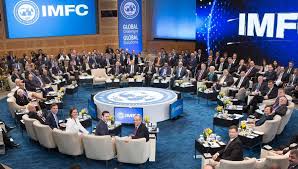
The International Monetary Fund (IMF) has revealed that climate change is a systemic risk to the global economy which can pose financial risks especially for developing countries.

 Additionally, a country’s vulnerability or resilience to climate change according to the International Monetary Fund can have a direct effect on its creditworthiness, its costs of borrowing, and, ultimately, the likelihood it might default on its sovereign debt.

“We find that the vulnerability and resilience to climate change have a significant impact on the cost of government borrowing, after controlling for conventional determinants of sovereign risk.

“Countries that are more resilient to climate change have lower bond yields and spreads relative to countries with greater vulnerability to risks associated with climate change”.

“Climate change vulnerability has no significant impact on bond spreads and credit ratings in advanced economies, but the effect on…developing economies is much greater”.

IMF

Elaborating further on the reason why the effect of these changes in climate are much greater in developing countries, the International Monetary Fund opined that it is as a result of their weaker capacity to adapt to and mitigate the consequences of climate change.

“Financial risks created by climate change are felt more acutely by developing economies, especially those that are not adequately prepared…because of the lack of policy space, to address climate shocks”.

IMF

The International Monetary Fund further noted that aside from having deep consequences for a country’s finances, a better understanding of how climate change affects sovereign credit ratings could provide valuable guidance on how much governments and firms can safely borrow and how much it will cost them.

ADVERTISEMENT

“We find that countries with greater vulnerability to climate change face a higher likelihood of debt default compared to more climate resilient countries.

“Our empirical results also indicate that climate change resilience can decrease the probability of sovereign debt default compared to those countries more vulnerable to climate change, after controlling for conventional determinants of sovereign defaults”.

IMF
Financial risks created by climate change are felt more acutely by developing economies- IMF

The International Monetary fund therefore holds that it is imperative for countries to take concrete steps to build resilience to climate change because “without adequate action, climate change is an inevitable reality across the world. Rising temperatures, changing weather patterns, melting glaciers, intensifying storms and rising sea levels undoubtedly create vulnerabilities, especially in low-income countries”.

As countries seek a sustainable path of recovery from the effects of the COVID-19 pandemic, the benefits of climate resilience are clear. In particular, developing economies with limited fiscal capacity could benefit from alternative instruments including catastrophe insurance and debt-for-nature swaps designed to mobilize resources for investments in resilient infrastructure and environmental conservation measures while reducing the debt burden, the IMF alerted.

Meanwhile, pursuing cost-effective climate change mitigation and adaption strategies; building structural resilience to climate risks, including through resilient infrastructure; strengthening financial resilience through fiscal buffers and insurance schemes; and improving economic diversification to reduce excessive reliance on climate-sensitive sectors can ease the strain of climate change on public finances and reduce the cost of borrowing associated with lower credit ratings.


ADVERTISEMENT

Sign Up to Our Newsletter

Fresh updates, Straight to your inbox

Tags: BondsClimate ChangeClimate ResilienceCOVID-19International Monetary Fundsovereign risk
ShareTweetShareSendSend
Please login to join discussion
Previous Post

Legal Counsel of Petitioner Delays In Filing Closing Statement

Next Post

World trade signals strong rebound but momentum may be short-lived -WTO

Related Posts

United Nations Secretary-General António Guterres
Around the Globe

UN Chief Calls for Global Cooperation to Ensure AI Benefits All

July 17, 2026
UNICEF
Around the Globe

UNICEF : Middle East Conflict Threatens to Push 23 Million Children Into Poverty

July 16, 2026
United Nations
Around the Globe

Over 500 Feared Dead After Boats Capsize Off Myanmar Coast, UN Reports

July 16, 2026
United Nations Environment Programme (UNEP)
Around the Globe

UNEP Harnesses AI Satellites to Combat Methane Emissions

July 15, 2026
ADVERTISEMENT

Sign Up to Our Newsletter

Fresh updates, Straight to your inbox

ADVERTISEMENT

Recent News

17843668490911144498455887069473

Messi Ready to Dent Yamal’s Dream as Argentina and Spain Clash for World Cup Crown

July 18, 2026
MIIF with GhIB

MIIF Partners GhIB to Attract Investments in Critical Minerals Sector

July 18, 2026
GSE Extends Rally as Market Surges 70% This Year

GSE Extends Rally as Market Surges 70% This Year

July 18, 2026
Nigeria 123

UNICEF Chief Calls for Sustained Investment in Nigeria’s Children

July 18, 2026
President John Dramani Mahama

Mahama Unveils Volta Region’s Development Gains During Resetting Ghana Tour

July 17, 2026
ADVERTISEMENT
Next Post
wto e

World trade signals strong rebound but momentum may be short-lived -WTO

The Vaultz News

Copyright © 2025 The Vaultz News. All rights reserved.

Navigate Site

  • About
  • Advertise
  • Privacy Policy
  • Contact

Follow Us

Welcome Back!

Login to your account below

Forgotten Password?

Retrieve your password

Please enter your username or email address to reset your password.

Log In
No Result
View All Result
  • Top Stories
  • News
    • General News
    • Education
    • Health
    • Opinions
  • Economics
    • Economy
    • Finance
      • Banking
      • Insurance
      • Pension
    • Securities/Markets
  • Business
    • Agribusiness
    • Vaultz Business
    • Extractives/Energy
    • Real Estate
  • World
    • Africa
    • America
    • Europe
    • UK
    • USA
    • Asia
    • Around the Globe
  • Innovation
    • Technology
    • Wheels
  • Entertainment
  • 20MOBPL2D
  • Jobs & Scholarships
    • Job Vacancies
    • Scholarships

Copyright © 2025 The Vaultz News. All rights reserved.

This website uses cookies. By continuing to use this website you are giving consent to cookies being used. Visit our Privacy and Cookie Policy.