• About
  • Advertise
  • Privacy Policy
  • Contact
Sunday, August 30, 2026
  • Login
The Vaultz News
  • Top Stories
  • News
    • General News
    • Education
    • Health
    • Opinions
  • Economics
    • Economy
    • Finance
      • Banking
      • Insurance
      • Pension
    • Securities/Markets
  • Business
    • Agribusiness
    • Vaultz Business
    • Extractives/Energy
    • Real Estate
  • World
    • Africa
    • America
    • Europe
    • UK
    • USA
    • Asia
    • Around the Globe
  • Innovation
    • Technology
    • Wheels
  • Entertainment
  • 20MOBPL2DNew
  • Jobs & Scholarships
    • Job Vacancies
    • Scholarships
No Result
View All Result
The Vaultz News
  • Top Stories
  • News
    • General News
    • Education
    • Health
    • Opinions
  • Economics
    • Economy
    • Finance
      • Banking
      • Insurance
      • Pension
    • Securities/Markets
  • Business
    • Agribusiness
    • Vaultz Business
    • Extractives/Energy
    • Real Estate
  • World
    • Africa
    • America
    • Europe
    • UK
    • USA
    • Asia
    • Around the Globe
  • Innovation
    • Technology
    • Wheels
  • Entertainment
  • 20MOBPL2DNew
  • Jobs & Scholarships
    • Job Vacancies
    • Scholarships
No Result
View All Result
The Vaultz News
No Result
View All Result
in Africa

Nigeria: 2022 Budget for Public Healthcare Increases but Sector Remains Underfunded

Maynard Championby Maynard Champion
January 28, 2022
Reading Time: 3 mins read
Add as Preferred on Google
budget

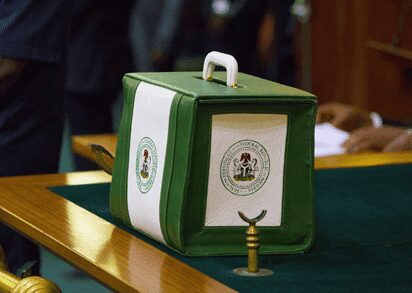
Nigeria’s 2022 government budget reflects an upward trend in health funding but it still falls below the level stipulated by the Abuja Declaration to which Nigeria is a signatory, according to Fitch Solution.

Parliament, in December 2021, approved a budget of NGN711.3 billion earmarked for the Ministry of Health (MOH) for FY2022, with capital budget standing at NGN194.6 billion (US$0.5 billion), while recurrent expenditure is at NGN504.0 billion (US$1.2 billion).

Fitch’s assessment of the budget allocation to health, indicates an increase of 29.4 per cent year-on-year in local currency terms, making the budget for the ministry the highest since President Buhari assumed office in 2015.

Additionally, capital expenditure will grow by 47.7% year-on-year, indicating the building of new hospitals in rural areas which “we believe will improve healthcare access over the long term.”

ADVERTISEMENT

On the whole, the increase in spending will benefit the quality and coverage of healthcare in the country, creating opportunities for healthcare providers as well as pharmaceutical companies.

Abuja Declaration

Despite the positive impact on public health, the health budget falls far below the 15 per cent Abuja Declaration, which Nigeria is a signatory.

The Abuja Declaration sets a benchmark for health sector budget allocation at 15 per cent of total budgetary spending across African Union (AU) countries with the aim of improving healthcare in the region.

“We note, however, that although countries such as Rwanda and South Africa have managed to significantly boost their healthcare budget allocations of between 10-12%, most countries have failed to meet this commitment. In particular, Nigeria lags far at 4.3%”.

Fitch

Furthermore, Fitch highlighted that Nigeria’s healthcare spending in per capita terms remains low in the region. Fitch estimates prove that healthcare spending in the country is equal to around US$79.7 per capita, with public spending accounting for only about 15.8% of this.

ADVERTISEMENT

This is below the sub-Saharan Africa (SSA) average of US$83.2, reflecting how little Nigeria is currently spending on healthcare.

Healthcare to limit opportunities

According to Fitch, the frequently underfunded health sector will therefore continue to limit commercial opportunities for healthcare providers and multinational drugmakers in the year.

Thus, generic drugs will remain dominant in the Nigeria’s drug market, especially given the country’s efforts to achieve universal healthcare while keeping costs low, Fitch said.

ADVERTISEMENT

Fitch also indicated that Nigeria’s tight fiscal position will continue to limit spending. Fitch’s analysts expect the recent uptick in hydrocarbon prices to continue over 2022, rising from a low of US$53.6/bbl in 2015 to US$72.0 bbl in 2022.

Considering that the crude oil industry accounts for over 70 per cent of government revenues in Nigeria, this will have a significant impact on government revenues, Fitch said. Nonetheless, healthcare is not viewed as political priority and has historically showed limited variation with revenues in Nigeria.

Fitch therefore expects that the healthcare market will remain seriously underfunded over our forecast period to 2031, increasing from NGN1.0 trillion (US$2.5billion) in 2021 to NGN2.6 trillion (US$5.3 billion) by 2031. This translates into a CAGR of 10 per cent in local currency terms and 8 per cent in US dollar terms.

READ ALSO: Ghana: Gov’t Receives 88.44% of Projected Petroleum Revenue in 2021

ADVERTISEMENT

Sign Up to Our Newsletter

Fresh updates, Straight to your inbox

Tags: budgetfundingHealthHealthcare
Please login to join discussion
Previous Post

Number Of Persons Who Go For Theory Test, Exceeds Practical Tests- DVLA

Next Post

US Bans Chinese Telecom Giant Unicom Over Spying Concerns

Related Posts

Niger on Map
Africa

Gunfire and Explosions Rock Niger’s Capital

August 29, 2026
United Nations
Africa

UN Committee Urges Tanzania to Halt Maasai Forced Evictions

August 28, 2026
Bundibugyo Ebola Virus
Africa

Ebola Crisis Escalates in DR Congo Despite Intensified Response

August 28, 2026
United Nations
Africa

UN Committee Sounds Alarm Over Violence, Displacement and Raids Targeting Migrants in South Africa

August 27, 2026
ADVERTISEMENT

Sign Up to Our Newsletter

Fresh updates, Straight to your inbox

ADVERTISEMENT

Recent News

Dr. Gideon Boako, Member of Parliament for Tano North

Bawumia’s Gold Program Boosted Foreign Reserves Without External Eurobond Borrowing – Gideon Boako

August 30, 2026
PURC

PURC Pushes Utility Mapping To Protect Infrastructure

August 30, 2026
image 315

”I Play With My Heart”: Emiliano Martinez Says After Sealing Chelsea Move

August 30, 2026
UK Prime Minister, Andy Burnham

Burnham Tightens Early Release Rules to Keep Killers Behind Bars

August 30, 2026
President John Dramani Mahama holds talks with his delegation and Angolan officials at Luanda ahead of the African Union's 21st Extraordinary Session on conflict prevention. Photo: The Presidency

Mahama Joins AU Leaders in Luanda to Adopt Continental Conflict Prevention Plan

August 30, 2026
ADVERTISEMENT
Next Post
US Bans Chinese Telecom Giant Unicom Over Spying Concerns

US Bans Chinese Telecom Giant Unicom Over Spying Concerns

The Vaultz News

Copyright © 2025 The Vaultz News. All rights reserved.

Navigate Site

  • About
  • Advertise
  • Privacy Policy
  • Contact

Follow Us

Welcome Back!

Login to your account below

Forgotten Password?

Retrieve your password

Please enter your username or email address to reset your password.

Log In
No Result
View All Result
  • Top Stories
  • News
    • General News
    • Education
    • Health
    • Opinions
  • Economics
    • Economy
    • Finance
      • Banking
      • Insurance
      • Pension
    • Securities/Markets
  • Business
    • Agribusiness
    • Vaultz Business
    • Extractives/Energy
    • Real Estate
  • World
    • Africa
    • America
    • Europe
    • UK
    • USA
    • Asia
    • Around the Globe
  • Innovation
    • Technology
    • Wheels
  • Entertainment
  • 20MOBPL2D
  • Jobs & Scholarships
    • Job Vacancies
    • Scholarships

Copyright © 2025 The Vaultz News. All rights reserved.

This website uses cookies. By continuing to use this website you are giving consent to cookies being used. Visit our Privacy and Cookie Policy.