


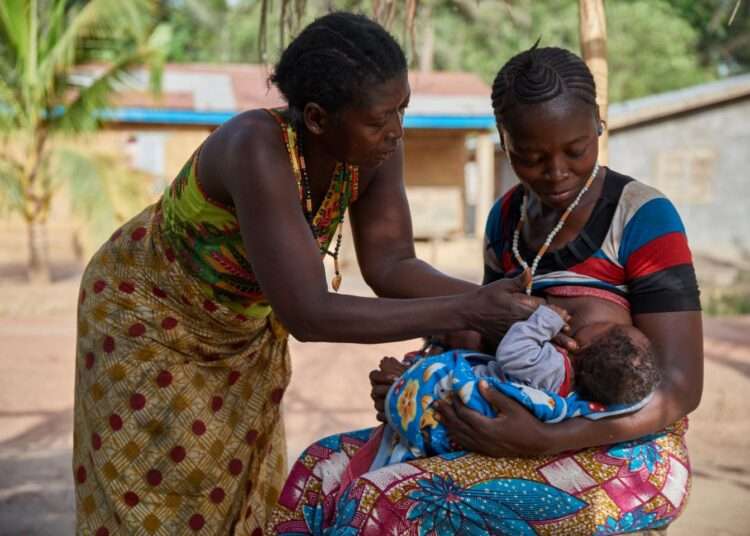
A growing number of African countries are fighting back against the unethical marketing of breast-milk substitutes by tightening laws to protect the health of mothers and children from misleading marketing practices, the 2022 report on the International Code of Marketing of Breast-Milk Substitutes finds.
Over the past two years, six African countries have adopted or reinforced measures against inappropriate marketing of breast-milk substitutes. This brings to 34 the number of countries in the region that have adopted legal measures to implement at least some of the provisions of the Code.
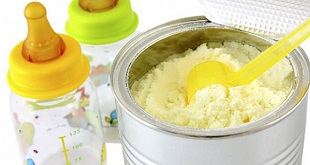
The Code, adopted by the World Health Assembly in 1981, plays a pivotal role in global efforts to help mothers make the best possible decisions about infant feeding based on impartial information and free of commercial influences, and to be fully supported in doing so. The International Baby Food Action Network, UNICEF and the World Health Organization (WHO), continuously monitor its implementation and publish biennial reports.
“Marketers have been trying for decades to divert mothers from their own power to nourish their babies. The tactics have become more insidious as communication channels expand. It’s reassuring to see that more African governments are taking the threat seriously and erecting barriers to these misleading marketing techniques”.
Dr Adelheid Onyango, Director, Universal Health Coverage/Healthier Populations, WHO Regional Office for Africa
Three countries in the African region that previously had no legislation related to the Code—Mauritania, Sao Tome & Principe and Sierra Leone—have now passed new measures. Ethiopia has enacted a strong new directive to replace older legislation that covered only a few provisions of the code. A new decree in Côte d’Ivoire and regulations in Kenya have clarified several issues in existing legislation to make additional provisions enforceable.
Manufacturers take advantage of COVID-19
According to the report, the COVID-19 pandemic created new opportunities for manufacturers of breast-milk substitutes in some countries to promote their brands and products. Among the marketing tactics cited in the report were the distribution of free supplies of commercial formula milk in communities experiencing lockdowns, online content positioning the manufacturer as an expert on protection against COVID-19 in babies and claims that formula provides immunity against COVID-19.

The report also noted that marketers released videos advising against breastfeeding for women infected with COVID-19, despite WHO and UNICEF guidelines for national governments as well as communications reassuring mothers of the safety of breastfeeding with COVID-19.
According to the WHO, marketing of breast-milk substitutes diminishes the perceived value of breastfeeding and undermines women’s confidence in their ability to breastfeed. It plays on expectations and anxieties around nourishing babies and positions formula milk as a better alternative to breast milk.
Significant gaps in national legislation
The report also pointed out significant gaps in national legislation. Provisions to prevent conflicts of interest are lacking. Of the 34 countries with Code laws, only six have legal restrictions on industry sponsorship of meetings of health professionals or scientific groups.
Overall, only 12 countries have measures clearly covering the full breadth of breast-milk substitutes, which includes milk products targeted for use up to at least 36 months. Only six countries prohibit the inclusion of nutrition and health claims on labels.
The report called for Political will at the highest levels to clamp down on marketing of breast-milk substitutes. It also recommended constraints on industry lobbying, better accountability, monitoring and enforcement mechanisms and education on the Code.
During the May 22–28, 2022 World Health Assembly, countries requested WHO to provide guidance on how to control the inappropriate marketing of breast-milk substitutes through digital channels. The World Health Assembly has continuously reinforced the Code to address ever-changing tactics that baby food manufacturers adopt to promote and market new products through traditional and new media.
In the African region, WHO is supporting baby-friendly hospital initiatives through which mothers are helped to initiate breastfeeding soon after delivery, which provide psychological, nutritional and immunization benefits. Over the past two years, 11 countries have received guidance on the institutionalization of baby-friendly hospital initiatives.
The report, thus, called for greater investment in human and financial resources to accelerate progress in protecting the health of mothers and babies through breastfeeding.
READ ALSO: There Are Renewed Efforts- Dr. Asah-Asante On NPP Elections










![French foreign ministry civil servants demonstrate in Paris in 2003 [File: Philippe Wojazer/Reuters]](https://thevaultznews.com/wp-content/uploads/2022/05/Ministers-75x75.webp "French Diplomats to go on Strike First Time in 20 Years 13")
