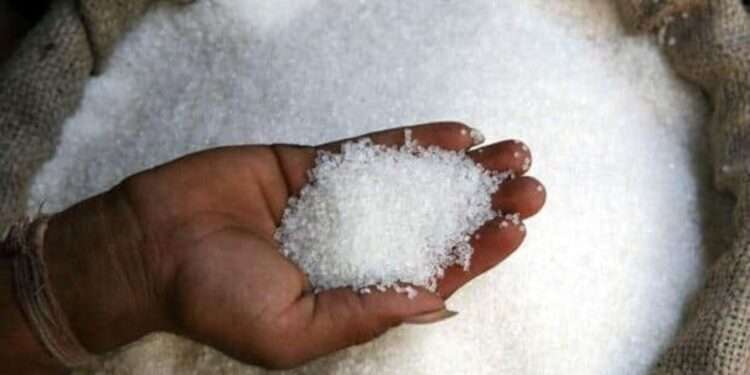
White sugar futures surged to an 11-year peak on the Intercontinental Exchange (ICE), as supply concerns persisted, underpinned by reports of recent rains in top producer Brazil.
According to dealers, lower than expected output in India, Thailand and China had tightened supplies while the harvest in centre-south Brazil had been slowed by rains.
White sugar is up 2.5 per cent to $712.30 a tonne, after setting an 11-year high of $721.00 in an earlier session. Meanwhile, A survey by S&P Global Commodity Insights showed expectations for sugar production in the first half of April at 560,000 tonnes, lower than mills had planned because of the rains in Brazil.
Market dealers also noted that a delivery of 750,000 to one million tonnes was expected against the May raws contract that expires on Friday.



“Sugar fundamentals are quite bullish for the prices to remain elevated in the short to medium term,” said Girish Chhimwal, a sugar analyst at S&P, citing weather risks plaguing top sugar producers.
Meanwhile, rising costs could be passed on to consumers in the form of pricier candy.
“The rising price of confectionary and sugar-based beverages will incorporate rising sugar values,” said John Stansfield, a senior sugar analyst at commodity data platform DNEXT. Prices of processed foodstuff are rising globally, Stansfield added.

“In a bar of chocolate you have milk, cocoa powder etc. and these costs are also rising. Energy and labor costs to make such goods are also rising.”
John Stansfield
Production Concerns
In recent weeks, the Asian cane crushing season has started to wind down and we have seen large downward crop revisions in the key producing countries most notably India, Thailand, China and Pakistan.
In early April, the All India Sugar Trade Association trimmed its sugar production estimates by nearly 3% for the crop year spanning October 2022 to September 2023. The association cited unseasonal rainfall in Maharashtra, which accounts for more than one third of the country’s sugar output.
Extreme weather could take prices much higher. “Prices should trend towards staying elevated in the 21 to 24 cents per pound range,” S&P’s Chhimwal forecasts.
While China could potentially draw upon state reserves to relieve the pressure in global markets, Chhimwal cautions there are many factors that could drive prices higher.
“However, the El Nino risk on Asian production outlook could far offset in the medium term and take prices much higher,” Chhimwal cautioned.
According to the National Oceanic and Atmospheric Administration, there is a 62% chance of El Niño conditions from May to June.
Depending on the Asian monsoon rainfall, the sugar market could potentially become very volatile and weather driven in the medium term.
Rain in number one producer Brazil is also slowing the start of harvest in April.
Meanwhile, coffee prices traded lower on Friday but maintained high valuations due to supply tightness.
Robusta coffee was down one per cent to $2,388 a tonne after peaking a day earlier at $2,489, its highest in nearly 12 years. Arabica coffee also shed 1.85 per cent to $1.8805 per pound.
Dealers noted that the market remained supported by tight supplies, with farmers in top robusta producer Vietnam having little left to sell. They also observed that robusta harvest in Brazil is also just beginning to gather pace.
According to market data, prices for robusta coffee, cheaper historically than the milder arabica beans, reached their highest in 12 years this week as roasters used more of a limited flow from the largest producers.
READ ALSO: Fertilizers Are Available, There Will Be No Shortage this Season- Yara Ghana