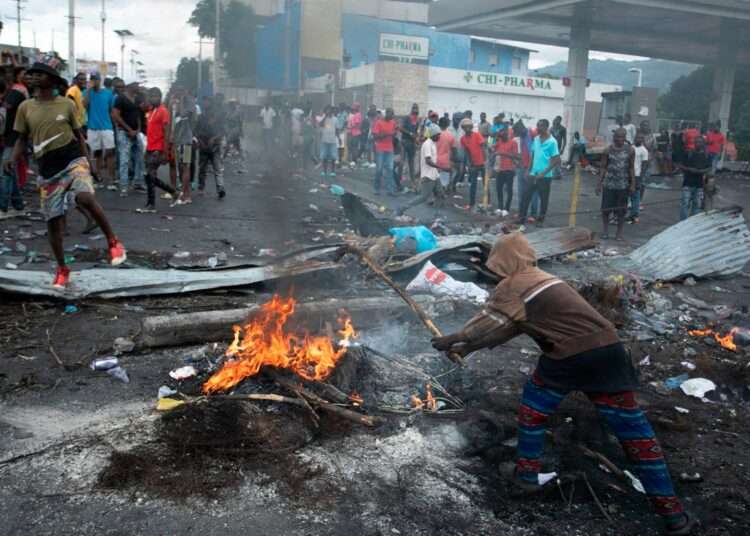
Haiti, once known as the Pearl of the Antilles, now finds itself teetering on the brink of anarchy, with gangs wielding more power and influence than the state itself.
This descent into chaos is not a sudden occurrence but rather the culmination of decades of historical events, institutional neglect, and the unchecked pursuit of power by politicians.
Historically, Haiti has faced numerous challenges, from colonial oppression to internal strife. The legacy of slavery and colonialism left deep scars on the nation, exacerbating social and economic inequalities.
The early years of independence were marked by political instability, as successive regimes vied for power, often through violent means.
This legacy of political turmoil laid the groundwork for the rise of gangs and paramilitary groups, who exploited the power vacuum left by weak and ineffective state institutions.
But this crisis cannot be understood without acknowledging Haiti’s dark history of slavery and international interventions, including the US occupation from 1915 to 1934.
For generations after independence in 1804, Haiti grappled with “reparations” to France – the very country that had enslaved its people. In 1825, twenty-one years after Haiti declared independence, France demanded an indemnity of 150 million francs from the newly formed nation.
This agreement was aimed to secure diplomatic recognition for Haiti and restore trade relations. However, the terms were draconian: Haiti had to pay this colossal sum over five years, with the first annual payment alone amounting to six times its entire yearly revenue.
The debt forced Haiti to take loans from French banks, including the infamous Crédit Industriel et Commercial, enriching the bank’s shareholders at Haiti’s expense. Haiti finally made its last indemnity payment in 1888.
President François Hollande of France aptly described the money paid by Haiti as the “ransom of independence.” It was a cruel irony that a nation fighting for freedom ended up shackled by debt.
The United States also got involved and even acquired Haiti’s treasury in 1911 to receive interest payments related to the indemnity. It took until 1947 – about 122 years – for Haiti to fully repay the associated interest to the National City Bank of New York (now Citibank).
However, Haiti’s problems cannot be attributed to the exogenous factors alone, some are internal.
One of the critical factors in Haiti’s descent into anarchy is the neglect of vital state institutions, such as the judiciary, military, and police force.
Decades of mismanagement, corruption, and international intervention have left these institutions weak and poorly equipped to maintain law and order.
The disbandment of the Haitian military in the 1990s further destabilized the country, leaving it vulnerable to external threats and internal unrest.
Moreover, the love of power among Haiti’s political elite has only exacerbated the problem. Politicians, desperate to cling to power, have often employed gangs and paramilitary groups to intimidate opponents and solidify their control.
However, these alliances have proven to be Faustian bargains, as the gangs they once used as pawns have now become monsters, wreaking havoc on the population and undermining any semblance of governance.
For example, the G9 coalition and G-Pep factions use brutal tactics to subjugate populations. Snipers on rooftops also deliberately kill men, women, and children.
Ways To Salvaging The Situation
To solve Haiti’s current crisis, a multifaceted approach is needed. Firstly, there must be a concerted effort to rebuild and strengthen state institutions, including the military and police force.
This will require significant investment in training, resources, and infrastructure, as well as rooting out corruption and ensuring accountability.
Secondly, there needs to be a comprehensive strategy to address the root causes of gang violence, including poverty, unemployment, and lack of opportunity.
This will require targeted social and economic policies aimed at addressing inequality and promoting sustainable development.
Additionally, there must be a commitment to political reform, including electoral transparency and accountability. Politicians must be held accountable for their actions, and there must be mechanisms in place to prevent the exploitation of gangs for political gain.
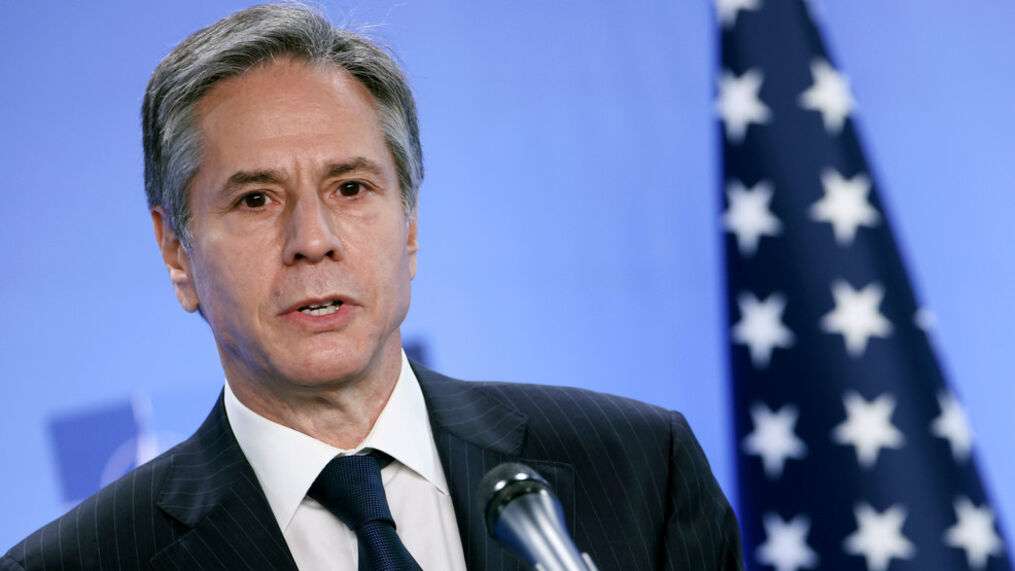
A glimpse of hope is on the horizon as US Secretary of State Antony Blinken on Monday, March 11 announced a $100 million package to finance the deployment of a multinational force to Haiti following a meeting with Caribbean leaders in Jamaica.
Blinken also announced another $33 million in humanitarian aid and the creation of a joint proposal agreed on by Caribbean leaders and “all of the Haitian stakeholders to expedite a political transition” and create a “presidential college.”
He said the college would take “concrete steps” he did not identify to meet the needs of Haitian people and enable the pending deployment of the multinational force to be led by Kenya.
Blinken also said that the US Department of Defense increased its support for the mission, having previously set aside $100 million.
The urgent meeting held by Caricom, a regional trade bloc, on Monday, supported the joint proposal.
“I think we can all agree: Haiti is on the brink of disaster,” said Guyanese President Irfaan Ali. “We must take quick and decisive action.”
Ali said he is “very confident that we have found commonality” to support what he described as a Haitian-led and –owned solution.
READ ALSO: US Evacuates Staff From Haiti Amidst Gang Violence