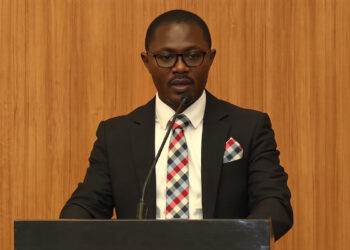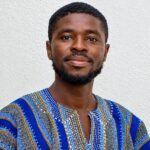

Dr Abdul Hakim Ahmed, a Political Science lecturer at the University of Education, Winneba has expressed concerns over the persistent financial losses plaguing Ghana’s state-owned enterprises (SOEs) and called for urgent steps to address the devastating situation.
In an interview with the VaultzNews, Dr Hakim attributed these losses to a combination of systemic mismanagement, indiscipline, political interference, and a lack of accountability, all of which have severely undermined the financial viability and operational efficiency of SOEs across the country.
According to Dr Hakim, the primary reason for the financial haemorrhaging in SOEs is mismanagement and indiscipline.
He pointed out that managers of these enterprises often do not handle them with the same level of prudence as they would their private companies.
This lax attitude, he noted stems from a deeply ingrained subculture within Ghana’s public sector, where state property is perceived as belonging to the government, and therefore, subject to abuse and neglect.
“In this country, we have a subculture in our public sector, that anything that belongs to the state is just for the government. So once it’s for the government, anything can be done. It’s not anybody’s private enterprise but for the government, and anybody can do what they like”.
Dr Abdul Hakim, a Political Science lecturer at the University of Education, Winneba
The renowned Political Scientist further highlighted that these enterprises are often staffed with unqualified individuals who are appointed based on political connections rather than merit.
This practice, according to him, is not limited to any single political party but is a pervasive issue that cuts across different administrations.
Dr. Hakim emphasized that this patronage system—where party loyalty supersedes competence—significantly contributes to the inefficiencies and financial losses experienced by SOEs.
Systemic and Structural Issues
Furthermore, Dr. Hakim agreed with the assertion that the financial losses are indicative of systemic and structural issues.
He noted that the problems within SOEs are deeply entrenched and have been perpetuated by successive governments.
“These enterprises have been turned into conduits for resources for politicians and politically exposed individuals,” he said, pointing out that SOEs are often used for campaign financing or to illegally funnel money into the pockets of politicians and senior management members.
He also raised concerns about a deliberate strategy by some politicians to run down SOEs, making them candidates for privatization.
This, he explained, is done to benefit those in power or their close associates, who often end up acquiring these enterprises at undervalued prices.
Dr. Hakim lamented that this practice has deprived the country of significant revenue, employment opportunities, and the provision of essential social services.
“It’s not just on one political side. It happens on both sides of the equation. You cannot limit it to 1. Of course, there are some who do it brazenly with no sense of empathy or no sense of remorse. And there are others who do it, you know, in a very clever way. But for both of them, the result is the same.
“At the end of the day, these enterprises are run down, where employment opportunities for younger people in those enterprises have been denied, and then the revenue to the state, which will help in the provision of social amenities, like water, health, education, and economic infrastructure, like roads, railways, energy infrastructure have all been denied because of that kind of behaviours in managing state-owned enterprises”.
Dr Abdul Hakim, a Political Science lecturer at the University of Education, Winneba
The Role of Management and Governance
Dr Hakim also expressed deep concerns over the excessive interference of the executive in the management of state-owned enterprises, leading to its financial losses.
He pointed out that the President’s prerogative to appoint heads of these enterprises often leads to the selection of individuals based on loyalty rather than competence.
“The position of the President is a partisan position. So he won’t go and appoint somebody from the other side; so he appoints people who will be answerable to him first. And there is a question of loyalty, loyalty, loyalty, at the expense of competence. Politicians will tell you that loyalty matters, and they don’t care about competence.
“And that is an unfortunate development. Competence should be the key, but politicians always focus on loyalty. And loyalty in the sense that if I bring you 100 people, even if there are no job opportunities, create job opportunities for them because they are party people or they are my family members or any members of my ethnic group. And that is where the problem lies”.
Dr Abdul Hakim, a Political Science lecturer at the University of Education, Winneba
This politicization of appointments, according to Dr. Hakim, leads to a lack of discipline and accountability within SOEs.
He argued that even when policies and governance structures are in place, their implementation is often undermined by the political interests of the appointing authorities.
The result, he noted is a continuous cycle of mismanagement and financial losses, with no real consequences for those responsible.
Long-Term Economic Consequences
The continued financial inefficiencies within SOEs, Dr. Hakim warned, have dire long-term economic consequences.
He highlighted that these enterprises, which should be helping the country reduce its dependence on imports, are failing to do so, exacerbating the country’s foreign exchange problems.
He cited the example of the Tema Oil Refinery, which, if properly managed, could reduce the need to export crude oil and import refined products, thus stabilizing the cedi.
Moreover, Dr. Hakim pointed out that the financial burden of these losses ultimately falls on the Ghanaian public.
He stated that the debts incurred by mismanaged SOEs add to the country’s public debt, leading to fiscal challenges that manifest in high inflation, reduced economic growth, and the inability to meet the nation’s developmental needs.
“Economic growth is all going to be affected. Because if you don’t have a stable economy, economic growth will elude you. Sustained economic growth would elude you. And so all this, you know, put together are going to continue to put pressure on the national economy”.
Dr Abdul Hakim, a Political Science lecturer at the University of Education, Winneba
Urgent Reforms Needed
To prevent future financial losses, Dr. Hakim called for urgent reforms in the governance of SOEs.
He argued for a comprehensive reform of executive powers, particularly the President’s ability to make partisan appointments.
“We have to be able to turn the tide of partisanship, nepotism, and corruption in those institutions. Unless we are able to do that, the problem will continue to be with us,” he asserted.
He also stressed the need for stronger accountability mechanisms and the implementation of existing laws and policies.
Dr. Hakim suggested that a “reform of the reform” is necessary to address the inefficiencies in current governance structures and to ensure that accountability institutions are empowered to curb the mismanagement within SOEs.
Dr. Hakim’s remarks underscore the urgent need for systemic reforms to address the financial losses within Ghana’s SOEs.
His insights reveal that without a shift towards competence-based appointments and stronger accountability mechanisms, the country will continue to suffer the economic consequences of mismanaged state enterprises.
READ ALSO: Ghana’s Aquaculture Sector Set for Transformation with Israeli Technologies