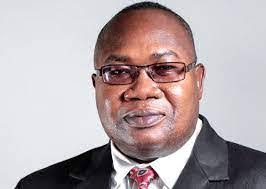
Prof. Stephen Kwaku Asare has firmly pushed back against the Minority’s calls for President Mahama to lift the current ban on the sale of state lands, arguing that such a demand undermines a critical national reform.
In his view, the Minority’s concerns over potential disruption to legitimate landholders and economic activity are overshadowed by the urgent need to address systemic corruption surrounding state lands.
According to Prof. Asare, while it is true that halting all land transactions could inconvenience some legitimate players, that inconvenience is insignificant compared to the deep-rooted abuse the ban seeks to correct.
“For years, state lands have been parceled out like party souvenirs, sold at substantial discounts, leased without transparency, and handed to insiders under dubious arrangements.
“These acts are not isolated mistakes; they represent a pattern of willful self-dealing, insider enrichment, and abuse of office that has led to the loss of critical public assets, especially in prime urban locations.”
Prof. Stephen Kwaku Asare
These corrupt deals, he argued, have led to a consistent depletion of national assets.
Accordingly, Prof. Asare rejected the notion that the current state lands ban undermines private sector interests or stifles legitimate business activity.
He argued that the directive is not targeted at businesses but is rather a strategic measure aimed at halting the long-standing abuse of public lands.
In his assessment, pausing land allocations is essential to prevent corrupt officials and politically connected individuals from rushing through last-minute deals designed to cover up past irregularities before reforms can be enforced.

According to him, allowing transactions to continue while audits are underway would give those involved in questionable allocations the chance to exploit loopholes and finalize dubious deals, effectively sabotaging any meaningful reform.
He emphasized that the ban serves as a safeguard, creating a controlled environment where a thorough audit of previous allocations can proceed without interference.
Prof. Asare maintained that this temporary freeze is a necessary corrective action, rather than an anti-business stance.
He argued that without halting land transactions, any effort to address corruption in the sector would be meaningless, as corrupt actors could preempt investigations by quickly securing legal backing for fraudulent deals.
In his view, the state lands ban acts as a reset mechanism, designed to bring an end to impunity and pave the way for transparency and accountability in Ghana’s land management system.
State Lands Ban Defends Public Interest, Says Expert
Prof. Kwaku Asare also challenged the Minority’s economic justification for opposing the state lands ban, asserting that their focus on potential revenue overlooks the broader national interest.
He criticized the notion that selling off state lands should serve as a strategy for raising quick funds, describing this approach as narrow and unsustainable.
In his view, relying on the sale of public lands for short-term financial gain effectively sacrifices national assets for minimal returns.
He explained that the small amounts earned through fees and stamp duties from these land transactions cannot compare to the long-term value lost when strategic lands are permanently handed over under questionable conditions.
For Prof. Asare, treating national lands as a revenue stream leads to undervalued transfers that benefit a few insiders at the expense of the general public.
“In sum, the ban is not anti-private sector. It is pro-public interest. And if properly managed, it will cleanse the rot, restore integrity, and protect our land from becoming a spoils system.”
Prof. Stephen Kwaku Asare

Calling for full national support, he urged Ghanaians to see the suspension as a necessary reform to protect shared resources.
Prof. Asare recommended that the government use this window to thoroughly audit past land deals and prosecute those found guilty of wrongdoing. “Let the audit proceed. Let justice follow. And let no one be allowed to privatize what belongs to us all.”
Prof. Asare’s defense of the state lands ban challenges opposition leaders to rethink their stance, highlighting that public lands are not just economic assets but part of the nation’s inheritance.
He insisted that the ban creates the conditions needed to correct historical wrongs, prevent future abuses, and rebuild public trust in the country’s land administration system.
READ ALSO: Equatorial Guinea Clashes With France Over Mansion