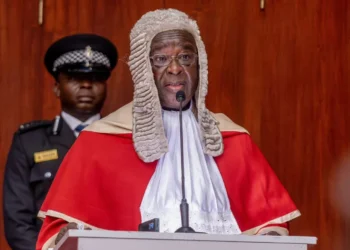
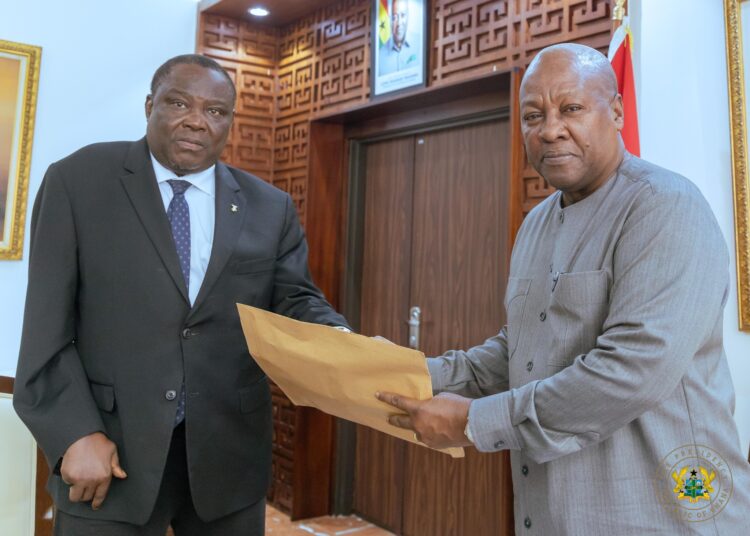
President John Dramani Mahama has officially received the first report of the Article 146 Committee of Inquiry, the body probing three separate petitions seeking the removal of suspended Chief Justice, Gertrude Araba Esaaba Sackey Torkornoo.
The submission of the report marks the latest development in a process that has attracted considerable national attention since the petitions were first lodged.
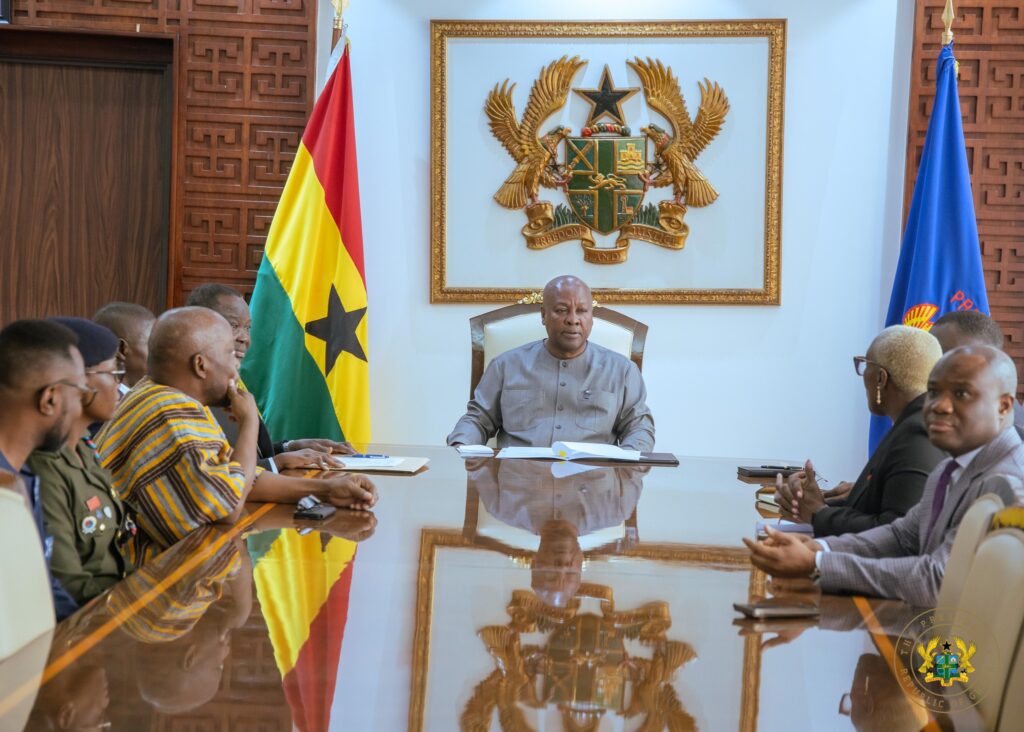
At a brief presentation ceremony at the Jubilee House, the Committee’s Chair, Justice Gabriel Pwamang of the Supreme Court, handed over the findings in a sealed envelope to the President.
He stressed that the committee conducted its work strictly within the bounds of the Constitution, particularly Article 146(7), which requires proceedings to be held in camera. This, he explained, ensured fairness while shielding the integrity of the process from unnecessary public pressure.
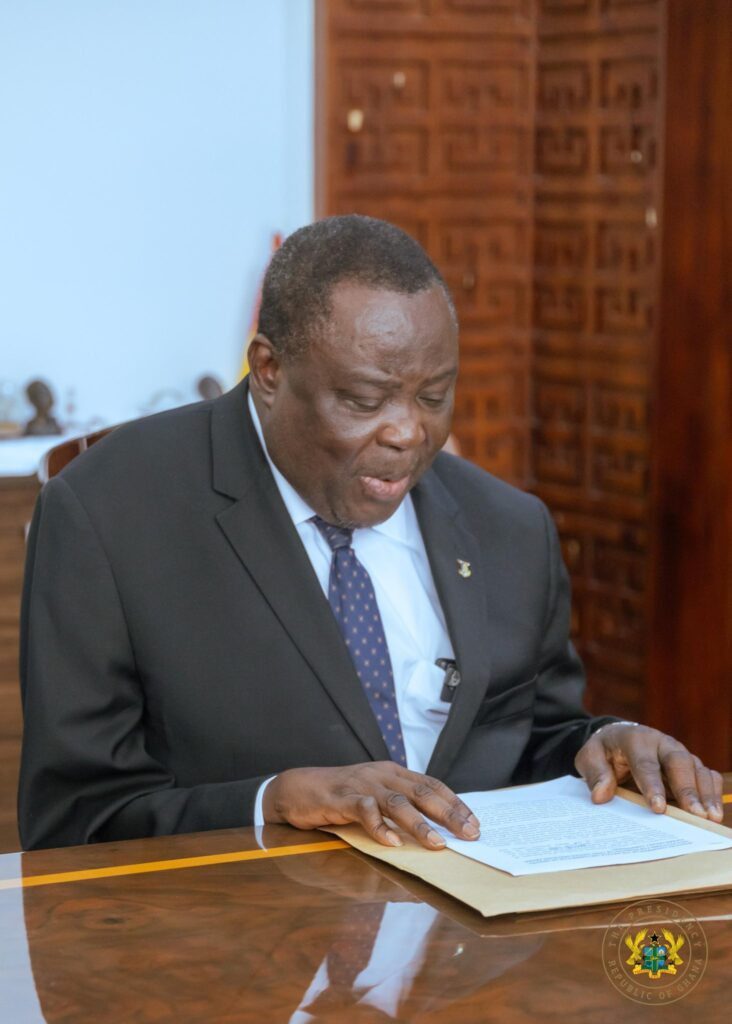
“In camera proceedings are not the same as in secret,” Justice Pwamang clarified, noting that while the committee refrained from engaging in public commentary, it was not prohibited from sharing limited details about the procedure.
He lamented the “blatant false statements made about members of the committee and our work” during the course of hearings, but underscored that the panel remained focused on its constitutional duty.
The first of the three petitions, filed by Mr. Daniel Ofori, was the subject of the report handed over to President Mahama. According to Justice Pwamang, the committee heard testimony from 13 witnesses who appeared on behalf of the petitioner.
The suspended Chief Justice herself also testified and underwent cross-examination. In addition, she called 12 witnesses, including experts, to support her defense.
The evidentiary process, he revealed, was extensive. Altogether, about 10,000 pages of documentary exhibits were submitted for the committee’s consideration. Both the petitioner and the respondent were represented by four lawyers each, ensuring what the Chair described as a “balanced and rigorous” presentation of arguments.
“After critical and dispassionate examination and assessment of all the evidence, including the expert evidence against the provisions of the Constitution and the relevant laws, we have, without fear or favour, arrived at a recommendation on the first petition.”
Committee’s Chair, Justice Gabriel Pwamang of the Supreme Court
Justice Pwamang did not disclose the nature of the recommendation, in keeping with the constitutional requirement that the substance of the committee’s findings be communicated first to the President.
The committee was also tasked with considering two additional petitions against the Chief Justice. Justice Pwamang disclosed that proceedings on the second petition had not been concluded because both the petitioner and the Chief Justice requested an adjournment.
The request was granted to ensure adequate preparation and a fair hearing. “Accordingly, we shall be reporting on the second and third petitions in due time,” he assured, signaling that the work of the panel is ongoing.
The submission of this first report represents a significant step in the inquiry process, which has been closely watched given its implications for the judiciary and constitutional governance.
Article 146 of the 1992 Constitution sets out the procedure for the removal of a Chief Justice or other superior court judges on grounds of stated misbehavior, incompetence, or inability to perform the functions of office due to infirmity of body or mind.

The President is mandated to act upon the recommendations of the committee once the process is concluded. While the details of the recommendation remain confidential at this stage, the eventual decision will shape the leadership and credibility of the country’s judiciary.
President Mahama, upon receiving the sealed report, did not make any immediate comments but is expected to study the recommendations before determining the next constitutional step.
READ ALSO: AU Welcomes UN Roadmap To End Libyan Crisis