
Ghana’s Vice President, Professor Naana Jane Opoku-Agyemang, has urged the international community to pursue a fair, inclusive, and cooperative approach to tackling climate change, warning that poorer countries are bearing the brunt of a crisis they have contributed least to.
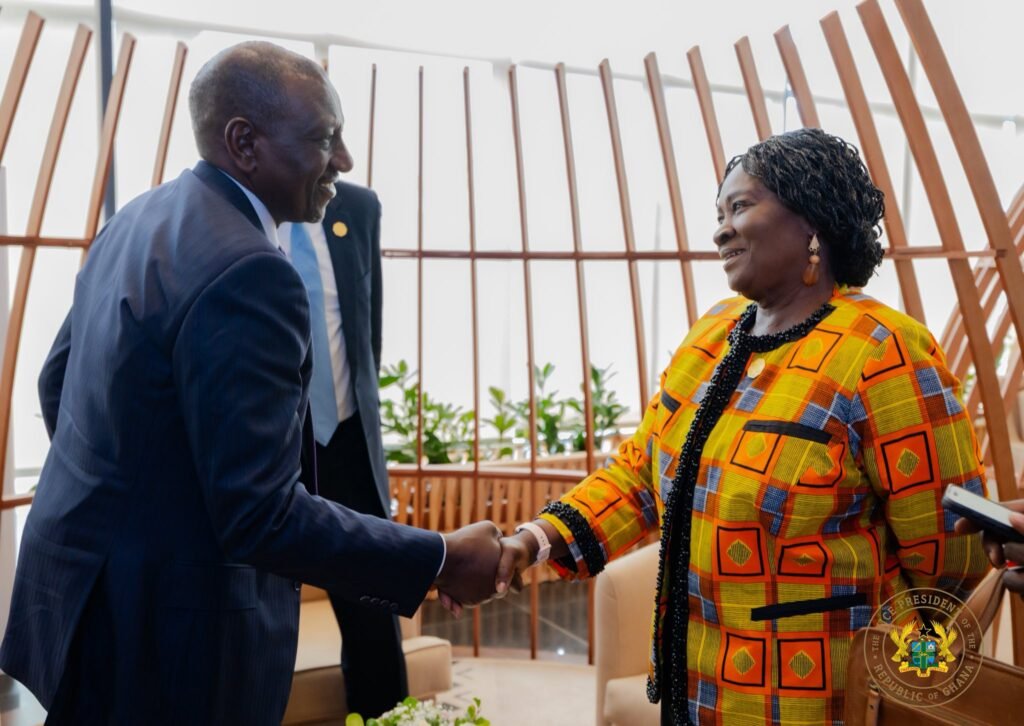
Speaking after a bilateral meeting in Addis Ababa with Selwin Hart, Special Advisor to the United Nations Secretary-General on Climate Action and Just Transition, she outlined Ghana’s climate priorities while stressing the urgent need for systemic reforms in global financial and development frameworks.
The Vice President underscored what she described as the “critical importance of 2025” in advancing global climate action, urging that this year must serve as a turning point in ensuring that vulnerable nations are not left behind in the transition to a more sustainable world.
“Climate change recognizes no national borders. Since many of the causes of climate change are man-made, we must find sustainable and fair solutions together.”
Ghana’s Vice President, Professor Naana Jane Opoku-Agyemang
She argued that climate responses must move beyond rhetoric to meaningful action rooted in justice and equity. Central to her remarks was the injustice inherent in the global climate crisis.
She emphasized that countries in the Global South—especially small island states and developing nations—are disproportionately affected by rising sea levels, food insecurity, and forced migration, even though their contribution to greenhouse gas emissions is negligible.
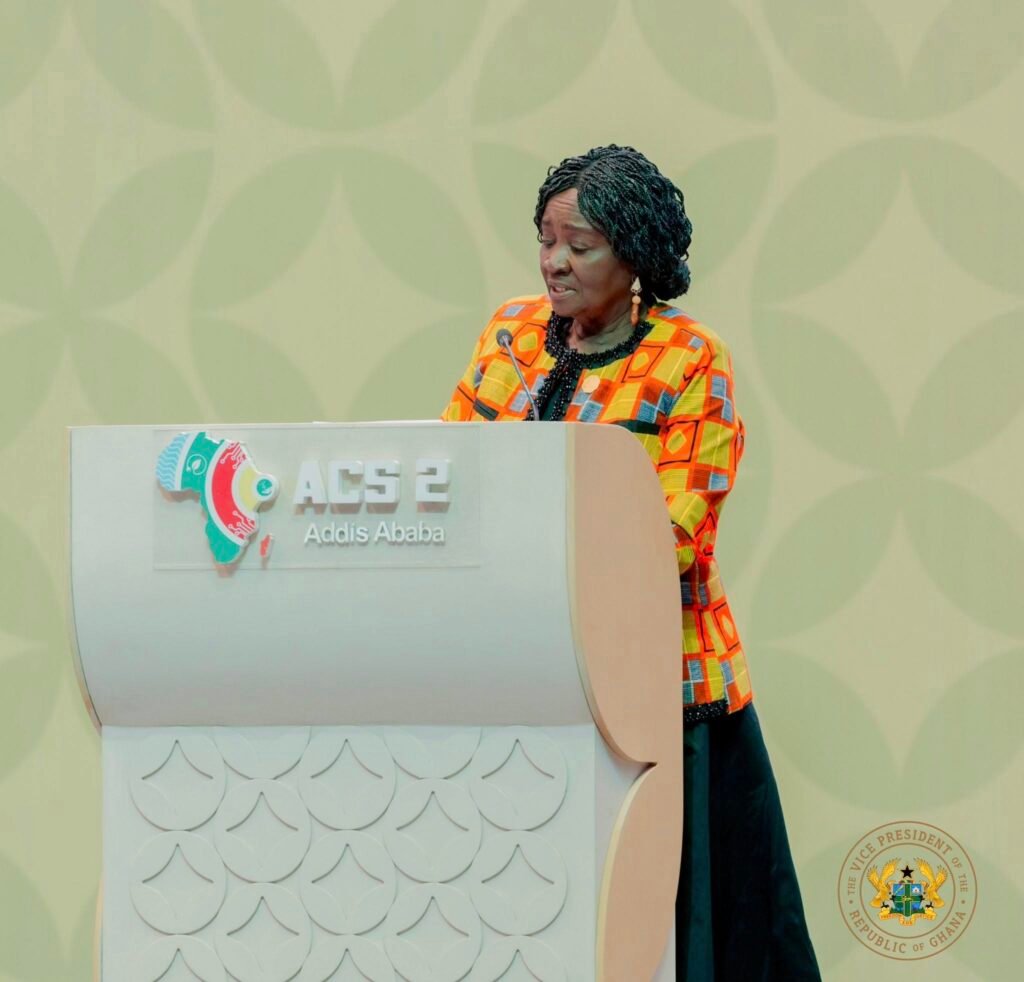
“Poorer countries, who contribute the least to the crisis, often bear the heaviest burdens,” she said. This, she argued, places a moral obligation on wealthier nations and global institutions to act decisively and inclusively. The Vice President called on the United Nations to strengthen its role in amplifying the concerns of vulnerable nations.
She also urged for a multidimensional and Pan-African approach to climate resilience, one that encourages countries to share strategies, integrate adaptation measures, and scale up solutions collectively. “We must work together as a continent,” she said, adding that Africa’s strength lies in collaboration and collective innovation.
Ghana’s Climate Actions
Prof. Opoku-Agyemang highlighted Ghana’s ongoing efforts to tackle climate change, showcasing local initiatives as proof that developing nations are not passive actors but active contributors to global solutions.
She pointed to the floating solar panels installed at the Bui Dam, which are diversifying Ghana’s energy sources, as well as the role of the University of Energy and Natural Resources in training citizens to implement and sustain climate policies.
These initiatives, she said, represent Ghana’s commitment to embracing renewable energy while preparing its people to lead climate adaptation efforts.
However, she underscored that domestic innovations cannot succeed without systemic changes in global economic structures. A central part of her advocacy was the link between climate action and international debt.
“Climate solutions must go hand in hand with reforms to the international financial architecture,” she said. She explained that unsustainable debt servicing continues to divert scarce resources away from critical sectors such as education, healthcare, and climate adaptation strategies.
For her, climate action is inseparable from broader issues of debt and development. The Vice President’s remarks echoed a growing call across the Global South for a more holistic approach to addressing the climate crisis.
By tying climate justice to debt restructuring and fair financing, she framed the issue as one that extends beyond environmental policies to questions of fairness, equity, and accountability in the international system.
“We need a holistic approach to climate, debt, and development challenges. Fairness, equity, and accountability must guide global action if we are to achieve just and lasting solutions.”
Ghana’s Vice President, Professor Naana Jane Opoku-Agyemang
Her Addis Ababa meeting with Mr. Hart came at a time of intensifying global negotiations around climate finance, adaptation, and mitigation strategies, with 2025 set to be a defining year for commitments under the Paris Agreement.

For Ghana, the stakes are particularly high, as climate change threatens coastal livelihoods, agricultural production, and food security. Rising sea levels along the coast and unpredictable weather patterns in farming areas have already disrupted communities, adding urgency to Ghana’s push for climate action.
Vice President Naana Opoku-Agyemang’s intervention was not only a defense of Ghana’s national interest but also a broader call for Africa’s collective voice to be heard on the global stage.
By stressing both innovation at home and systemic reform abroad, she positioned Ghana as a nation committed to solutions but demanding fairness in the international order.
READ ALSO: Beyond Colonial Dig and Ship: Ghana Charts New Path for Mining Sector Transformation