• About
  • Advertise
  • Privacy Policy
  • Contact
Friday, August 21, 2026
  • Login
The Vaultz News
  • Top Stories
  • News
    • General News
    • Education
    • Health
    • Opinions
  • Economics
    • Economy
    • Finance
      • Banking
      • Insurance
      • Pension
    • Securities/Markets
  • Business
    • Agribusiness
    • Vaultz Business
    • Extractives/Energy
    • Real Estate
  • World
    • Africa
    • America
    • Europe
    • UK
    • USA
    • Asia
    • Around the Globe
  • Innovation
    • Technology
    • Wheels
  • Entertainment
  • 20MOBPL2DNew
  • Jobs & Scholarships
    • Job Vacancies
    • Scholarships
No Result
View All Result
The Vaultz News
  • Top Stories
  • News
    • General News
    • Education
    • Health
    • Opinions
  • Economics
    • Economy
    • Finance
      • Banking
      • Insurance
      • Pension
    • Securities/Markets
  • Business
    • Agribusiness
    • Vaultz Business
    • Extractives/Energy
    • Real Estate
  • World
    • Africa
    • America
    • Europe
    • UK
    • USA
    • Asia
    • Around the Globe
  • Innovation
    • Technology
    • Wheels
  • Entertainment
  • 20MOBPL2DNew
  • Jobs & Scholarships
    • Job Vacancies
    • Scholarships
No Result
View All Result
The Vaultz News
No Result
View All Result
in Agribusiness

Ghana Bleeds $100m Annually as Raw Rubber Exports Rob Economy of Jobs & Revenue

Maynard Championby Maynard Champion
September 19, 2025
Reading Time: 4 mins read
Add as Preferred on Google
Ghana Bleeds $100m Annually as Raw Rubber Exports Rob Economy of Jobs & Revenue

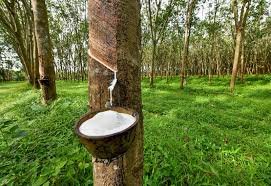
Ghana’s rubber industry, long hailed as a promising contributor to the agricultural and industrial sectors, is now teetering on the edge of a financial crisis.

The Rubber Processors Association of Ghana has sounded a stern warning that the country could lose more than $100 million annually if urgent steps are not taken to prioritize value addition. According to the Association, the growing reliance on exporting raw rubber rather than processing it locally has left the nation vulnerable to exploitation and financial hemorrhage.

Chairman of the Association, Emmanuel Akwasi Owusu, lamented that the trend not only deprives Ghana of much-needed revenue but also hands away jobs and economic opportunities to foreign nations.

The situation has been worsened by foreign companies who exploit Ghana’s relatively cheap raw rubber prices. Mr. Owusu revealed that Ghana sells raw rubber at around $600 per metric ton, compared to global processed prices of $800 and beyond. This disparity, he explained, has turned the country into a cheap sourcing hub for foreign firms who reap massive profits after value addition in their home countries.

ADVERTISEMENT

“Now, because we are cheap in terms of $600 compared to the $800 prices, they can afford to just come and take our raw rubber away. We are giving jobs to people in other countries and collapsing our economy.”

Emmanuel Akwasi Owusu

The $100 Million Ripple Effect

The most alarming revelation is the annual financial loss Ghana suffers by exporting unprocessed rubber. Mr. Owusu noted that when raw rubber is processed locally, its value can surge by an additional $900 per metric ton, creating enormous revenue opportunities. However, by failing to capitalize on this, Ghana loses nearly $100 million every year, a staggering figure that reflects the ripple effect across the entire economy.

“The most serious thing is that every year, if we don’t add value, we are losing $100 million. When you add value to the raw rubber, which is sold at $600, you can then have an additional $900. If you multiply that by our production per year, it is the $100 million. That is the ripple effect we are talking about.”

Emmanuel Akwasi Owusu

The rubber industry is not only about figures—it also concerns livelihoods. Thousands of jobs could be created if Ghana invested more in local processing. Unfortunately, the current practice of exporting raw materials means those employment opportunities are being created in foreign economies, leaving Ghana’s labor market underutilized.

Industry players argue that the nation’s over-reliance on raw exports undermines its broader industrialization agenda. “Every time we export raw materials without adding value, we are exporting jobs, collapsing our industries, and weakening our economy,” Mr. Owusu emphasized.

The Unregulated Export Challenge

The Association has also raised concerns about the surge in unregulated exports of raw rubber. Reports suggest that significant volumes are leaving the country through unofficial channels, denying the state vital revenue. This raises questions about regulatory enforcement and the government’s commitment to protecting local processors.

Without stricter monitoring, Ghana risks not only losing money but also weakening investor confidence in the sector.

ADVERTISEMENT

The Rubber Processors Association is urging government authorities to enforce existing regulations and create policies that incentivize local processing. According to them, this is the only way to safeguard the future of the rubber industry and ensure it contributes meaningfully to Ghana’s industrial and economic growth.

They propose targeted interventions such as tax incentives for processors, access to affordable credit, and strategic partnerships to build modern processing facilities. By doing so, Ghana can strengthen its industrial base, create more jobs, and position itself as a competitive player in the global rubber market.

The looming crisis in the rubber sector reflects a broader challenge Ghana faces across many of its natural resource industries. Cocoa, gold, and now rubber tell the same story—raw exports that benefit foreign economies while Ghana struggles to industrialize.

ADVERTISEMENT

If value addition is prioritized, the rubber industry could emerge as a significant pillar in the government’s vision of making Ghana an industrial hub in West Africa. Failure to act, however, could push the sector toward collapse, with devastating consequences for the economy.

READ ALSO: Goldbod Massive Exports Driving Ghana’s Economic Stability – CEO

ADVERTISEMENT

Sign Up to Our Newsletter

Fresh updates, Straight to your inbox

Tags: $100 million annual lossforeign exploitation of Ghana’s resourcesGhana rubber industryIndustrialization in Ghanaraw rubber exportsrubber processors associationvalue addition in Ghana
Please login to join discussion
Previous Post

Estonia Summons Russian Diplomat Over Incursion

Next Post

GSE Composite Index Surges Past 7,700 Mark, Bulls Maintain Relentless Momentum

Related Posts

Selorm Dramani Dzramado
Agribusiness

Arise Ghana Urges Legal Backing For Agricultural Reforms

August 20, 2026
8da47fb9 790d 444e bf35 c91921549636
Agribusiness

Ghana Loses Millions from Raw Shea Nuts Exports

August 20, 2026
76b8961d 7b96 46ef b27d 9090916714bb
Agribusiness

PFAG Demands 10% of National Budget for Agriculture in 2027, Proposes Dedicated Fund for Farmers  

August 19, 2026
GNPC
Business

Ghana International Horticulture Expo 2026 Set to Boost Agricultural Self-Reliance

August 17, 2026
ADVERTISEMENT

Sign Up to Our Newsletter

Fresh updates, Straight to your inbox

ADVERTISEMENT

Recent News

Mr Mark Prempeh, Director of Petroleum, Ministry of Energy and Green Transition

Government Pushes GNPC Toward A More Commercial Future

August 21, 2026
Photo from PIAC's 15th anniversary launch

GIZ Urges Ghana To Turn Petroleum Accountability Into Development

August 21, 2026
Kai Harvetz celebrate after scoring against Coventry City at the Emirates Stadium

Arsenal Begin PL Title Defence With Resounding Victory Over Coventry

August 21, 2026
From the left, Mr Patrick Stephenson, Country Director for Ghana, NRGI, the moderator, and the panelists for the engagement, from the left: Mr Michael Aryeetey, Deputy CEO, Exploration&Production, GNPC, Mr Benjamin Boakye, Executive Director, ACEP, Mr Agyemang, Technical Director, PIAC and Dr Steve Manteaw, Co-Chair of GHEITI

GNPC Faces Governance Test As Energy Transition Accelerates

August 21, 2026
From the left: Mr Michael Aryeetey, Deputy CEO, Exploration&Production, GNPC, Mr Mark Prempeh, Director of Petroleum, Ministry of Energy and Green Transition, Mr Kwame Ntow Amoah, CEO, GNPC, Nafi Quarshie, Africa Director, NRGI, Mr Benjamin Boakye, Executive Director, ACEP, Mr Abrokwah, GNPC and Mr Patrick Stephenson, Country Manager for Ghana, NRGI

NRGI, GNPC Convene Dialogue On Future Of Ghana’s National Oil Company

August 21, 2026
ADVERTISEMENT
Next Post
GSE Extends Rally as Market Surges 70% This Year

GSE Composite Index Surges Past 7,700 Mark, Bulls Maintain Relentless Momentum

The Vaultz News

Copyright © 2025 The Vaultz News. All rights reserved.

Navigate Site

  • About
  • Advertise
  • Privacy Policy
  • Contact

Follow Us

Welcome Back!

Login to your account below

Forgotten Password?

Retrieve your password

Please enter your username or email address to reset your password.

Log In
No Result
View All Result
  • Top Stories
  • News
    • General News
    • Education
    • Health
    • Opinions
  • Economics
    • Economy
    • Finance
      • Banking
      • Insurance
      • Pension
    • Securities/Markets
  • Business
    • Agribusiness
    • Vaultz Business
    • Extractives/Energy
    • Real Estate
  • World
    • Africa
    • America
    • Europe
    • UK
    • USA
    • Asia
    • Around the Globe
  • Innovation
    • Technology
    • Wheels
  • Entertainment
  • 20MOBPL2D
  • Jobs & Scholarships
    • Job Vacancies
    • Scholarships

Copyright © 2025 The Vaultz News. All rights reserved.

This website uses cookies. By continuing to use this website you are giving consent to cookies being used. Visit our Privacy and Cookie Policy.