
• About
  • Advertise
  • Privacy Policy
  • Contact
Friday, December 12, 2025
  • Login
The Vaultz News
  • Top Stories
  • News
    • General News
    • Education
    • Health
    • Opinions
  • Economics
    • Economy
    • Finance
      • Banking
      • Insurance
      • Pension
    • Securities/Markets
  • Business
    • Agribusiness
    • Vaultz Business
    • Extractives/Energy
    • Real Estate
  • World
    • Africa
    • America
    • Europe
    • UK
    • USA
    • Asia
    • Around the Globe
  • Innovation
    • Technology
    • Wheels
  • Entertainment
  • 20MOBPL2DNew
  • Jobs & Scholarships
    • Job Vacancies
    • Scholarships
No Result
View All Result
The Vaultz News
  • Top Stories
  • News
    • General News
    • Education
    • Health
    • Opinions
  • Economics
    • Economy
    • Finance
      • Banking
      • Insurance
      • Pension
    • Securities/Markets
  • Business
    • Agribusiness
    • Vaultz Business
    • Extractives/Energy
    • Real Estate
  • World
    • Africa
    • America
    • Europe
    • UK
    • USA
    • Asia
    • Around the Globe
  • Innovation
    • Technology
    • Wheels
  • Entertainment
  • 20MOBPL2DNew
  • Jobs & Scholarships
    • Job Vacancies
    • Scholarships
No Result
View All Result
The Vaultz News
No Result
View All Result

Democracy Under Siege: Trust, Governance, and Human Needs in the 21st Century 

Evans Junior Owuby Evans Junior Owu
October 8, 2025
Reading Time: 4 mins read
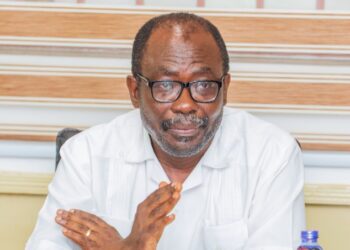
Abubakar Mohammed Aminu, Conflict, Security, and Human Rights Activist.

Abubakar Mohammed Aminu, Conflict, Security, and Human Rights Activist.

The global democratic order is facing a crisis not seen in decades. According to the 2025 Democracy Report from the University of Gothenburg’s Varieties of Democracy (V-Dem) Institute, autocracies now outnumber democracies worldwide. 

Nearly three-quarters of the world’s people live under authoritarian rule, the highest proportion since 1978. This is not just a statistic; it signals a deep loss of faith in democracy and shows its limits in meeting human and societal needs. 

One key reason for this decline is growing disappointment with democracy itself.   In Africa, West Africa, and other places, many citizens see democracy as a foreign project imposed from outside rather than a system designed to solve local problems. 

RelatedPosts

GES Pays Outstanding Feeding Grants for Special Schools and Perishables for SHS/SHTS

Kwakye Ofosu Defends GHS 2.5 Billion Military Retooling Plan as Essential Priority

Road Crashes Kill 2,600 People in 11 Months, MTTD Warns of Escalation During Christmas

Interventions in Afghanistan, Libya, and Iran show what scholars call the weaponization of democracy: exporting democratic ideals under the banner of peacebuilding and state reconstruction. In reality, these interventions often produced instability, human rights abuses, and weak governance. 

In Libya, NATO’s 2011 intervention toppled Gaddafi but left behind armed groups, division, and the collapse of the state.  Afghanistan’s experience after 2001 also shows how externally imposed systems, detached from local realities, can worsen insecurity instead of resolving it. 

Economic crises have also shaped the picture. The 2008 global financial meltdown revealed the weaknesses of democratic systems, especially their slow and bureaucratic nature. Democracies, by design, are deliberative: policy requires negotiation, checks, and balances. While this protects against abuse, it also slows down decision-making. 

ADVERTISEMENT

Autocracies, in contrast, concentrate power in one leader or a small elite, enabling quick and decisive action. In times of crisis, this speed makes authoritarian rule appear more effective to citizens frustrated with slow democratic processes that fail to deliver results. But the supposed efficiency of autocracy hides major risks. 

As Lord Acton once said, “power corrupts, and absolute power corrupts absolutely.” In authoritarian systems, leaders shielded from accountability often perpetuate corruption, abuse, and failure with no checks. 

Democracies, even imperfect ones like Ghana, Nigeria, and Senegal, allow rotation of leaders, legal oversight, and citizen activism to challenge executive excess. These mechanisms, though slow, protect against abuse and allow people to influence outcomes. 

For democracy to survive, it must connect to human needs. John Burton’s Human Needs Theory argues that people are driven by basic needs: security, livelihood, identity, and recognition. When these needs are denied, grievances grow, which fuels conflict and authoritarian alternatives. 

In Mali, Niger, and Burkina Faso, high unemployment, weak governance, and persistent insecurity show how failure to meet these needs drives instability. Democracy cannot be just a set of elections and institutions; it must tangibly improve people’s lives. 

Another challenge is the way democracy is often promoted as if it were automatically sweet and liberating, a guaranteed path to progress. But reality often disappoints. As the Akan proverb says, “masua nsuo, masua nsa 3na mahu de3 3mu y3 duro”: I have weighed water and alcohol, and alcohol is heavier. In other words, what is promised as sweet may in practice feel bitter. 

Citizens who have “tasted” democracy in fragile states often face corruption, inefficiency, and unmet needs, making them question whether democracy truly delivers. The bureaucratic safeguards of democracy, while meant to ensure accountability, can paradoxically weaken it. Layers of administration and lengthy procedures make governments slow to act. 

Autocracies, while dangerous, can act quickly. This tension between the speed of autocracy and the accountability of democracy is at the heart of current debates and explains why many people lean toward authoritarian solutions during crises. 

Yet abandoning democracy for autocracy is not a real solution. Authoritarian regimes often sacrifice freedoms, rights, and inclusion in exchange for speed. The real challenge is for democracies to balance accountability with responsiveness, and ideals with results. 

In West Africa, there are examples: Senegal shows that when institutions are adapted to local realities and participatory systems are strengthened, democracy can bring stability and citizen influence even in difficult times. 

The global crisis of democracy is therefore both systemic and social. Weaponized democracy, bureaucratic slowness, economic shocks, and failure to meet basic needs have weakened trust. But democracy still has a unique value: it safeguards rights, provides accountability, and creates space for citizens to engage. 

The challenge in the 21st century is to make democracy not just a formal structure but a system that truly serves the people. Democracy must therefore be seen as both an ideal and a tool for human well-being. Its survival depends on balancing procedure with efficiency, ideals with reality, and accountability with speed. 

For Africa and West Africa especially, democracy must adapt to local needs, deliver basic services, and resist external imposition. Otherwise, it will continue to taste bitter to those it claims to serve. Only by meeting real human needs can democracy live up to its promise of freedom and stability. 

Writer: Abubakar Mohammed Aminu – Security, Conflict, and Human Rights Activist 

READ ALSO: Trace Every Hand Behind Akonta Docket Disappearance – Prof. Asare Demands Probe
Tags: 2025 Democracy Report21st Centuryauthoritarian systemsdemocracyHuman needs
Share2Tweet1ShareSendSend
Please login to join discussion
Previous Post

Another Gaza Aid Flotilla Intercepted

Next Post

Uganda’s $4B Oil Refinery Signals Regional Energy Shift 

Related Posts

Professor Ernest Kofi Davis, Acting Director-General, Ghana Education Service
General News

GES Pays Outstanding Feeding Grants for Special Schools and Perishables for SHS/SHTS

December 12, 2025
Hon. Felix Kwakye Ofosu, Minister for Government Communications
General News

Kwakye Ofosu Defends GHS 2.5 Billion Military Retooling Plan as Essential Priority

December 12, 2025
Chief Superintendent Alexander Kwaku Obeng, MTTD Director of Education, Research and Training
General News

Road Crashes Kill 2,600 People in 11 Months, MTTD Warns of Escalation During Christmas

December 12, 2025
President John Dramani Mahama
General News

Mahama Secures ECOWAS’s Full Backing for 2027 AU Chairmanship

December 12, 2025
Director of Advocacy and Policy Engagement at CDD-Ghana, Dr Kojo Pumpuni Asante
General News

CDD-Ghana Hails Mahama’s Stand on Protecting OSP

December 12, 2025
Hon. Samuel Abu Jinapor, MP for Damongo
General News

Jinapor Warns Foreign Minister Against Escalating Ghana-Israel Tensions

December 12, 2025
Artisanal Small-Scale Miners Association (ASSMA) Operations
Extractives/Energy

MDF Intensifies Efforts to Ensure Chemical-Free Mining

by Bless Banir YarayeDecember 12, 2025
Gas Plant
Extractives/Energy

WAPCo Assures Region of Uninterrupted Gas Transport After Pipeline Breach

by Prince AgyapongDecember 12, 2025
SMEs at Risk: UKGCC and Deloitte Warn Ghanaian Firms Against ‘Dangerous’ DIY Transactions
Vaultz Business

SMEs at Risk: UKGCC and Deloitte Warn Ghanaian Firms Against ‘Dangerous’ DIY Transactions

by M.CDecember 12, 2025
Professor Ernest Kofi Davis, Acting Director-General, Ghana Education Service
General News

GES Pays Outstanding Feeding Grants for Special Schools and Perishables for SHS/SHTS

by Evans Junior OwuDecember 12, 2025
Asia

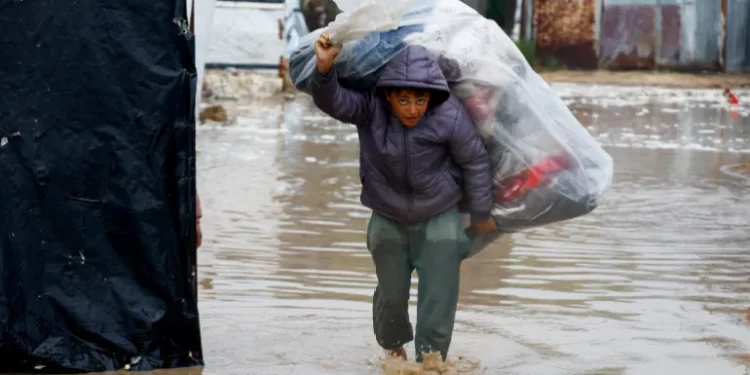
14 People Killed As Storm Byron Wrecks Havoc On Gaza

by Comfort AmpomaaDecember 12, 2025
Europe

Italy’s Largest Trade Union Holds National Strike To Protest Government’s Budget Plans

by Comfort AmpomaaDecember 12, 2025
Artisanal Small-Scale Miners Association (ASSMA) Operations
Gas Plant
SMEs at Risk: UKGCC and Deloitte Warn Ghanaian Firms Against ‘Dangerous’ DIY Transactions
Professor Ernest Kofi Davis, Acting Director-General, Ghana Education Service

Recent News

Artisanal Small-Scale Miners Association (ASSMA) Operations

MDF Intensifies Efforts to Ensure Chemical-Free Mining

December 12, 2025
Gas Plant

WAPCo Assures Region of Uninterrupted Gas Transport After Pipeline Breach

December 12, 2025
SMEs at Risk: UKGCC and Deloitte Warn Ghanaian Firms Against ‘Dangerous’ DIY Transactions

SMEs at Risk: UKGCC and Deloitte Warn Ghanaian Firms Against ‘Dangerous’ DIY Transactions

December 12, 2025
Professor Ernest Kofi Davis, Acting Director-General, Ghana Education Service

GES Pays Outstanding Feeding Grants for Special Schools and Perishables for SHS/SHTS

December 12, 2025
reuters 693bfe0d 1765539341

14 People Killed As Storm Byron Wrecks Havoc On Gaza

December 12, 2025
The Vaultz News

Copyright © 2025 The Vaultz News. All rights reserved.

Navigate Site

  • About
  • Advertise
  • Privacy Policy
  • Contact

Follow Us

Welcome Back!

Login to your account below

Forgotten Password?

Retrieve your password

Please enter your username or email address to reset your password.

Log In
No Result
View All Result
  • Top Stories
  • News
    • General News
    • Education
    • Health
    • Opinions
  • Economics
    • Economy
    • Finance
      • Banking
      • Insurance
      • Pension
    • Securities/Markets
  • Business
    • Agribusiness
    • Vaultz Business
    • Extractives/Energy
    • Real Estate
  • World
    • Africa
    • America
    • Europe
    • UK
    • USA
    • Asia
    • Around the Globe
  • Innovation
    • Technology
    • Wheels
  • Entertainment
  • 20MOBPL2D
  • Jobs & Scholarships
    • Job Vacancies
    • Scholarships

Copyright © 2025 The Vaultz News. All rights reserved.

Discover the Details behind the story

Get an in-depth analysis of the news from our top editors

Enter your email address