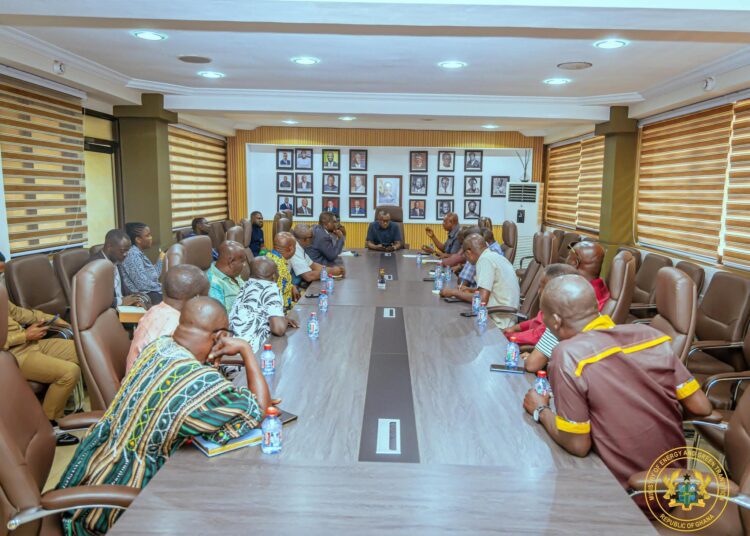
The Minister of Energy and Green Transition, Hon. John Abdulai Jinapor, has assured members of the Ghana National Petroleum Tanker Drivers Union (GNPTDU) of government’s commitment to improving their welfare and working conditions, describing their role as “indispensable” to the smooth functioning of the country’s energy distribution network.
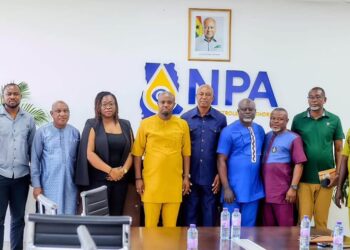
The Minister made the remarks after a high-level meeting with the Union’s leadership in Accra, held as part of his ministry’s broader stakeholder engagement drive aimed at addressing systemic challenges and promoting stability within Ghana’s petroleum sector.
Hon. Jinapor described the discussions as “productive and constructive”, noting that the session focused on key issues such as the drivers’ welfare, the establishment of a fair and structured salary regime, and the elimination of unlawful surcharges imposed on tanker drivers in various depots and distribution terminals.
“The discussions focused on a number of critical issues affecting petroleum tanker drivers across the country, including their general welfare, the need for a fair and structured salary regime, and the elimination of unlawful surcharges.”
Hon. John Abdulai Jinapor, Minister of Energy and Green Transition
He underscored the government’s recognition of tanker drivers as a vital link in Ghana’s petroleum distribution chain, stressing that their dedication ensures the uninterrupted supply of fuel to every corner of the country from industrial centers and airports to rural communities and power generation plants.
Ensuring Fair Treatment and Industrial Harmony

The Minister revealed that the Energy Ministry, in collaboration with the National Petroleum Authority (NPA) and other key industry stakeholders, is working towards developing a comprehensive framework to address the concerns raised by the GNPTDU.
“This framework will be designed to safeguard the welfare of tanker drivers, enhance operational efficiency, and promote long-term industrial harmony within the sector.”
Hon. John Abdulai Jinapor, Minister of Energy and Green Transition
According to him, Ghana’s petroleum logistics network which depends heavily on road-based tanker operations cannot function effectively without ensuring that drivers are adequately compensated, properly regulated, and fairly treated.
Tanker drivers have long faced numerous challenges, including inconsistent pay structures, irregular bonuses, exposure to health and safety risks, and alleged illegal fees collected at loading terminals.
These grievances have occasionally led to strikes and disruptions in fuel supply, affecting consumers and businesses nationwide.
By opening structured dialogue with the GNPTDU, the Minister signaled a shift toward a more inclusive and consultative approach in managing the petroleum downstream sector, one that balances efficiency with equity and labor justice.
A Strategic Move for Energy Security
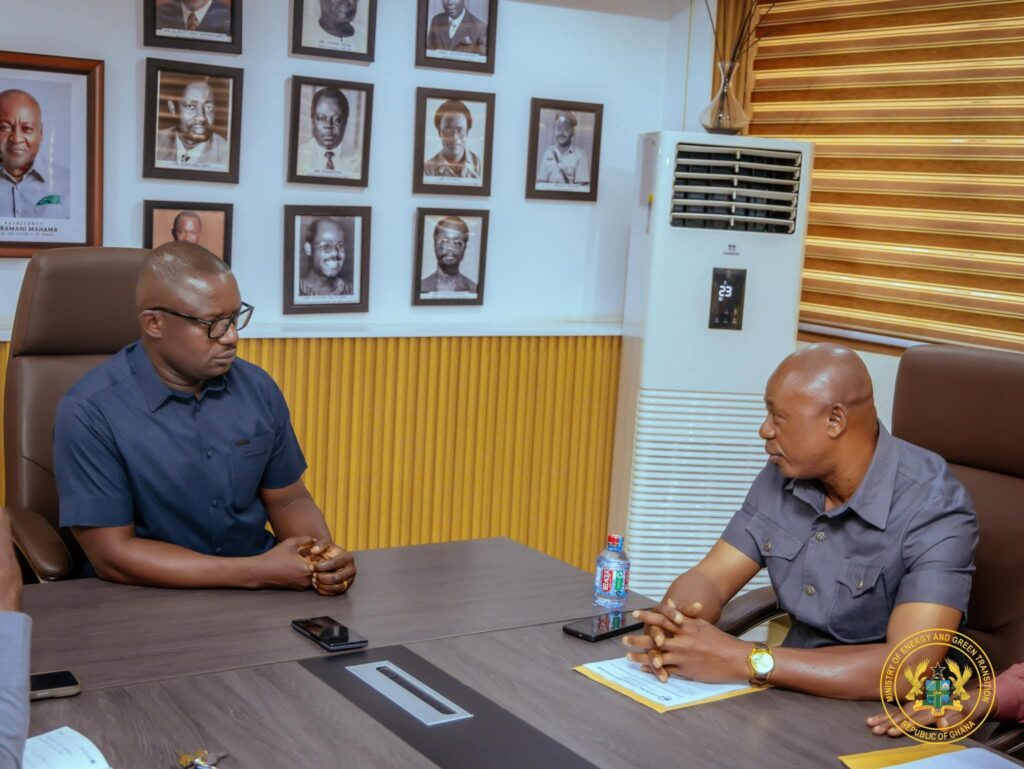
The meeting, which forms part of the Ministry’s ongoing stakeholder consultations, comes at a time when Ghana’s energy supply chain faces growing logistical and financial pressures.
Hon. Jinapor emphasized that ensuring the well-being of tanker drivers directly contributes to national energy security.
Any disruption in their operations, he said, could have ripple effects across industries, transportation networks, and everyday livelihoods.
“These matters are central to ensuring stability and efficiency within Ghana’s petroleum distribution chain.
“Our goal is to maintain a distribution system that is not only efficient but also fair and humane.”
Hon. John Abdulai Jinapor, Minister of Energy and Green Transition
He commended the leadership of the GNPTDU for their professionalism and constructive engagement, noting that such dialogue sets a precedent for resolving industrial disputes amicably and promoting collective problem-solving within Ghana’s vital energy ecosystem.
The Ministry’s collaboration with the NPA and the private sector is expected to go beyond the immediate welfare discussions.
The forthcoming framework is anticipated to include reforms related to licensing procedures, training programs for drivers, and digital tracking systems to ensure transparency in petroleum distribution.
The move aligns with the government’s broader agenda under the Energy and Green Transition Policy, which seeks to create a modern, efficient, and socially responsible energy industry capable of supporting Ghana’s economic transformation.
For the GNPTDU, the engagement represents a rare opportunity to have its concerns formally acknowledged at the ministerial level.
Union leaders have repeatedly called for transparent systems that guarantee fair treatment and improved safety conditions for drivers who traverse long distances daily to deliver petroleum products.
READ ALSO: BoG’s $1.15bn FX Injection Sparks Clash with IMF and World Bank Over Cedi Stabilization