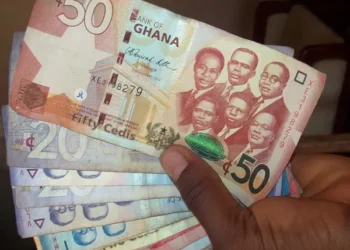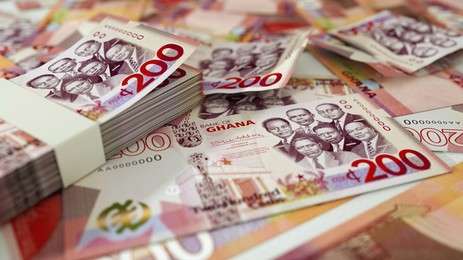
The Ghana cedi has been crowned the best-performing currency in Africa for the first eight months of 2025, according to the World Bank’s October 2025 Africa Report.
The international financial institution revealed that the cedi outpaced all other African currencies, gaining 20% year-to-date, buoyed by tight fiscal and monetary policy, rising export revenues, and improved investor confidence.
This remarkable performance stands in sharp contrast to 2024 when the cedi depreciated by about 19% against the US dollar. The World Bank’s findings highlight Ghana’s significant progress in stabilizing its currency and economy despite global headwinds, inflationary pressures, and domestic fiscal constraints.
The cedi’s turnaround story is nothing short of remarkable. In 2024, Ghana’s economy faced multiple shocks, including high inflation, tight external financing conditions, and sluggish investor sentiment. However, through deliberate and coordinated efforts by the Bank of Ghana (BoG) and the government, the narrative has changed dramatically in 2025.
By implementing strict monetary policy measures and maintaining fiscal discipline under the International Monetary Fund (IMF) support programme, Ghana has restored a degree of stability to its financial system. The BoG’s focus on building foreign exchange buffers through initiatives like the Domestic Gold Purchase Programme and gold-for-oil policy has also boosted confidence in the cedi’s value.
According to the World Bank report, “Ghana’s currency appreciation is a reflection of improved market sentiment and effective policy coordination between fiscal and monetary authorities.”
Policy Discipline and Investor Confidence Drive Gains
The cedi’s strength has been anchored on two main pillars: prudent fiscal management and monetary tightening. The Bank of Ghana maintained a tight monetary stance to curb inflation, while the government continued implementing structural reforms to reduce fiscal deficits.
In addition, rising export revenues from cocoa, gold, and crude oil — coupled with increased foreign investment inflows — helped improve Ghana’s balance of payments position. The World Bank noted that these factors combined to enhance the credibility of Ghana’s macroeconomic framework, creating a more favorable environment for the cedi.
Improved investor confidence has also played a crucial role. As Ghana’s economic outlook brightened, demand for cedi-denominated assets rose, particularly among foreign investors seeking higher yields in emerging markets. This demand further supported the local currency’s upward momentum during the early part of the year.
Cedi Outperforms African Peers
In comparison to other African currencies, the Ghana cedi’s performance has been exceptional. The Zambian kwacha ranked second with a 16% year-to-date appreciation, while other major African currencies, including the South African rand and Nigerian naira, struggled under pressure from weak commodity prices and inflation.
On the flip side, the South Sudanese pound and the Ethiopian birr were the weakest performers in 2025, recording year-to-date declines exceeding 10%. The divergence in performance across the continent underscores the importance of sound policy frameworks and structural reforms in achieving currency stability.
The World Bank emphasized that addressing barriers to structural transformation and maintaining prudent fiscal management will be key to sustaining the cedi’s gains and supporting broader economic resilience across Africa.
Short-Term Setbacks, Long-Term Potential
Despite its impressive performance in the first eight months, the cedi experienced some volatility between late July and September 2025, losing about 19% in value after recording a 40.5% appreciation earlier in July. This fluctuation, according to analysts, reflects short-term market corrections and profit-taking behavior among investors.
As of September 2025, the Bank of Ghana’s Summary of Economic and Financial Data indicated that the cedi was trading at GH¢12.15 to the US dollar on the interbank market, while retail market rates hovered around GH¢13.60 per dollar. Even with this depreciation, the cedi’s cumulative appreciation for the year remained among the best in Africa, demonstrating its relative strength and resilience.
Experts believe that the recent correction is temporary and that the fundamentals supporting the cedi remain strong. “The dip observed in late Q3 reflects short-term liquidity adjustments rather than structural weakness,” said one financial analyst in Accra.
In the intervening time, the World Bank and other international observers have urged Ghana to consolidate its gains by maintaining strict fiscal discipline, enhancing domestic revenue mobilization, and deepening structural reforms.
The Bank also stressed the importance of boosting productivity, diversifying exports, and reducing overreliance on commodity-driven revenues. These measures will not only support the cedi’s long-term stability but also foster sustainable economic growth and resilience against external shocks.
The Ghanaian government has already signaled its commitment to maintaining macroeconomic stability through continued collaboration with the IMF and the implementation of key economic recovery measures. The Bank of Ghana has also reiterated its determination to safeguard the local currency’s value through prudent reserve management and effective market interventions.
All in all, the Ghana cedi’s rise to become Africa’s best-performing currency in 2025 represents more than just a financial milestone — it symbolizes Ghana’s broader economic renewal and growing investor confidence.
From a period of steep depreciation in 2024 to remarkable appreciation in 2025, the cedi’s journey highlights the power of policy consistency, discipline, and innovation in economic management.
READ ALSO: Guinness Ghana Leads Bull Run as GSE Financial Stocks Rally 65.76% YTD