The Electricity Company of Ghana (ECG) has emerged victorious in an international arbitration case against Power Distribution Services Ghana Limited (PDS), marking the end of a five-year controversy that once cast a shadow over Ghana’s energy reform agenda.
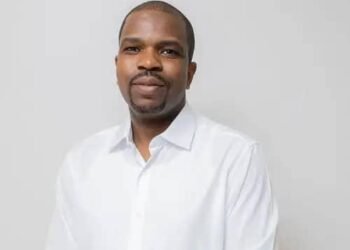
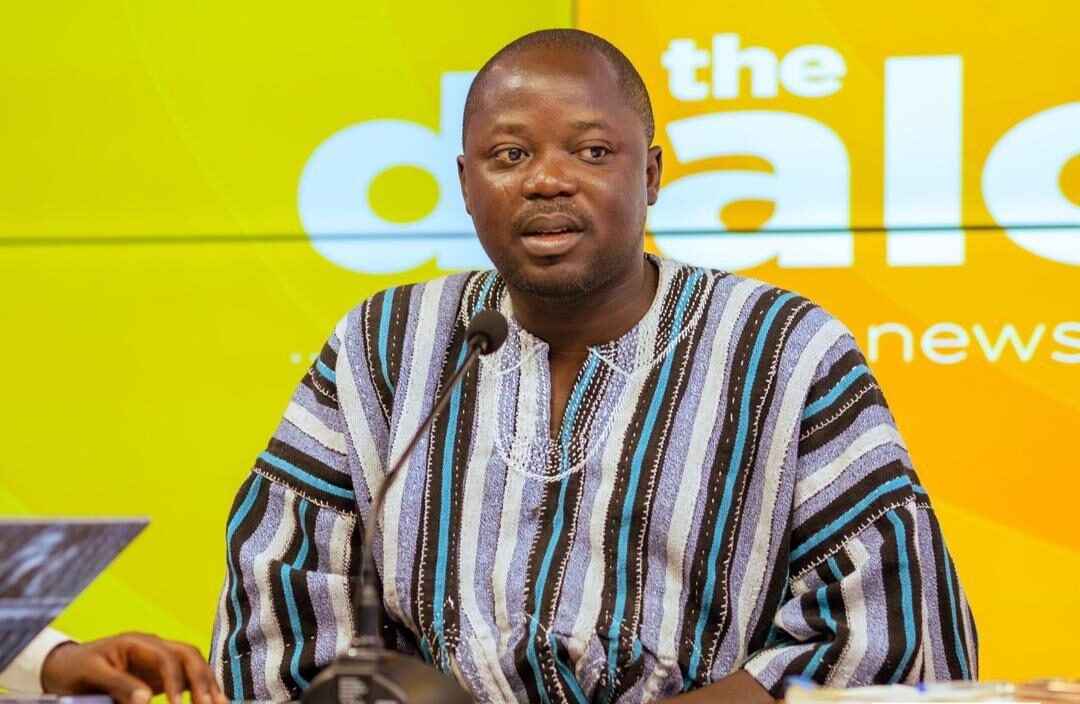
Executive Director of the Centre for Energy Market and Sustainable Environment (CEMSE), Benjamin Nsiah, speaking in an interview with Vaultz News, commended the outcome but cautioned that the country must learn critical lessons from the controversy that surrounded the PDS concession.
While the tribunal’s decision saved ECG from potential damages amounting to US$390.9 million, Mr. Nsiah stressed that the legal outcome should not be mistaken for a triumph of governance.
“I don’t think ECG has won, but rather ECG has been saved by the court or has not been burdened by additional cost or damage as was sought by PDS.”
Benjamin Nsiah, Executive Director of CEMSE
While many have described the decision as a landmark victory, Nsiah believes the ruling should be viewed as a narrow escape rather than a win.
According to Mr. Nsiah, the tribunal’s outcome prevented Ghana from facing a significant financial burden but should not mask the underlying weaknesses that led to the contract’s collapse in the first place.
A Costly Partnership Gone Wrong


Under the 2019 concession, PDS took over the management of ECG with the expectation of injecting private-sector efficiency into Ghana’s electricity distribution.
But within months, the government suspended the arrangement after discovering that payment guarantees provided by PDS through Al Koot Insurance and Reinsurance Company of Qatar were fraudulent.
Investigations, including a ruling by the Qatari Court of Cassation, later confirmed that the documents were indeed forged.
The Ghanaian government subsequently terminated the concession, citing the invalid guarantees as a breach of the contract’s fundamental conditions.
PDS, insisting that it acted in good faith, later took ECG to arbitration in London, seeking damages of US$39.4 million in direct costs and US$351.5 million in alleged lost profits.
ECG, represented by Omnia Strategy LLP, led by Cherie Blair KC, defended the case, arguing that the termination was justified and in the best interest of the state.
After years of proceedings, the tribunal ruled entirely in ECG’s favor, dismissing all of PDS’s claims. The tribunal agreed that the fraudulent guarantees went “to the heart of the concession” and justified the termination of the contract.
PDS Responds: “We Have Been Vindicated”
Following the ruling, PDS issued a statement asserting that it had been vindicated on the core allegations of fraud.
“The award found that PDS made no misrepresentation regarding the financial instruments.
“Accordingly, PDS considers itself vindicated on the core allegations, consistent with its position from the outset.”
Power Distribution Services Ghana Limited (PDS)
PDS added that the tribunal “found that PDS held a genuine belief in the validity of the financial instruments it provided to ECG” and that there was “no information to suggest that PDS committed or conspired to commit fraud.”
Mr. Nsiah, however, noted that while the court did not impose damages on either party, PDS’s incomplete submission of key documentation was a major factor in the breakdown of the deal.
“It has been the position of most civil society groups that PDS did not submit some relevant documents needed before the inception of the contract.”
Power Distribution Services Ghana Limited (PDS)
Lessons from the PDS Episode
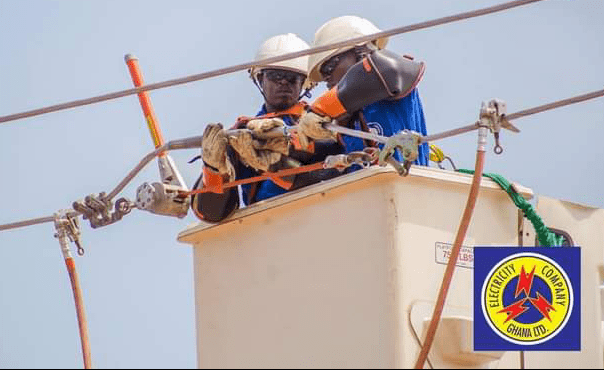
For Mr. Nsiah, the ruling should serve as a turning point for Ghana’s energy governance framework, particularly in the way concession and partnership agreements are negotiated and executed.
“So first of all, I think that we need to do away with political interference in some of these contracts.
“We need to stop interfering or pushing political interests at the expense of national and economic interests. We need to stop personalizing some of these contract arrangements.”
Benjamin Nsiah, Executive Director of CEMSE
He referenced the PDS experience as an example of political capture undermining sound decision-making.
“The experience from PDS indicated that some political friends of the previous government personalized the contract.
“Because of their interest, the contract was not sustainable and had to be terminated.”
Benjamin Nsiah, Executive Director of CEMSE
Mr. Nsiah further emphasized that due diligence, both technical and financial must become a cornerstone of future energy agreements.
He further called for stronger technical, legal, and financial capacity within key state institutions such as the Ministry of Finance, the Attorney-General’s Department, and ECG itself.
“If we were to strengthen these institutional capacities and review some of these contracts, there would be early detection of any fault or anomaly that might cost us as a state.”
Benjamin Nsiah, Executive Director of CEMSE
Calls for Inclusive Stakeholder Engagement

Mr. Nsiah underscored the importance of broad-based stakeholder engagement in the design and review of national contracts, stressing that “Stakeholder engagement is critical because no one knows it all,” he said, invoking the Akan proverb ‘Tikro nko agyina’.
“We must involve experts who have done serious research in the sector, from Parliament to civil society, to industry professionals.
“That is the only way to design contracts that benefit both the state and private partners.”
Benjamin Nsiah, Executive Director of CEMSE
He argued that such engagement would prevent future disputes and foster transparency in contract execution.
Beyond governance and process reforms, Mr. Nsiah urged policymakers to ensure that all major contracts are guided by a clear strategic vision of the state. “Every contract must be underpinned by a philosophy and strategic vision,” he explained.
“If the state’s vision is to maintain ownership of critical utilities, then we shouldn’t sign private partnership agreements.
“But if our vision is to attract private sector participation, then we must design contracts that balance both public and private interests.”
Benjamin Nsiah, Executive Director of CEMSE
He warned that without such alignment, Ghana risks entering into agreements that fail to deliver long-term value, noting that “many of our contracts are signed without clarity of purpose, leading to disputes and financial losses.”
The ECG–PDS arbitration outcome may have spared Ghana from significant financial liability, but as Benjamin Nsiah of CEMSE observed, it also exposed deep-rooted governance flaws in how public-private partnerships are negotiated and managed.
Eliminating political interference, enforcing due diligence, empowering local institutions, and aligning contracts with national interests are now imperative if Ghana is to avoid repeating the mistakes of the PDS saga.