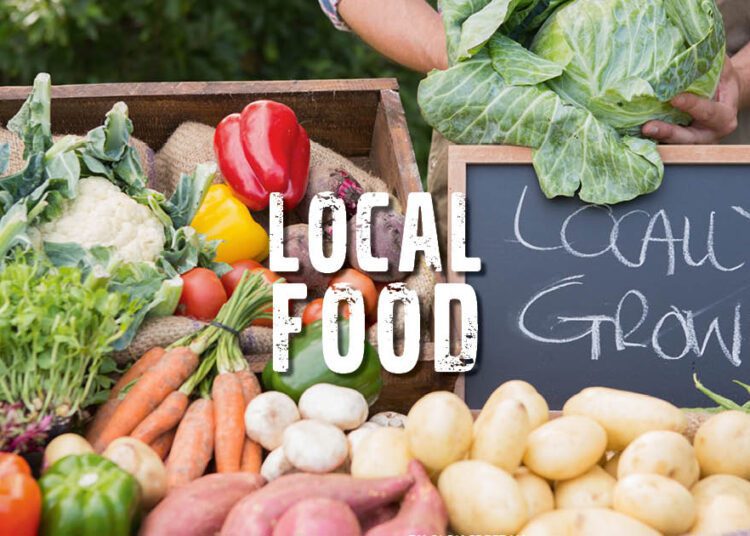
The government’s initiatives to boost productivity in the productive sector seem to be making impact as inflation for locally produced goods reduces to 8.0 percent in October 2025, showing a 2.1 point drop and a 0.7 percent decline from the September inflation.
According to the Ghana Statistical Service (GSS), the inflation for locally produced goods declined from 10.1 percent in September 2025, signifying increases in output and supply of goods produced in the country.
Compared to imported goods, locally produced goods have higher inflation. However, imported goods inflation increased to 7.8 percent from 7.4 percent recorded in September, implying that prices of imported goods rose slightly by 0.34 percent.
Goods coming from outside the country through Ghana’s ports and borders had higher prices. This could be caused by the high import duties and clearing costs at the entry points.
Locally produced goods contributed more to inflation than imported goods. The GSS data shows that locally produced goods contributed 5.5 points in October, while imported goods contributed 2.45 points to the October inflation.
Though the inflation for the locally produced goods dropped, as against imported goods inflation, which increased, the locally produced goods inflation remains relatively higher. The trend reveals that inflation for locally produced goods could drop further going forward, equaling or below the imported goods inflation.
Drivers of the Inflation
According to the latest GSS data, certain items drove inflation for October 2025 lower. The highest item, ‘Recreation, Sport and Culture,’ recorded an inflation of 15.1 percent, a 1.5 point decline from September. The next is ‘Housing, Water, Electricity, Gas and Other Fuels’ with an inflation of 13.9 percent in October from 15.8 percent recorded in September, also showing 1.5 points decline.

The third top driver of inflation is ‘Alcoholic Beverages, Tobacco & Narcotics’ with a 10.4 percent record for October, as against 15.4 percent recorded in September. Two items recorded the same inflation level for October and September. These are ‘Food and Non-Alcoholic Beverages’ and ‘Clothing and Footwear,’ recording 9.5 percent inflation for October and 11.5 percent for September.
These five items are mostly locally produced items. Therefore, their decline influenced the inflation for the locally produced items and subsequently the year-on-year headline inflation for October.
Transport, had a slight acceleration in the decline of price in October as it recorded -4 percent inflation as against -3.9 percent in September. This means transport prices fell at a marginally faster rate in October than in September. A negative inflation figure records a general price decline over the period, known as deflation. This means transport fare got cheaper between September and October.

While ‘Food and Non-Alcoholic Beverages’ were the highest contributor to inflation in October with 4.07 points, transport contributed least to October inflation with -0.42 points. Food and Non-Alcoholic Beverages; Housing, water, electricity, gas and other fuels; Clothing and footwear; Recreation, sport and culture; and Alcoholic Beverages, Tobacco & Narcotics, in order, contributed most to October’s 8.0 percent inflation recorded.
Contributors to Inflation
Among the individual items that contributed to October’s inflation, locally produced ginger had the highest year-on-year inflation of 94.1 percent, which is a decline from 113.8 percent in September. Other items with high inflation include plantain (green), Cinema/Cultural Services, Cashew, lime, charcoal, avocado pear, and dark beer.

However, locally produced herrings-smoked was the highest contributor to October’s inflation, though prices declined from 23.8 percent in September to 16.4 percent in October.
Other top contributing items to October inflation include Plantain (green), cinema/culture services (non-food), cooked rice, charcoal, ginger, kenkey with fried fish, fufu and soup, among others, all being locally produced items. Imported items contributors include vegetable oil and tomato paste.
Among the top 20 list of inflation contributors by the GSS, 18 of the items are locally produced, and 14 are food items. These are everyday items Ghanaians interact with.
Impact, Policy Success, and Outlook
According to GSS, the “locally produced goods remain costlier than imports in October. Local inflation fell from 10.1% in September to 8.0% in October, while imports rose from 7.4% to 7.8%.”
The Government Statistician, Dr. Alhassan Iddrisu, mentioned that “overall prices decreased by 0.4% between September and October,” adding that “Food inflation fell to 9.5% in October, down from 11.0% in September. Food prices decreased by 1.0% between September and October.”
“Non-food inflation eased to 6.9% from 8.2% in September. Non-food prices, however, rose 0.04% month-to-month. Inflation for goods slowed to 9.3% from 11.2% in September. Services inflation eased more gently, from 4.8% in September to 4.6% in October. Since goods account for nearly ¾ of the CPI basket, the slowdown in goods inflation is a relief for consumers where it matters most.”
Dr. Alhassan Iddrisu
The year-on-year headline Inflation rate announced monthly by the GSS informs policy direction and initiatives of the government and the Bank of Ghana. Individuals have their purchasing power increased and can buy more goods and services with the same income level.

Businesses can plan and invest better with the continuous decline in inflation. Confidence and integrity in the economy are boosted. Internal and external investors will be more willing to do business in Ghana. The Ghanaian economy is now fairly predictable and stable for investors.
The government’s initiatives in boosting the productive sectors of the economy need to be accelerated to further bring down local prices of goods and services.
Dr. Alhassan Iddrisu recommended that households take advantage of the falling inflation to plan ahead and save more. He encouraged businesses to invest in efficiency and local supply chains while cutting waste, strengthening sourcing from local producers, and repositioning to grow as the economy stabilizes. He also urged the government to maintain fiscal discipline, focus resources on keeping food prices low by strengthening storage, irrigation, and transport.
The continuous decline in inflation creates an outlook that projects Ghana ending the year with a single-digit inflation. The government will likely achieve its inflation target of 8 percent ± 2.
READ ALSO: October Inflation Falls to 8% – Boon for Consumers, Signal of Policy Success