
The Office of the Special Prosecutor (OSP) says it is making significant progress in two major corruption probes involving the Minerals Income Investment Fund (MIIF) and an extensive fuel diversion scheme, signaling what could become landmark cases in Ghana’s fight against corruption and the protection of public assets.
In a statement outlining the latest developments, the OSP indicated that the investigations have reached advanced stages, with more details expected to enter public discourse as the processes unfold. The Office emphasised that its work remains rooted in due process, transparency and the overarching obligation to protect the public interest.
One of the OSP’s most consequential ongoing cases is the probe into the Minerals Income Investment Fund. According to the Office, the investigation covers “suspected corruption and corruption-related offences arising from the operations of the Minerals Income Investment Fund.”
The scope, officials said, is broad and includes payments, transactions and financial decisions taken across several of MIIF’s projects. These include dealings with Agyapa Royalties Limited, the Small-Scale Mining Incubation Programme, the Quarry Value Addition Programme, Asante Gold Corporation, ElectroChem Ghana Limited, the Lithium Asset Project and the Enchi Gold Project, as well as other investment undertakings managed by the Fund.

The OSP has already undertaken several statutory measures in relation to the case, including freezing of accounts, seizure of assets and restrictions placed on the movement of certain individuals.
These actions, the Office stressed, are within its legal mandate and are aimed at preventing any dissipation, concealment or misuse of assets while the investigation proceeds. The inquiry, it disclosed, is specifically centred on two former officials of MIIF and two current officials whose roles and decisions are being scrutinised.
The investigation also extends beyond project-related payments. The OSP is examining expenditure linked to the Chairman of the Board, operational finances of the Fund, a land acquisition earmarked for the construction of an office building, contractual engagements entered into by MIIF, and the production and circulation of MIIF publications.
These layers of inquiry, according to the Office, are intended to establish whether any improper financial conduct, mismanagement or abuse of public resources occurred within the Fund’s operations.
Fuel Diversion Probe
In parallel, the OSP is investigating a massive fuel diversion scheme involving more than thirty Oil Marketing Companies (OMCs). The alleged diversion covers marine gas oil, premix fuel and diesel—products with significant revenue implications for the state.

According to the Office, millions of cedis that should have accrued to the national purse were lost through these diversions, and efforts are underway to recover those funds.
The fuel diversion probe touches on some of the most sensitive areas of Ghana’s petroleum distribution chain, particularly premix fuel, which has historically been vulnerable to corruption and leakages.
The OSP’s findings so far, sources indicate, suggest a network of coordinated diversions that deprived the state of substantial revenue. Matters relating to the alleged diversions are already before the courts, including the ongoing National Petroleum Authority (NPA) and Strategic Mobilisation Ghana Limited (SML) cases.
These cases, the OSP noted, reflect its determination to ensure accountability across all sectors where corruption undermines national development.
Two separate investigations connected to the petroleum sector have also reached advanced stages, although the OSP stopped short of releasing full details at this time. These investigations are expected to be disclosed more comprehensively as charges are finalised and the matters move toward the judicial process.
In its update, the Office of the Special Prosecutor reaffirmed its dedication to its core mandate: “preventing, investigating and prosecuting corruption, and ensuring the effective recovery and management of state assets.”
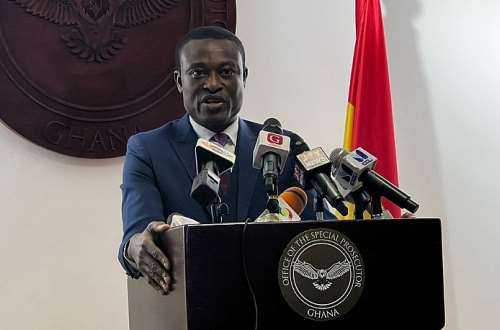
The Office underscored that its work is driven by statutory authority and a commitment to fairness. It has hinted that as these high-profile cases move forward, public conversation will intensify, especially given their potential implications for governance, public finance and investor confidence.
The OSP reiterated that its approach remains systematic and insulated from political and external influence. It maintained that the public should expect transparency at every stage permitted by the law, stressing that no individual or institution involved in the investigations will be shielded from accountability.
As the MIIF and fuel diversion probes near completion, the outcomes are expected to shape national discourse on corruption and strengthen public expectations for greater discipline in the management of public institutions.
Whether these cases lead to prosecutions, asset recoveries or structural reforms, they represent a critical test of the OSP’s resolve and its role in Ghana’s broader anti-corruption architecture.
READ ALSO: Reliable Electricity Central Gov’t’s 24-Hour Economy Push