President John Dramani Mahama has renewed the call for a major overhaul of Ghana’s centralised public payroll system, describing it as outdated, inefficient, and responsible for persistent payroll infractions flagged annually by the Auditor-General.
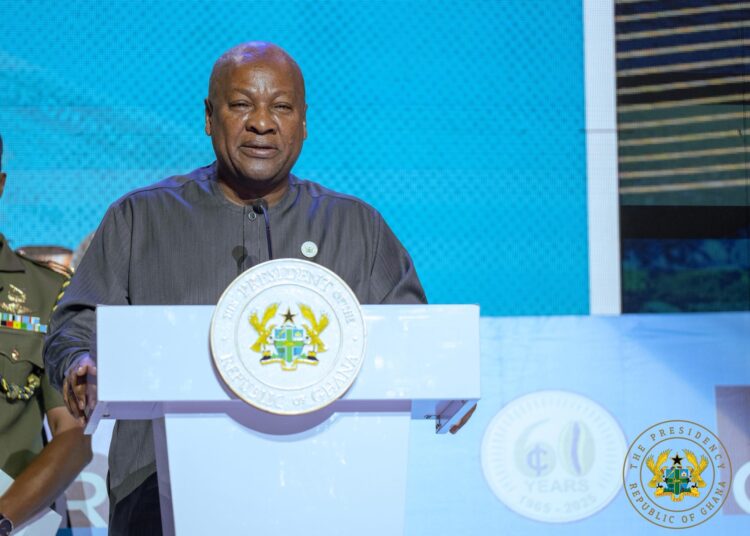
Speaking at the Annual Conference of the African Association of Accountants General in Accra, the President argued that decentralisation is no longer optional but an urgent necessity if Ghana is to eliminate long-standing leakages and modernise its public financial management architecture.
Addressing a gathering of accountants-general from across the continent, President Mahama stated plainly that Ghana’s current payroll arrangement—where the Office of the Accountant-General controls the salary administration of every public sector employee nationwide—has outlived its relevance and now poses administrative and financial risks.’
He highlighted the absurdity of a highly centralised system that requires actions to travel through multiple bureaucratic layers before reflecting on an employee’s salary status.
“I think that the time has come we take bold action about decentralising,” he emphasised. According to him, the existing structure creates long delays in processing critical human resource actions, allowing ghost names, wrongful payments, and extended unearned salaries to slip through the system for months—sometimes years—without detection.
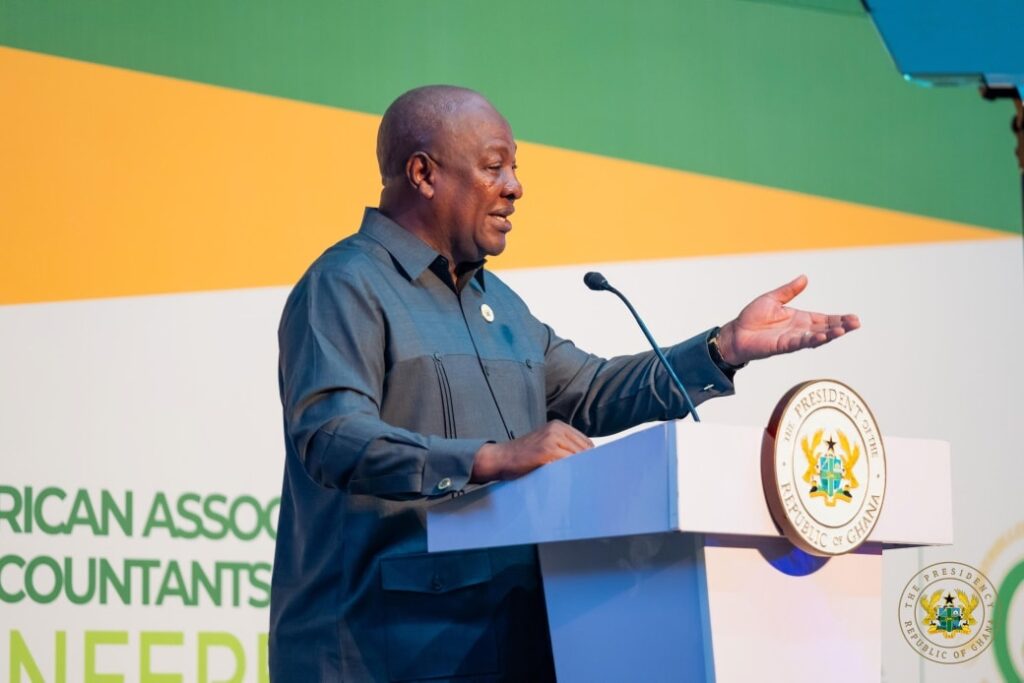
To illustrate the dysfunction, President Mahama cited the example of a nurse working in Bole, his hometown, whose salary is still processed and controlled from Accra. Under the current model, even if such a nurse deserts her post, it may take several months before the right documentation reaches the appropriate authorities to halt the salary.
He explained that a simple process—such as confirming whether a staff member has reported to work—must pass through the district, the region, the ministry, and finally the Accountant-General.
“By the time somebody writes a letter to the region, the region sends it to the ministry, the ministry sends it to the Accountant-General, and some 3, 4, 5, 6 months have passed”.
President John Dramani Mahama
Auditor-General’s Report
The President noted that the Auditor-General’s reports consistently highlight cases where individuals continue to draw salaries long after deserting their posts. Yet, because of the systemic delays in the current centralised arrangement, the problem remains widespread and predictable, with substantial financial implications for the state.

“Every year, the Auditor-General will flag it and say somebody continued to receive a salary even after they had deserted their post,” he said, stressing that the recurring nature of these infractions underscores the urgent need for structural reform. President Mahama shared a particularly striking case that demonstrates both the fragility and inefficiency of the payroll system.
According to him, an individual who had passed away—whose death was well-known to officials in the organisation that employed him—continued to be paid for an astonishing 36 months after his death. The President noted that such episodes are not isolated, but symptomatic of a broader structural weakness in Ghana’s financial governance system.
He argued that payroll decentralisation—through a well-supervised, technology-driven, and transparent framework—would improve accountability, enhance service delivery, tighten internal controls, and eliminate the costly administrative bottlenecks that currently characterise the payroll chain.
While acknowledging the concerns often raised about decentralisation—such as the need to ensure strong local oversight mechanisms—President Mahama insisted that maintaining the status quo is far more damaging.
He said the long-standing justification for centralised payroll management had been based on the need to prevent abuse, but real-world evidence now shows that the centralised system is itself a breeding ground for inefficiency and waste.

The President called for a deliberate, phased transition to a decentralised payroll system that empowers district and regional structures to verify and validate staff movement in real time.
He also highlighted the importance of robust digital systems that link local government entities to the national financial management framework to ensure efficiency and prevent corruption.
As Ghana works toward broader public sector reforms and improved financial governance, President Mahama’s remarks are expected to stimulate renewed debate on one of the country’s most consequential administrative bottlenecks.
READ ALSO: Geopolitical Tensions and Market Swings Trigger New BoG Warning