Ghana’s past economic growth has come at the expense of depleting natural resources, and its management is instrumental in widening Ghana’s productivity level for growth.
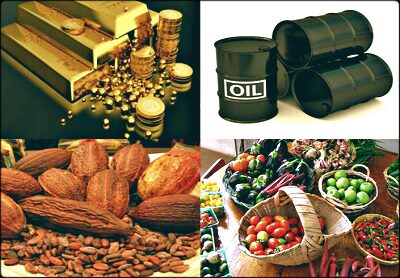
Ghana’s pursuit of economic expansion and improved livelihoods through ‘all means possible’ ideology has dampened Ghana’s environment and consequently affected productivity negatively. The government of Ghana is urged by the World Bank to review its traditional growth means and to manage natural resources judiciously and effectively.
The World Bank acknowledged that “both the expansion of mining, driven by higher income potential compared to agriculture, and the increase in arable land, due to low productivity and a lack of adaptation measures, have significantly contributed to deforestation, soil erosion, and environmental degradation across land, rivers, and seas.”
These activities have diminished productivity in various essential economic sectors, which are vital for structural transformation and poverty alleviation, while also heightening household income volatility and susceptibility to natural hazards and climate-related disruptions. Growth should not come at the expense of basic environmental destruction, as that affects other potential growth sectors.
Need for Efficient Management of Natural Resources
Addressing Ghana’s current natural resource management can promote productivity, reduce macroeconomic volatility, and foster growth and job creation.
The World Bank whispered that “a key action for the new administration would be to reset the mindset that focuses on the unsustainable exploitation of depletable natural resources or relying on potential discoveries of oil or other minerals that mask deeper growth issues, government efficiency concerns, and intergenerational equity.”
Greater governance, transparency, and accountability in natural resource management will enable the country to capitalize on its natural resources while nurturing a more sustainable and inclusive growth model.
Ghana has growing challenges that require intentionality and political will to address them. Reducing policy uncertainty and addressing significant institutional and governance challenges are necessary for effective natural resource management.
The World Bank revealed that these challenges include a fragmented institutional framework; weak enforcement of laws related to forest, mining, and environmental protection; limited stakeholder involvement; and inadequate capacity and resources.
The government must also focus on addressing policy uncertainty across Artisanal and Small-Scale Mining (ASM), water, forestry, and disaster risk management, as they are essential for the future of the country. The enforcement of laws is also key to boosting efficiency and sustainable growth.
Ghana, front-lined by the government, must align multiple national, subnational, and sectoral strategies and agencies. Strategy is key in the fight and implementation of good governance and prudent economic practices.
Inter-ministry linkages have been weak over the years, affecting collaborations and purposeful, effective planning. Many economic issues and challenges fall within the purview of multiple ministries; hence, their collaboration is essential. The World Bank alluded that “consolidating the currently fragmented roles and responsibilities across ministries and agencies is necessary to enhance responsibility, accountability, resources, regulation, and enforcement.”
Boosting Agriculture Productivity and Agribusiness
Ghana, in unlocking its full potential in agriculture, must increase crop productivity and develop robust value chains and agribusinesses, which can contribute to food security and alleviate poverty among rural households.
This transition, the World Bank insisted, will “help agriculture become a more dynamic, technology-driven, and commercially oriented sector that emphasizes value addition, which is crucial for boosting productivity and generating income.”
Infrastructure expansion, irrigation promotion, market connectivity, and modernized large-scale storage facilities and markets are key to improving agricultural productivity. This will generate a reliable, competitive, and sizable domestic supply necessary to capture the value added of agro-processing without relying on imports.
To further stimulate agribusiness requires fostering value chain development and commercialization. The government must establish a Public-Private Partnership (PPP) framework to attract economically viable large-scale investments into strategic clusters such as the Afram Plains to drive growth and enhance the agricultural sector’s overall contribution to the economy.
Ghana, therefore, requires a comprehensive institutional reform to rebuild the country’s natural resource use, efficient use of limited public funds, attract substantial private finance for infrastructure development, prevent waste and the accumulation of debt, and expand the agricultural sector to create jobs for the youth to end natural resource depletion and environmental degradation.
READ ALSO: Financial Stocks Soar: GSE-FSI Climbs to 4,459.35 in Stunning Market Rally