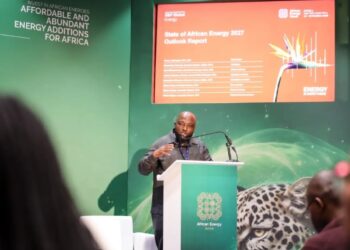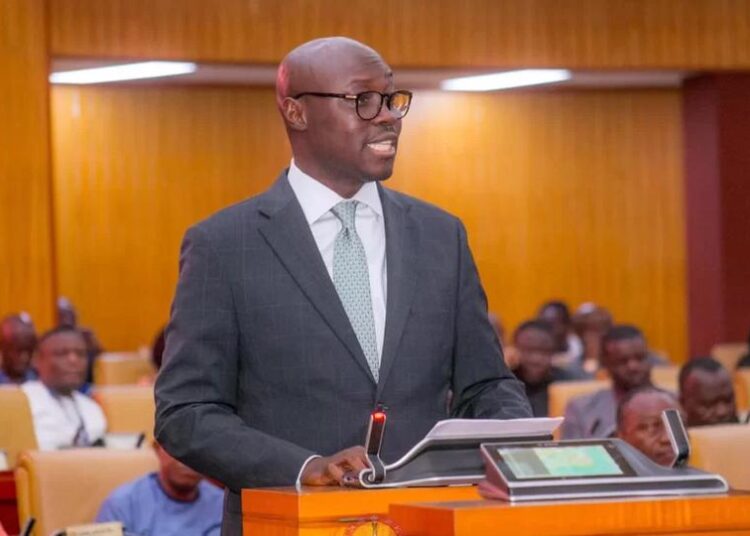
Finance Minister, Dr Cassiel Ato Forson, has declared that Ghana’s energy expansion agenda is central to industrialisation, warning that power instability across Africa continues to impose heavy economic losses and weaken manufacturing competitiveness.
Speaking at a high-level economic gathering in Accra, the sector minister highlighted how the persistent lack of adequate and affordable power directly compromises the continent’s capacity to build modern industries or run factories efficiently.
He underscored that reliable energy infrastructure must be prioritised as the ultimate foundational pillar upon which sustained economic transformation, job creation, and overall national development are built.
“We cannot industrialise in darkness. Energy remains central to Africa’s transformation. Yet over 600 million Africans still lack access to electricity. Africa collectively loses an estimated US$25 billion annually through power outages.”
Finance Minister, Dr Cassiel Ato Forson
Turning to Ghana’s domestic energy strategy, Dr Forson said the government is scaling up generation capacity to ensure stability and support industrial growth, thereby targeting an additional 3,000 megawatts of installed generation capacity by 2030.

This ambitious medium-term expansion plan is specifically designed to completely eliminate current electricity supply deficits and secure long-term energy sovereignty for the country.
The proposed generation boost will provide the required baseload power necessary to fuel aggressive state-led value-addition projects, modernise agriculture, and expand local manufacturing.
To achieve this, the state is strategically mobilizing both public and private capital to fund new power plants, upgrade aging transmission networks, and diversify the national energy grid.
Power Deficits as a Constraint to Continental Growth
The ongoing pan-African energy crisis continues to severely undermine industrial productivity, creating an economic bottleneck that holds back businesses across various sectors.
Broad structural deficits across continental electricity grids have turned routine power blackouts into a persistent commercial hazard.
Financial estimates show that African nations suffer massive financial leakages due to unreliable power networks.
This persistent instability makes local manufacturing less competitive globally, as businesses are forced to rely on expensive alternative energy solutions.

Beyond financial calculations, the social costs of this deficit are immense, leaving hundreds of millions of citizens completely cut off from modern electric grids.
Sub-Saharan Africa remains disproportionately affected by low electrification rates, which stifles small-scale entrepreneurship and limits local value addition.
Dr Ato Forson stressed that the continent’s resource base makes the energy deficit unacceptable, given its endowment in gas, hydro, solar, wind, and critical minerals.
Observers point out that bridging this vast gap requires a complete overhaul of current infrastructure models and a massive injection of cross-border energy investments.
The Shift to Value Addition and Resource Sovereignty
The next phase of Africa’s industrial transformation will depend on shifting from raw exports to value addition across key commodities.
For generations, African economies have operated primarily as exporters of raw, unprocessed commodities, leaving them exposed to global price volatility and diminishing returns.

Transitioning toward secondary and tertiary manufacturing is critical to building economic resilience.
This strategic pivot requires deep structural reforms, massive infrastructural support, and, most importantly, an uninterrupted supply of heavy industrial power.
By establishing domestic processing plants, nations can capture a significantly higher share of global market value while creating millions of sustainable jobs for the youth.
Dr Forson argued that the next quarter of a century will become Africa’s industrial century, “not just extracting lithium, but refining lithium, not just exporting bauxite, but producing aluminium, not just exporting cocoa, but processing and building competitive value addition and value chain.”
This shift helps resource-rich nations protect their economies from foreign market exploitation and establish true resource sovereignty.
Redefining Regional Growth via Trade Integration
He also highlighted trade integration under the African Continental Free Trade Area (AfCFTA) as a complementary driver of growth, noting its potential to reshape intra-African commerce.
The elimination of trade barriers and tariffs creates an integrated marketplace that allows locally manufactured goods to move easily across borders.
However, this unified trade ecosystem cannot succeed without robust regional infrastructure to support it. Cross-border power pools and shared transmission lines are necessary to lower production costs and help local factories compete effectively.

True economic independence across the continent requires a unified approach that links power generation directly to regional market demands.
“Trade integration is an economic survival strategy,” Dr Forson remarked, noting that modern supply chains depend heavily on reliable infrastructure.
By building a secure, renewable-rich energy framework, African nations can leverage the full potential of regional trade agreements.
This collaborative strategy ensures that infrastructure investments drive broad-based economic growth and long-term industrial resilience across the entire continent.
READ ALSO: UK Unveils New Fighter Jet Pact to Boost Ukraine’s Air Defences