Africa Energy Chamber’s Executive Chairman, NJ Ayuk, has issued a strong call for African governments and industry leaders to prioritise youth engagement, skills development, and education reforms to secure the continent’s future in the rapidly evolving global energy landscape.
Speaking on the need to reposition Africa’s workforce for modern energy opportunities, Ayuk warned that the continent stands to lose significant talent if it fails to act decisively.
According to him, Africa cannot afford to let this generational transition pass without preparing its young people to take over critical roles.
“Many of the international expats that championed the oil and gas industry are retiring and young people, especially Africans, need to be brought into the industry.”
NJ Ayuk, Africa Energy Chamber’s Executive Chairman
He stressed that attracting young talent will require more than simply offering jobs in traditional oil companies. “Young people are not looking at working at ExxonMobil or Chevron, but rather for Amazon or Google,” he added, noting that the aspirations of Africa’s youth have evolved alongside the global job market.
“Young people are not looking at working at ExxonMobil or Chevron, but rather for Amazon or Google.
“A wise man told me in the past, ‘if you want to change the world, become an exploration geologist.’ I agree.”
NJ Ayuk, Africa Energy Chamber’s Executive Chairman
Calls for a Reimagined Energy Workforce

According to Ayuk, the challenge is not simply about replacing retirees, but about preparing young Africans to lead a modern, technology-driven energy sector.


He argued that the era of traditional oil and gas is giving way to a broader energy ecosystem that demands digital skills, innovation, and adaptability. “If we don’t do something, we will lose a lot of talent,” he said.
“This is a chance for Africa to succeed by bringing in young Africans, who are already more technology driven and who will be able to shape the oil industry of the future.
“The industry of old is gone, it is not going to be oil and gas, but the energy industry.”
NJ Ayuk, Africa Energy Chamber’s Executive Chairman
Ayuk insisted that closing Africa’s widening skills gap is now “critical for the energy sector”, warning that too many young Africans lack the skills and credentials needed for 21st-century jobs not only in energy but in other competitive fields such as technology and finance.
The AEC Chair highlighted two major threats to Africa’s energy competitiveness: shortages of skilled labour and regulatory environments that stifle innovation.
“Too many businesses especially in finance and energy can’t find the workers they need, when and where they need them.”
NJ Ayuk, Africa Energy Chamber’s Executive Chairman
He added that “excessive regulations that do not encourage free markets” further discourage growth and investment.
Ayuk emphasised that Africa’s economic advancement hinges on “maintaining and advancing leadership with young people”, urging governments and industry players to channel more resources into STEM, innovation and practical training.
“Our energy sector has an obligation to STEM and we can and must do more to leverage the skills, ideas, and innovations that women leaders bring to the table.”
NJ Ayuk, Africa Energy Chamber’s Executive Chairman
Local Content Still Faces Tough Barriers Despite Years of Policy Efforts

Ayuk also raised concerns about persistent gaps in local content development—an area that many African governments have prioritised but continue to struggle with. He noted that while policies exist on paper, many local companies remain unable to fully compete.
“Local content implementation also faces significant challenges,” he said, citing inadequate industrial capacity, a shortage of technical skills, and limited access to capital as key obstacles.
He noted that many indigenous firms “struggle to compete with established international service providers due to limited access to capital, technology, and management expertise.”
He stressed that local content cannot succeed unless African countries build a strong educational and industrial base.
Ayuk was unequivocal that governments must lead the charge by strengthening their education systems and preparing future generations for globally competitive opportunities.
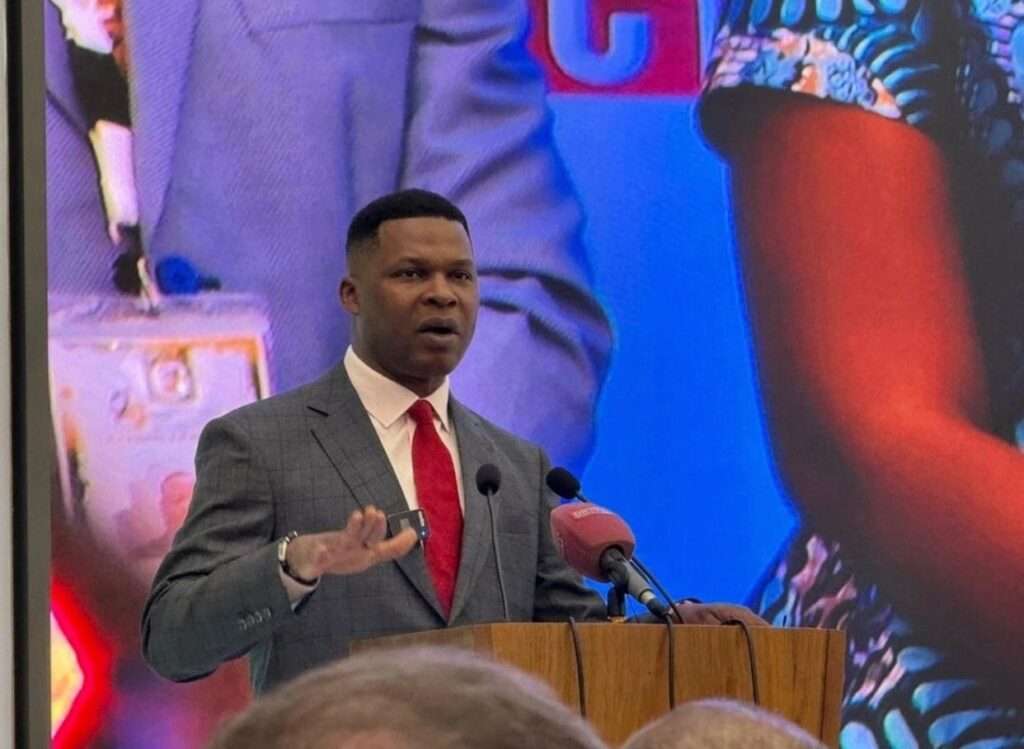
“We cannot expect the international service companies or IOCs to be the ones who are going to train, develop, and prepare our people to serve the industry.
“It is not their job; we have to set up our education and ensure schools are ready and competitive globally.”
NJ Ayuk, Africa Energy Chamber’s Executive Chairman
He argued that once the right educational foundation is in place, “every African child can compete”. For him, this is not simply an economic issue but “about rights and responsibilities”.
Ayuk’s message underscores a defining moment for Africa’s energy future: transform its workforce now or risk falling behind as the global industry evolves.
He believes Africa has an unparalleled opportunity to cultivate a new generation of innovative, tech-savvy energy professionals, but only if governments, industry leaders and educational institutions take urgent, coordinated action.
READ ALSO: IMANI’s Simons Alleges Procurement Scandal Behind 2026 SIM Re-registration: ‘Katanomics’ Again?