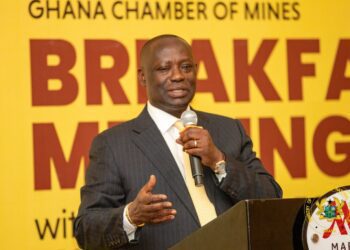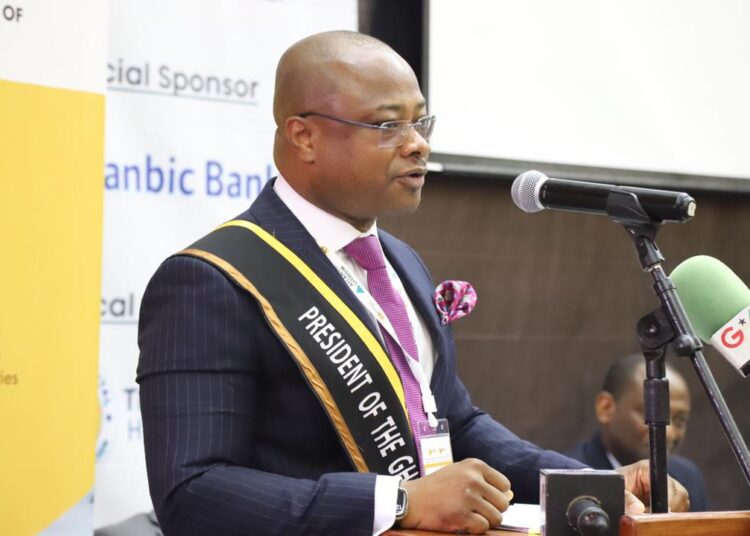
Mr. Michael Edem Akafia, President of the Ghana Chamber of Mines has renewed the industry’s call for the introduction of Mineral Revenue Management Law to guarantee that the nation’s mineral wealth directly translates into sustainable development.
He emphasized that while Ghana has made remarkable strides in mineral production, the absence of a clear and binding legal framework for managing mineral revenues continues to hinder equitable distribution and long-term benefits for citizens.
“Ladies and gentlemen, it’s time yet again to repeat our call for a Minerals Revenue Management Act in a similar fashion as a Petroleum Revenue Management Act.”
Mr. Michael Edem Akafia
According to Mr. Akafia, such a law would help create transparency, improve accountability, and strengthen the foundations for responsible resource governance in the country’s mining sector.
Expanding on his call, Mr. Akafia stressed that Ghana’s mineral resources must serve as a catalyst for inclusive economic growth rather than a source of fiscal inefficiency or environmental degradation.
He noted that lessons from oil and gas revenue frameworks, such as the Petroleum Revenue Management Act, offer valuable guidance for designing a similar structure for the mining industry.

A Mineral Revenue Management Law, he explained, could enshrine principles that channel revenue into infrastructure, human capital development, and environmental restoration funds-elements critically needed to sustain Ghana’s extractive sector.
“Ghana’s mining sector continues to generate substantial revenue, yet we must institutionalize a transparent system that benefits all Ghanaians,” he remarked.
This approach, he argued, would not only secure long-term fiscal health but also deepen public trust in the mining value chain.
The call for a Mineral Revenue Management Law comes at a crucial time, as Ghana consolidates its position as one of Africa’s top gold producers and a growing player in gold, bauxite, and manganese exploration. The mining industry contributes approximately 7% to Ghana’s GDP and remains the leading source of foreign exchange earnings.
However, despite its economic significance, concerns persist over how mineral revenues are allocated and reinvested. Various stakeholders argued that without a dedicated law, resource governance risks being hampered by ad-hoc spending, revenue leakages, and insufficient reinvestment in mining communities.
Ghana Chamber of Mines’ and Mining Industry

Ghana Chamber of Mines since established, has being the primary representative body for the mining industry in Ghana. It acts as a collective voice for mining companies, advocating policies that promote sustainable and responsible mining practices.
Over the decades, the Chamber has been instrumental in shaping mining legislation, developing human capacity, and improving community relations within mining districts.
The Chamber also plays a coordinating role between government agencies, investors, and host communities to foster social and environmental accountability.
The president’s call for a mineral revenue law aligns perfectly with the Chamber’s long-standing mission to strengthen industry governance and enhance transparency.

Under Mr. Akafia’s leadership, the Chamber intensified its advocacy for local content development and technology transfer, emphasizing the need for Ghanaian participation at every level of the mining value chain.
Recent initiatives focused on skills development programs, partnerships with tertiary institutions, and the promotion of environmentally responsible mining practices.
The proposed law, according to industry observers, would serve as a legal backbone for these efforts by directing a fixed percentage of mineral proceeds toward capacity-building and green technology adoption.
Analysts believe that combining structured fiscal management with sustainability incentives could transform Ghana into a mining knowledge hub for West Africa.
Mineral Revenue Law Relevance

Experts in extractive policy however, argued that the absence of a mineral revenue law creates a gap in resource governance, leading to inefficiencies in fiscal discipline and community development.
For instance, while the Ghana Extractive Industries Transparency Initiative (GHEITI) provides oversight and data analysis on mineral income, its work is not fully anchored in an enforceable legal framework specific to mining revenues.
Mr. Akafia’s proposal therefore represents a pragmatic step toward institutionalizing the link between resource extraction and national development goals.

Beyond fiscal responsibility, the law would also reinforce environmental accountability. As global attention shifts toward sustainable mining and decarbonization, Ghana’s ability to align with
international ESG (Environmental, Social, and Governance) standards could determine its competitiveness.
A clear legal framework, backed by political will, would empower mining firms to implement best practices in land reclamation and emissions control while encouraging innovation in cleaner extraction technology.
Mr. Akafia’s emphasis on environmental stewardship reflects the Chamber’s belief that mining prosperity should not compromise ecological integrity.
His advocacy for a Mineral Revenue Management Law mirrors the current global trend of translating natural wealth into enduring national prosperity. With its abundant mineral resources and rapidly evolving mining ecosystem, Ghana stands at a defining moment.
Mr. Michale Akafia believe the new Mineral Revenue Management Law will be the panacea to the country’s ming industry challenges. The law will not just benefit the mining communities but the entire nation.
READ ALSO: ADB Pledges Powerhouse Financing to Strengthen Ghana’s Food Security Drive